

The United States came out of the Revolutionary War victorious. But building a new nation was very different from fighting a war.
Articles on Bill of rights
Displaying 1 - 20 of 60 articles
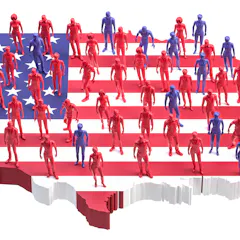
State constitutions play a growing role in American politics. But turning to such documents to recognize rights and liberties is not a new project – nor is it an entirely liberal one.

Is the US a democracy or a republic? That’s a misleading question, writes a historian of early America. The values of republicanism and the values of democracy have both been vital to the nation.
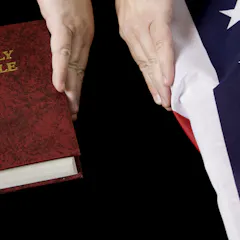
When government officials hold prayer services, quote scripture and engage in religious proselytizing at the workplace, is it religious freedom – or an old-fashioned First Amendment violation?

A new Trump administration policy threatens free speech and association by targeting individuals and groups as potential domestic terrorists based on their beliefs rather than their actions.

A balance needs to be struck between the protection of teenagers and the preservation of culture.
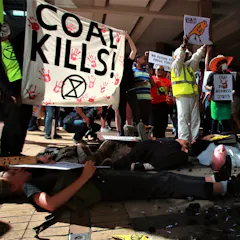
A recent South African court judgment shows that the right to have the environment protected for the benefit of present and future generations is being upheld.
John Adams signed the Sedition Act in an attempt to silence dissent. Some other Founding Fathers thought that muzzling the press would mean the end of the republic.
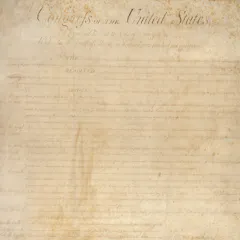
Key freedoms for US citizens against excessive government power are contained in the Bill of Rights, the first 10 amendments to the US Constitution.
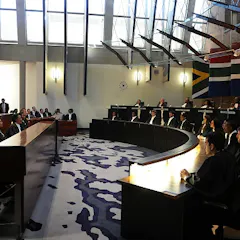
The court covered itself in glory in the first 15 years, but its performance has been patchy since then, coinciding with Jacob Zuma’s presidency.
The governing ANC’s indifference to constitutionalism has left the constitution vulnerable to opportunistic attack by politicians.

A satirist posted a parody of a police Facebook page. He was arrested and jailed for four days. How far do free speech protections extend when it comes to satire about government?
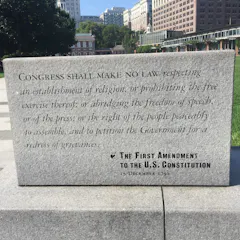
‘Congress shall make no law … abridging the freedom of speech.’ It’s often misunderstood, by many Americans. A constitutional scholar explains what it really boils down to.
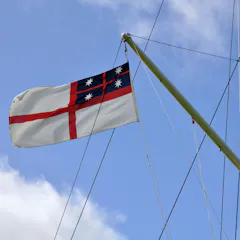
Article 3 of Te Tiriti o Waitangi gave Māori the fundamental rights and freedoms guaranteed under British law. Understanding it is critical to modern debates over ‘co-governance’ and partnership.
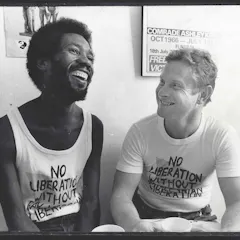
The activist is today the subject of songs, sculptures, an annual lecture and even a new musical.
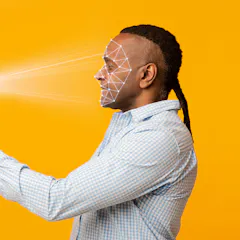
Many AI algorithms, like facial recognition software, have been shown to be discriminatory to people of color, especially those who are Black.

Queen Elizabeth II encouraged tolerance in a multifaith United Kingdom. To appreciate the significance of her efforts, it is important to understand the country’s complicated religious history.

The gun rights decision from the conservative majority on the Supreme Court signals a fundamental change in how the court reads the Constitution.

Regulations that limit fundamental human rights should be accompanied by a transparent risk and benefit analysis.

This history covers twelve decades, from the surrender of Boer guerrillas in the Second Anglo-Boer War in 1902 to the July 2021 looting spree and violence.
Top contributors
-

Professor of American Civics, University of Tennessee
-
Professor of Law, University of Waikato
-
Emeritus Associate Professor in Public Law, UCT. Visiting Adjunct Professor, WITS School of Governance; Director, Africa Programme, University of Cambridge Institute for Sustainability Leadership, University of Cambridge
-
Professor Emeritus of Applied Philosophy, Glasgow Caledonian University
-
Professor of African legal pluralism, University of the Western Cape
-
Political Scientist, University of the Western Cape
-
Assistant researcher, University of Sydney
-
Senior Lecturer in Law, Charles Sturt University
-
Professor Emerita of Religious Studies, College of the Holy Cross
-
Senior Research Fellow, Horizon Digital Economy, UnBias, University of Nottingham
-
Professor Emerita in Constitutional Law, University of Sydney
-
Professor of Law; Kim Santow Chair of Law and Social Justice, University of Sydney
-
Scholarly Communications Librarian, University of the Witwatersrand
-
Postdoctoral Research Associate, Dr Williams's Library, University of Stirling
-
Professor Emeritus of Media and Culture, Griffith University, Griffith University