

Québec’s Bill 9 demands the public sphere be free of visible religion, even when expressions of religion take are obligations its adherents cannot set aside.
Articles on Bill 21
Displaying all articles

The Québec government thought it would Charter-proof its religious symbol law when it invoked the nothwithstanding clause. It was wrong.

The notwithstanding clause is both historically appropriate and democratically desirable. Excising it would make our Charter of Rights and Freedoms more American. Is that really where we want to go?
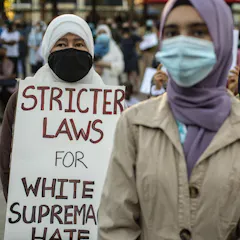
In today’s episode, we take a look at some ways lawmakers have legalized Islamophobia through niqab bans and other restrictive policies.

In the coronavirus pandemic, wearing a protective mask signifies a commitment to the social and collective good of society. But that changes when a face mask is worn by Black and racialized people.
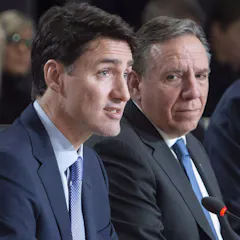
Canada’s Charter of Rights and Freedoms doesn’t mean much if it can’t be enforced. That’s why the Court Challenges Program is so important — no matter what the Québec premier says.

The Bloc surged because the Liberal campaign focused on attacking premiers from other provinces and promised initiatives that already exist in Québec.
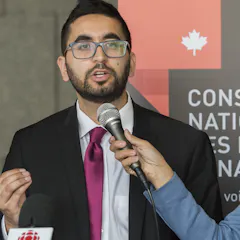
Québec schools must consider Bill 21’s potential impact on students. Bullying researchers have found links between publicly permitted behaviour and personal expression.
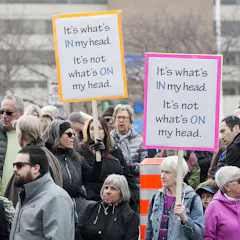
Despite decades of bickering and hand-wringing, Canada continues on. National tensions, in and of themselves, are not leading us to poor policy outcomes.

The proposed secular law (Bill 21) in the province of Québec appears to be directed primarily against Montreal and Québec City, and reflects a fear of strangers in Québec’s more homogeneous regions.

Respecting religious freedom not only protects the rights of individuals, it safeguards the integrity and accountability of democratic governments.

Many Canadians are puzzled by Québec’s law banning some civil servants from wearing religious symbols. A Québec sociologist explains the law is rooted in the province’s troubled history with religion.

While few would deny secularism and religious neutrality are legitimate goals, they don’t justify Bill 21’s undue restriction of minority rights.
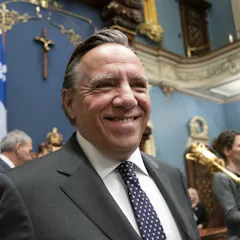
The language of the neutral and secular state in Bill 21, like its precursors, presumes an invisible Christian default for the rules around public expressions of religiosity.
Top contributors
-

Executive director, McGill University
-
Assistant Professor of Political Science, University of British Columbia
-
Professor Emeritus for Public Ethics and Fellow at the Centre for Public Ethics, Martin Luther University College, Wilfrid Laurier University
-
Professor, Public Policy, Université de Montréal
-
SSHRC Postdoctoral Fellow in Sociology, L’Université d’Ottawa/University of Ottawa
-
Associate professor, Faculty of Law, L’Université d’Ottawa/University of Ottawa
-
Acting Deputy Provost, University of Saskatchewan
-
Associate Law Professor, University of New Brunswick
-
Professor, Concordia University
-
PhD Candidate in Religious Studies, McMaster University
-
Full professor, Faculty of Law, L’Université d’Ottawa/University of Ottawa
-
Professor Emeritus, Department of Political Science, Wilfrid Laurier University
-
Professor of Sociology, Wilfrid Laurier University
-
Assistant Professor, Political Science, University of Windsor
-
Assistant Professor, School of Journalism and Communication, Carleton University