

The bipartisan revolution against automated license plate readers suggests Americans have not entirely lost their rebellious spirit.
Articles on Benjamin Franklin
Displaying 1 - 20 of 33 articles

The nation’s first successful circulating library was established almost 300 years ago by Benjamin Franklin in Philadelphia.
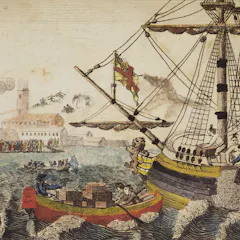
America’s struggle for independence from Britain was supported by some highly influential thinkers in 18th-century Britain.
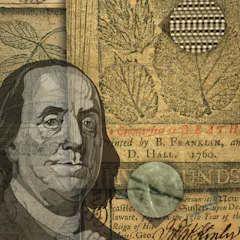
Ben Franklin led an effort to print paper bills in the American colonies, after a coin shortage constrained the economy.
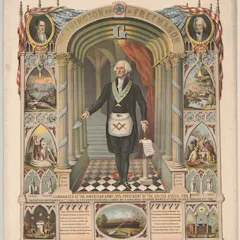
In the early days of the United States, Philly was a hotbed of conspiracy theories as fears grew that secret societies sought to dismantle religion’s influence on society.
We’ve long been fascinated by lightning, which can also be found in volcanoes and on Jupiter.
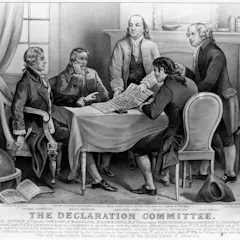
For all the festivities around July 4, the nation’s founding document, the Declaration of Independence, actually depicts a wounded, fearful society, teetering on the brink of disaster. Sound familiar?
Trump is not the first American leader to dream of northern expansion. History suggests these designs reveal simmering divisions inside the United States.
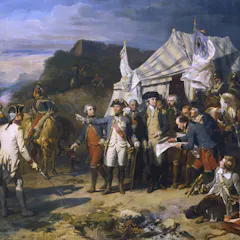
Why should a country want or need allies? President Donald Trump and his followers seem to disdain the idea. So did George Washington.

A weather station in the Shetland Islands has one of the world’s best-preserved long records of atmospheric electricity.
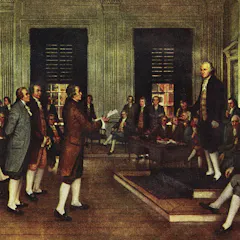
Right from the very beginning of the nation, there have been rules that limit the ability of the people to choose their leaders.

The much-loved Yorkshire actor was held in high regard for his low-key but affecting performances.
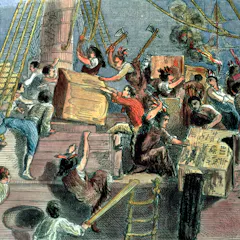
An attack on private property angered Colonial leaders as much as the British public – but a strong reaction from Parliament hardened the positions of the opposing sides, making compromise impossible.
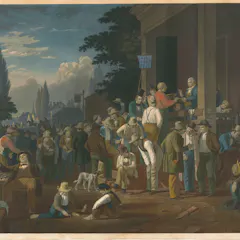
Is American democracy an ‘experiment’ in the bubbling-beakers-in-a-laboratory sense of the word? If so, what is the experiment attempting to prove, and how will we know if and when it has succeeded?
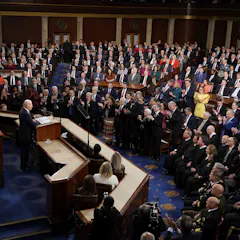
Americans are not the first to fret over the potential harm that parties can inflict. But parties can also promote the common interest.

He was an important philosopher, mathematician and social reformer of his time. But Richard Price was subsequently written out of history.
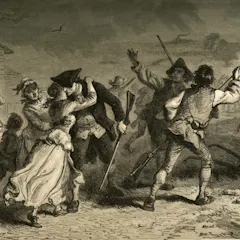
Fuel for the American Revolution came from a source familiar today: distorted news reports used to drum up enthusiasm for overthrowing an illegitimate government.

A leader’s machismo can lead to war, and Russian President Vladimir Putin has long displayed his version of hyper-masculinity. A historian says that for America’s founders, wars never fed their egos.

An ‘old year’ approach takes into account findings from psychological research and the wisdom of habit guru Benjamin Franklin.
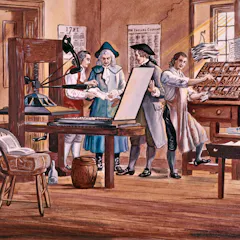
When Bostonians in 1721 faced a deadly smallpox outbreak, a new procedure called inoculation was found to help fend off the disease. Not everyone was won over, and newspapers fed the controversy.
Top contributors
-

Chancellor and Professor of English, Indiana University Kokomo
-
Professor of American History, Università di Torino
-
Professor of law and ethics, Georgia State University
-
Professor of the History of Art, Fashion Institute of Technology (FIT)
-
Assistant Professor of History, University of Tampa
-
Professor of Atmospheric Physics, University of Reading
-
Professor of History, University of New Hampshire
-
Senior Fellow, Miller Center, University of Virginia
-
Associate Professor of Journalism, Marist College
-
Reader in Film & Television, Department of English & Creative Arts, Edge Hill University
-
Reader in Political Philosophy, Cardiff University
-
Professor of History, The University of Texas at Austin
-
Professeure des Universités, Université de Montpellier
-
Associate Professor of Law, University of Nevada, Las Vegas
-
Research Associate Professor of History, University of Tennessee