

Can we move from algorithmic discrimination to inclusive finance?
Articles on Banks
Displaying 21 - 40 of 313 articles

The UK system can be hard to navigate – and lacking knowledge on how it works can leave migrants paying more or missing out entirely.

New research has found that a two-year drought can have the same economic impact on a region as a one percentage point increase in the unemployment rate.

Two studies show how flooding can reduce companies’ earnings and their ability to access finance.

Non-executive directors are supposed to provide a company’s management with independent perspectives. Does the experience gained by letting them stay long-term outweigh the independence lost?

Claims that sustainability goals are making banks ‘woke’ might be effective populist politics. But undermining their risk management strategies can have unintended consequences.

If you’re saving to buy a house, planning an overseas trip, or a pensioner, the rate cut will be no help.

Letting the banks charge their own extra fees might be a non-starter. The government has some other ideas, including a cash mandate and a possible new rural services levy to keep branches open.

A deep dive into 866 public companies and 1,413 carbon projects reveals some twists in who relies on cheap offsets and who chooses to cut their own emissions instead.

There’s a push for reforms to make banks more responsible for detecting, deterring and responding to scams, rather than just asking consumers to be ‘more careful’.
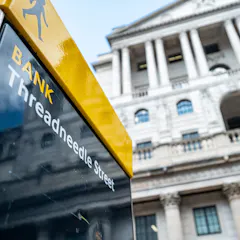
The committee that decides on UK interest rates has been independent of government since 1997 – but it still attracts controversy.

The financial sector is central to the UK economy – so while fears linger over its underlying strength, Labour is unlikely to give it the tougher treatment some experts recommend.

Around 400,000 UK households are set to experience increases of 50% or more in their mortgage payments.

As mortgage costs rise more first-time buyers are choosing longer-term loans to keep the monthly payments down.
To help raise the cash needed to meet their commitments on the NHS and social care, the Liberal Democrats propose a new tax on banks.

The UK is about to force banks to reimburse payments made “because of deception by fraudsters”. Australia’s government isn’t keen.

Development finance addresses the failures or limitations of financial institutions such as commercial and investment banks.
How exactly does our central bank control the cost of borrowing in the first place?

High interest rates have been a big earner for the last couple of years.
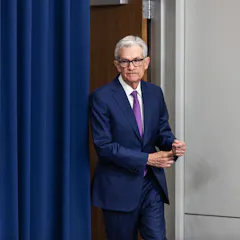
The Ides of March will coincide with one or two changes to the financial system that could cause problems for banks and the economy.
Top contributors
-

Professorial Fellow, University of Canberra
-
Visiting Fellow, Macquarie University Applied Finance Centre, Macquarie University
-
Emeritus Professor of Finance, The University of Melbourne
-
Vice Chancellor's Fellow at Victoria University and Adjunct Professor of Economics, Victoria University
-
Professor, Finance, UTS Business School, University of Technology Sydney
-
Senior Lecturer, Faculty of Law, University of Wollongong
-
Scientia Professor of Economics, UNSW
-
Head of Department of Economics, Finance & Accounting, Brunel University of London
-
Associate Professor in Finance, University of Canberra
-
Professor of Organisational Behaviour, Bayes Business School, City St George's, University of London
-
Senior Lecturer, Adelaide Law School, Adelaide University
-
Associate Professor in Marketing, Keele University
-
Vice-Chancellor and President, University of Canberra
-
Emeritus Professor of Accounting, University of Essex, University of Essex
-
Adjunct Professor, Swinburne University of Technology