
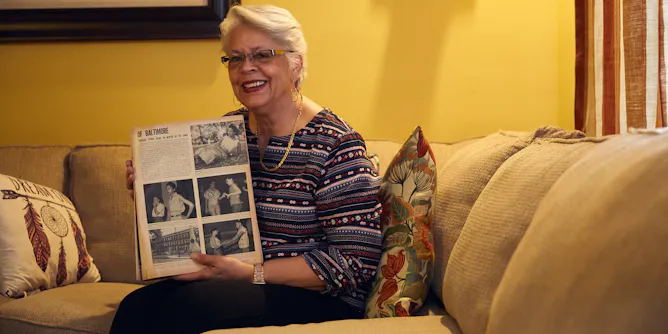
Two Lumbee scholars who have mined local archives in search of tribal history raise the profound question: Who has the rights to memories and artifacts of their people’s past?
Articles on Baltimore
Displaying 21 - 40 of 43 articles

Police experience in crisis and hostage negotiation could come in handy when dealing with cybercriminals who have, effectively, kidnapped data.
More than 40 percent of U.S. adults have a gun in their household, making it hard to get guns off the streets – even if new gun restrictions are passed.
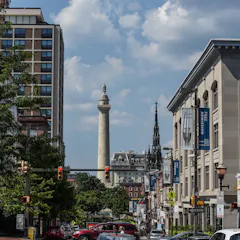
Extreme, dehumanizing language like the words used by President Trump to describe Baltimore can escalate into destructive outcomes, writes a scholar of hostage negotiation.

Recent scandals involving economic development programs in New Jersey and Maryland highlight their many flaws, including a lack of oversight and their ineffectiveness.
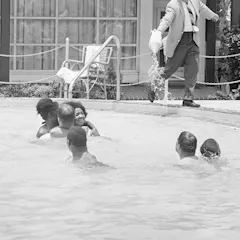
Municipal swimming pools flourished in the 20th century. But too often, their success was based on the exclusion of African Americans.

Ransomware has crippled governments and companies around the world, encrypting data and demanding payment for the decryption key – though that’s no guarantee of recovering the information.
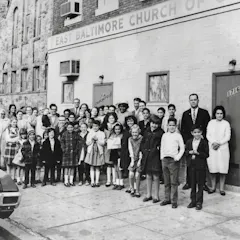
A folklorist is working to preserve the history of a unique, urban community of Lumbee Indians.
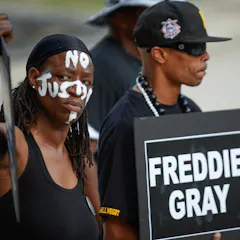
Violent cops are just playing by the rules American society has created for them. It’s time to change the rules.
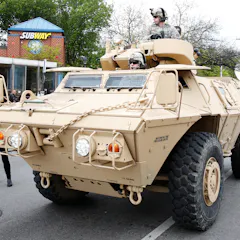
The Baltimore Police Department is found to have violated the civil rights of poor blacks. A historian explains why those findings are eerily similar to how the city treated blacks in the 1800s.
After two more fatal shootings by police of black men this week, we republish one legal scholar’s argument that what needs addressing is the police’s culture of masculinity.
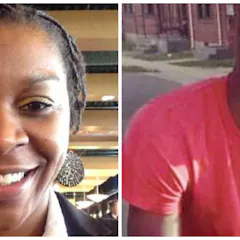
Police in Lowell, Massachusetts and Memphis, Tennessee are using a new approach designed to help them build trust while enforcing the law.
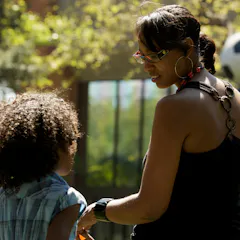
Black students get suspended or expelled at a rate three times greater than white students. The cost: they fall behind in school, and the cycle of poverty and failure is perpetuated.

The current climate is inviting us to conceive of Baltimore not as a place where the law doesn’t work but, more radically, as an example of Italian legal philosopher Giorgio Agamben’s “state of exception”.

America is a country with pockets of poverty with neighborhoods filled with unskilled workers with limited opportunities.
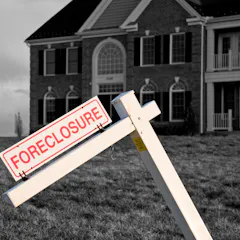
Predatory lending and the subprime mortgage crises as well as a history of economic injustice fueled the Baltimore protests.

Freddie Gray had high levels of lead as a child, one of the environmental injustices suffered by poor and minority groups.

Provocative, violent and discriminatory policing has sparked riots in both the UK and America.

The news media are a major presence in the Baltimore riots. Are they providing an accurate picture of what’s going on?

Racial segregation and poisonous living conditions played a large part in determining the young man’s fate.
Top contributors
-

Assistant Curator for History and Culture, National Museum of the American Indian, Smithsonian Institution
-
Assistant Professor of Criminology and Criminal Justice, University of South Carolina
-
John Rennie Short is a Friend of The Conversation.
Professor Emeritus of Public Policy, University of Maryland, Baltimore County
-
Lecturer in English, Yale University
-
Clinical Professor of Law and Director of the Education and Health Law Clinic, Rutgers University - Newark
-
Professor and Chair, Department of Sociology & Anthropology, West Virginia University
-
Research Fellow, University of Edinburgh
-
Director and Associate Professor of Language, Literacy and Culture Ph.D. Program and Affiliate Associate Professor in the Department of Africana Studies, University of Maryland, Baltimore County
-
Lecturer in American Studies, Sustainability, and EcoJustice, University of Maryland, Baltimore County
-
Researcher in Crowd Behaviour, University of Brighton
-
Director, Center for Applied Insight Conflict Resolution; Adjuct Faculty at the School for Conflict Analysis and Resolution, George Mason University, George Mason University
-
Assistant Professor of African-American Studies and Political Science, Yale University
-
Assistant Professor of Criminal Justice, Georgia Southern University
-
Associate Professor of Communications, Penn State
-
Lecturer of Gender and Women’s Studies and the Director of the Women Involved in Learning and Leadership (WILL) program, University of Maryland, Baltimore County