
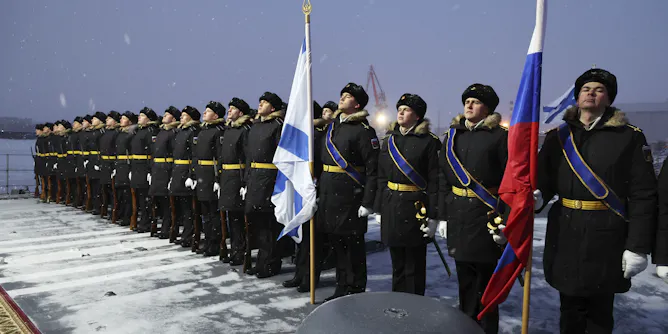
By the time Australia has its first nuclear-powered attack submarine, Russia’s Pacific fleet will have grown to 45 warships.
Articles on AUKUS
Displaying 81 - 100 of 163 articles
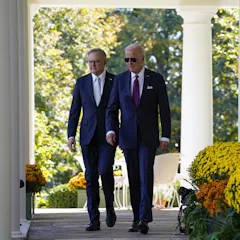
Anthony Albanese and Joe Biden have said climate will now be a critical component of the Australia-US relationship. Now they need to ensure it stays on the agenda.
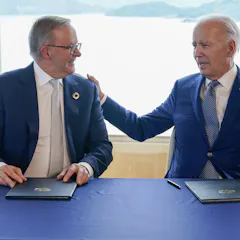
Despite the pomp of a state visit, Albanese will be hoping to bring home from Washington some significant wins on policy and the bilateral relationship.
From the war in Ukraine and China’s role in the Pacific, to multi-billion-dollar military decisions, New Zealand will face huge challenges during the next term of government.
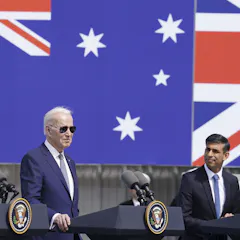
AUKUS faces political challenges right now, and the next year may bring even deeper problems. Big-picture geopolitical realities suggest AUKUS will survive.

South-East Asia is anxious about the Ukraine war’s impact on regional economies. For New Zealand, that presents more pressing geopolitical priorities than confronting China.

With the rise of China and shifting international power dynamics, New Zealand needs to find its place in a complex system of alliances and partnerships.
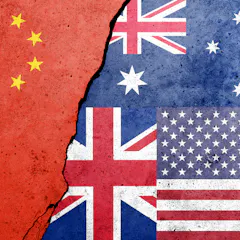
Does New Zealand have more to lose than gain by joining ‘pillar two’ of the AUKUS security pact? The next government will have to decide, with serious implications for the country’s foreign policy.

After last-minute deliberations between Labor powerbrokers and unions, the AUKUS pact was endorsed by the ALP at its national conference this Friday
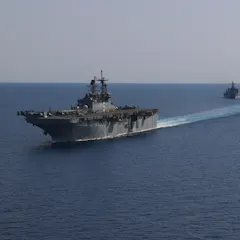
Part of the rationale for acquiring nuclear-powered subs is to counter China’s growing military influence. But the US navy still remains much more powerful than China’s.

The Prime Minister’s message to delegates at the Labor national conference was, in essence: be patient, don’t rock the boat, you shouldn’t expect the government to do all you want all at once.

The conference, being held in Brisbane, runs three days, with Albanese delivering his keynote address on Thursday morning

The loudest disagreements at this year’s ALP national conference are likely to be on foreign policy - the AUKUS deal prime among them.
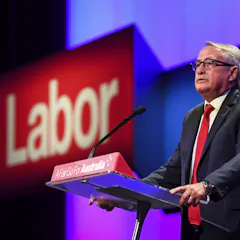
In this podcast we talk with Wayne Swan, the Labor Party National President. Swan was treasurer and deputy prime minister in the Rudd and Gillard governments.
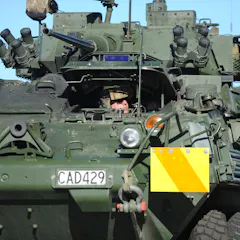
New Zealand faces “more geostrategic challenges than we have had in decades”, according to the defence minister. A broad defence and security reset aims to prepare the country for what may be ahead.
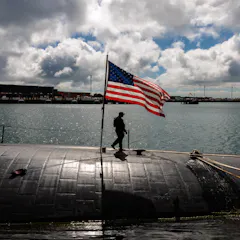
The US is proposing legislation to ease restrictions on sharing US military technologies with other countries. The AUKUS agreement depends on it.
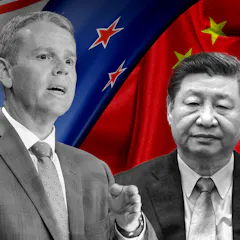
With a visit to NATO in July, and a decision due on joining the AUKUS security pact, Chris Hipkins’ visit to China has been well timed to avoid any further provocations.

Australians remain deeply concerned about China as a long term potential military threat

While the technologies being explored under ‘pillar two’ of the AUKUS security pact are becoming clearer, New Zealand’s policy on autonomous weapons and military AI has become increasingly murky.
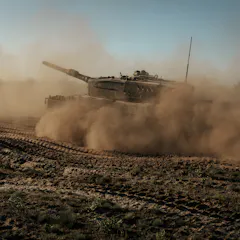
It may be half-a-world away, but the war in Ukraine is escalating geopolitical tensions everywhere – including between China and the US, with major implications for New Zealand foreign policy.
Top contributors
-

Professorial Fellow, University of Canberra
-
Professor of Law, University of Waikato
-
Professor, Strategic and Defence Studies Centre, Australian National University
-
Professor of International Relations, University of Otago
-
Associate Professor of International Politics and Principal Research Fellow, Institute for Indo-Pacific Affairs (Christchurch), University of Otago
-
Election Analyst (Psephologist) at The Conversation; and Honorary Associate, School of Mathematics and Statistics, The University of Melbourne
-
Director, La Trobe Centre for Global Security, and Professor of International Relations, La Trobe University
-
Adjunct Professor in the School of Humanities and Social Sciences at UNSW Canberra, UNSW
-
Associate Professor (Adj), Griffith Asia Institute; and Fellow, Strategic and Defence Studies Centre, Australian National University
-
Emeritus Professor, School of Environment and Science, Griffith University
-
Adjunct Professor, Defence and Security Institute, The University of Western Australia; UNSW
-
Senior Lecturer in International Relations, University of Waikato
-
Adjunct Professor, Australia-China Relations Institute, University of Technology Sydney
-
Professor, School of Economics, The University of Queensland
-
Adjunct Senior Fellow, School of Global, Urban and Social Studies, RMIT University