

Even before COVID-19, use of the ATAR for university entry was contentious. Now it’s even more so, and universities need to rely on other ways to admit students.
Articles on ATAR
Displaying 21 - 40 of 59 articles

How will the move to online study, and the disruption of routine, affect year 12 students’ abilities to perform and, consequently, their grades? And what does this mean for university entry?

Some subjects are more likely to get you into university. But more advantaged students access these subjects. This means we have an unequal system.

NSW schools are losing senior music students in significant numbers. Teachers say they’re dropping the subject in year 12 to ensure a higher ATAR.

The ATAR is mainly used as an efficient way for universities to decide which students can be offered a place in a certain course.

Universities are increasingly accepting more students into degree programs without an ATAR. Here are some of the most common ways in.

Our top-scoring students aren’t choosing to become teachers, and that has flow-on effects for the students who come after them.

Students with lower ATARs generally have lower lifetime earnings. But a Grattan Institute report found low ATAR men could earn more doing a VET course than a bachelor degree in their chosen field.

Evidence shows improving teacher selection will improve student results.

Before deciding what to study at which university, high school graduates should consider the drop-out rates, early-career employment prospects and lifetime earnings their program is likely to yield.

Chief Scientist Alan Finkel writes we can do a better job of teaching students to master a discipline and maximise their post-school opportinities.

Some universities accept students into their teaching degree programs with an ATAR as low as 35. Do we need to raise the bar, or are other factors more important than a high ATAR for teachers?
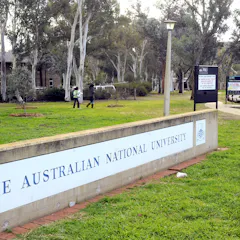
From 2020, ANU will require students to meet co-curricular requirements alongside ATAR. This significant policy shift is meant to improve equity of access, but won’t change much.

In 2017, around 60% of domestic undergraduate university offers were reported as non-ATAR, meaning there’s a diversity of pathways to higher education.

Students should consider all their options and remember the ATAR is just one measure that doesn’t necessarily dictate how well they will do in future.

Gonski funding was scrapped and the vocational education sector got a new student loan system. Here’s what else happened in education this year…

The government has announced it will accept recommendations to make the university admissions process more transparent. But that alone isn’t enough.

More students than ever before have the opportunity for higher education but their choices are being undermined by a confusing admissions system in much need of reform.

In determining a replacement for the ATAR, it will be essential to consider the impacts of any such change on the school and vocational education systems.

The government wants to make the university admissions process more transparent as a way to provide greater choice. But this fails to recognise how the system currently works.
Top contributors
-

Senior Research Fellow, Curtin University
-
Vice Chancellor's Postdoctoral research fellow, RMIT University
-
Associate Professor, Faculty of Education, Monash University
-
Director, Peter Noonan Policy Impact Program, Mitchell Institute, Victoria University
-
Professor of Higher Education Policy, Monash University
-
Lecturer, Teachers and Teaching Research Centre, School of Education, University of Newcastle
-
Professor (Curriculum Inquiry / Rural Education), University of Canberra
-
Deputy Program Director, School Education, Grattan Institute
-
National Director, AVID Australia, Victoria University
-
Professor, Leadership and School Transformation, School of Education, University of Newcastle, University of Newcastle
-
Professor and Pro Vice Chancellor, Social Inclusion, Macquarie University
-
Senior Research Fellow at the Victoria Institute of Strategic Economic Studies (VISES), Victoria University
-
Emeritus professor, Victoria University
-
Gabrielle Matters Consulting; and Adjunct professor (faculty of education) at the Queensland University of Technology, Queensland University of Technology
-
Emeritus Professor, Australian Catholic University