
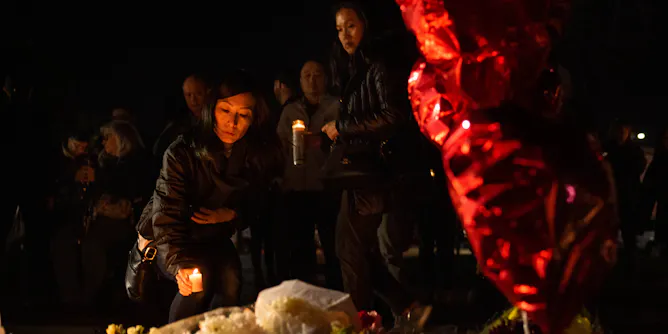
Once seen as the Chinese Beverly Hills, Monterey Park is now seen as Asian America’s ‘town square’ – the impact of a mass shooting there will ripple across the country.
Articles on Asian Americans
Displaying 21 - 40 of 61 articles
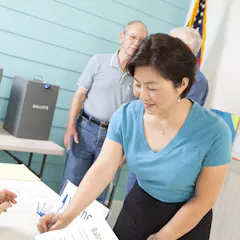
As the fastest-growing racial group in the US, Asian Americans form an important voting bloc and could play a key role in swing states, write two political scientists.

Early on, public health messaging focused on the need for vaccines to combat COVID-19. But far less attention has been given to the role of boosters in preventing deaths and reducing inequities.
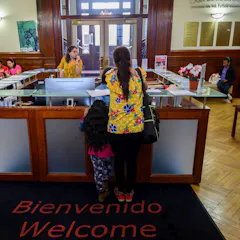
Researchers created an imaginary nonprofit and told participants in a survey that it served different kinds of people. Their results show how feelings about immigrants may influence generosity.

When the Census Bureau’s count of the population is inaccurate, it affects representation and government spending. Correcting errors isn’t always allowed.
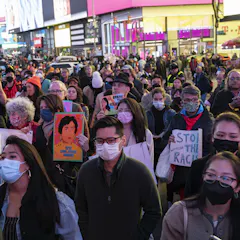
Asian American mothers face a caregiving crisis, fueled by the pandemic but rooted in histories of anti-Asian discrimination and violence.
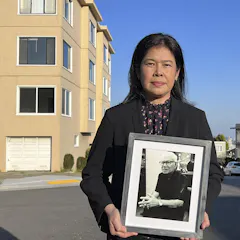
A new analysis of crime data shows that anti-Asian violence, targeting people of Asian descent and their property, rose sharply during the pandemic.
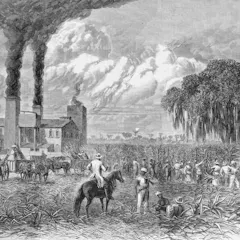
Sugar has deep links with slavery in the US, but Black workers weren’t the only ones affected. In post-Civil War Louisiana, Chinese workers also toiled cutting and processing cane.

Access to voting materials in a citizen’s native language helps boost involvement and voter turnout.

In the wake of 9/11, some called for rounding up whole groups of people viewed as potential threats to the nation. But Transportation Secretary Norman Mineta knew the U.S. had done that before.

A new wave of Korean music and cinema can play a powerful role in changing perceptions and stereotypes of Asian people.

For AAPI History Month: Young Japanese American men who were incarcerated because they were presumed to be disloyal were considered loyal enough for compulsory military service.

Asian Americans are more likely to participate in remote learning than other racial groups, federal data show. To understand why, three experts weigh in.

In the wake of anti-Asian violence in North America, we need to demand accountability and not just stop after performing mental health check-ins.
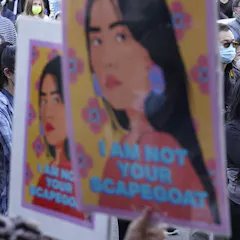
The invisibility of anti-Asian racism is inextricably connected to the model minority myth, which serves to disguise the violence experienced by Asian American and Asian Canadian women.
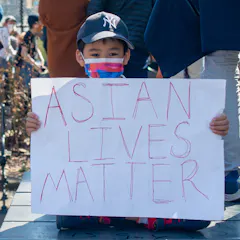
The media tends to render Asian Americans as either a ‘perpetual foreigner’ or ‘model minority’ – both stereotypes that have been levied in tandem against immigrants from Asia since the 1830s.

US culture has long represented Asian American women as sexually seductive – showing how victims’ gender and race cannot be separated when attacked by white male violence.
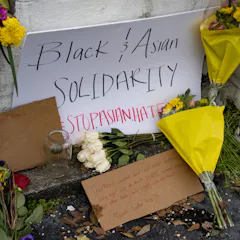
Bias-motivated attacks became a distinct crime in the 1980s. But police investigate only a fraction of the roughly 200,000 hate crimes reported each year – and even fewer ever make it to court.
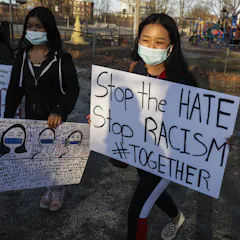
Some racism isn’t criminal at all but still is the result of deep-seated and long-standing racial prejudices.
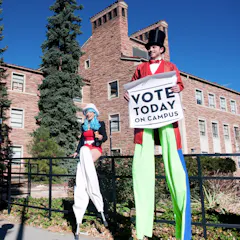
Researchers examined the voting behavior of 5,762 students at 120 colleges and universities. Two groups stood out as an untapped electoral resource – if the candidates can turn out Gen Z.
Top contributors
-

Professor of U.S. Immigration Studies, Amherst College
-
Assistant Professor of Asian Pacific American Studies, Arizona State University
-
Professor of Asian American Studies, University of Colorado Boulder
-
Adjunct Professor of History and Affiliated Faculty, USC Shinso Ito Center for Japanese Religions and Cultures, USC Dornsife College of Letters, Arts and Sciences
-
Professor of Sociology, Columbia University
-
Associate Professor of Education, University of Maryland
-
Professor of Educational Foundations, Policy and Practice, University of Colorado Boulder
-
Associate Professor of Political Science, University of California, Berkeley
-
Postdoctoral fellow, University of Washington
-
Adjunct professor, Women's Studies, Lakehead University, York University, Canada
-
Associate Professor Affiliate, School of Education, Colorado State University
-
Professor & Chair of Educational Policy Studies, University of Wisconsin-Madison
-
Post Doctoral Fellow, Colorado State University
-
Professor of Psychology, University of St. Thomas
-
Smith Professor of Equity and Inclusion in Business, Queen's University, Ontario