
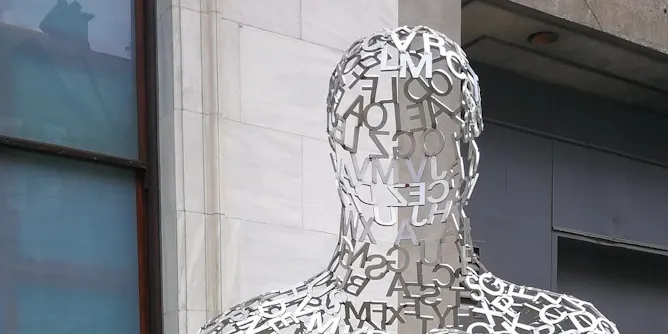
Arts-related activities for people living with Alzheimer’s and other related disorders could improve people’s quality of life, but collaborating in communities requires a common language.
Articles on Art therapy
Displaying 21 - 38 of 38 articles

Theatre is able to create a space for discussion about how and why women experience physical and emotional violence.
With 350 artworks created by 320 Indigenous artists who are in or recently released from prison, The Torch is making a difference to how people are seen and how they see themselves.

An ongoing study shows that storytelling can positively increase self-awareness in young people, especially if they can relate to the stories. But in Africa access to story platforms is limited.

Our attraction to the arts may be driven by an innate desire to use our brains in ways that make us feel good.

In times of crisis, the role of art becomes more central to our lives, like it or not.
Important learning takes place through experiences of fun and belonging at an arts-based mindfulness program.
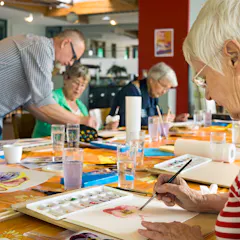
Creative arts therapies allow people with dementia to express joy and sadness through painting, dance, music and drama.
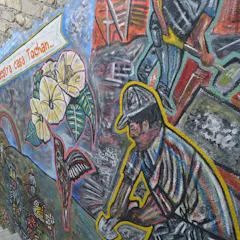
A human rights researcher documents the stories of Central American migrants leaving behind endemic poverty and high homicide rates. In limbo in Mexico, many use art therapy to express their anxiety.
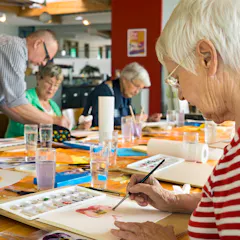
As part of a new strategy to combat loneliness GPs will be able to prescribe social activities. But is this ethical?
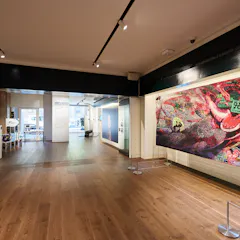
Art is no cure all. But it can open up new spaces for us to ask new questions.
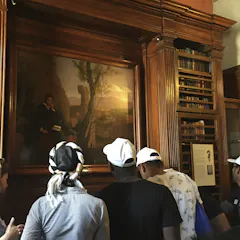
Was John Keats a refugee in his day? A workshop for refugees, migrants and artists took place recently at Keats-Shelley House and the story of the great Romantic poet’s life and death hit a nerve.
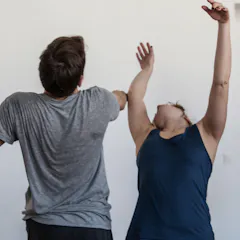
… and does it work?
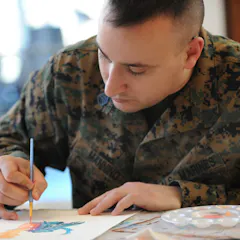
Using creativity and artistic metaphor to tap unconscious memories helps release pent up trauma.

Embroidery - often seen as women’s work - was a common form of therapy for troops wounded in the first world war. One soldier, Albert Biggs, learned to sew with his left hand after his right arm was badly injured.

A new study shows that looking at paintings can bring pleasure to people living with dementia, affecting their wellbeing even after the memory of the event has gone.
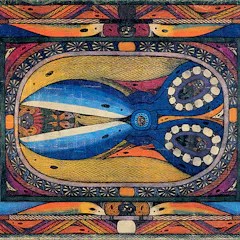
Organisations such as MIND work tirelessly to raise awareness of mental health problems and real progress has been made in destigmatising mental illness through campaigns such as Time to Change and Black…
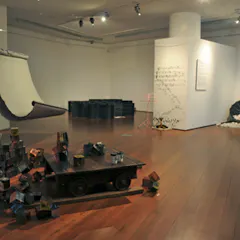
My doctoral studies in visual arts entails working with people who are not necessarily visual artists, but see the value in artistically expressing their story to expand our understanding of suicide. Suicide…
Top contributors
-

Honorary Research Fellow, School of Design, University of Technology Sydney
-
Senior Lecturer in Abnormal/Clinical Psychology, Bath Spa University
-
Lecturer in Political Theory, University of Otago
-
Doctoral Student in Visual Art, Southern Cross University
-
Professor of Behavioural Science, University of Surrey
-
Leading the research group on Arts for Wellbeing, Edge Hill University
-
Senior Lecturer, Creative Writing Program, The University of Melbourne
-
Associate Professor in Arts and Cultural Leadership, University of Southampton
-
Professor of Molecular Psychiatry, King's College London
-
Canada Research Chair in Ethics and Political & Social Philosophy, University of British Columbia; Independent Social Research Foundation
-
Assistant Investigator at Kaiser Permanente Washington Health Research Institute, University of Washington
-
Associate Professor in Child Psychology and Education, University of Staffordshire
-
The Open University
-
Professor of Art Therapy Research, Drexel University
-
Researcher in relation to Psychosocial design, arts engagement mental health, trauma, dementia, UNSW