

Artists and scientists explore how we subconsciously perceive subtle proportions in trees.
Articles on Art in Science
Displaying all articles
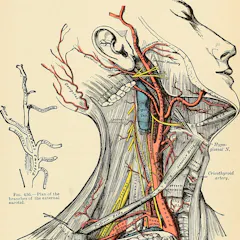
From body snatching to Photoshop and virtual reality, the techniques of medical illustration have evolved. But its essential role in showing clinicians how to care for the body continues today.
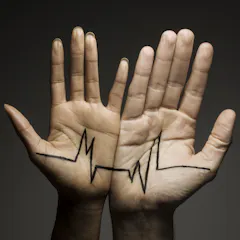
While medical school may teach students about how the body works, it often neglects the social, political and cultural factors that determine health and disease. The humanities can help.

Visualization is an essential part of the scientific process. Advances in imaging have enabled eye-opening discoveries, not only for scientists and researchers but also for the general public.

A youth-focussed exhibition about experiences of mental health is interactive and expansive, kicking down the barriers between science and art.
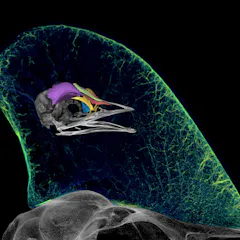
Scientists have been using art to illuminate and share their research with the public for centuries. And art could be one way to bolster K-12 science education and scientific literacy in the public.

Many features of proteins are analogous to music. Mapping these features together creates new musical compositions that help researchers learn about proteins.
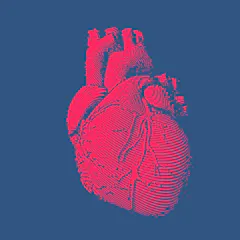
A bioengineer collaborates with artists, clinicians and patients to come up with an art exhibition with heart.
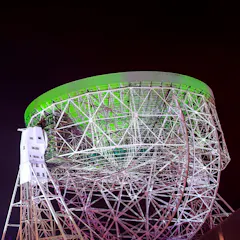
Science and art meet on the ‘big screen’ – turning data into visuals at the Lovell Telescope, Jodrell Bank.
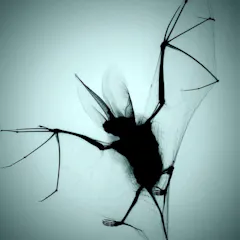
Widening our view of the world can mean taking a much closer look at the familiar. And technology from MRI to Scanning Electron Microscopes, which use focused beams to interact with a sample’s surface…
Top contributors
-

Professor and Director Neuroscience Program, Northern Kentucky University
-
Postdoctoral Researcher, Massachusetts Institute of Technology (MIT)
-
Microscopy and Histology Core Facility Manager, University of Aberdeen
-
Senior Lecturer in Biostatistics, University of Bristol
-
Junior Research Fellow, Imperial College London
-
Associate Professor of Neural and Behavioral Sciences, Penn State
-
Distinguished Professor of Medical Illustration, Rochester Institute of Technology
-
Professor of Psychology, The University of Melbourne
-
Postdoctoral Researcher in Computational Biology, The Rockefeller University
-
Assistant Professor of Pediatrics, University of Virginia
-
Professor of Computational and Systems Biology, Associate Senior Vice Chancellor for Science Strategy and Planning, University of Pittsburgh
-
Scientific Program Leader at Gladstone Institutes, University of California, San Francisco
-
Professor of Pharmacy, National University of Singapore
-
Reader in Astrophysics, University of Manchester
-
Research Assistant Professor of Biology, University of New Mexico