

Since 2019, a number of workshops have been held in the Darwin Correctional Precinct, as part of an ongoing prison education project.
Articles on Aboriginal art
Displaying 1 - 20 of 34 articles
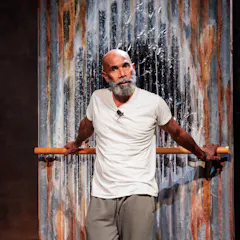
Beyond the Tracks is a multidisciplinary work combining dance, movement and song.
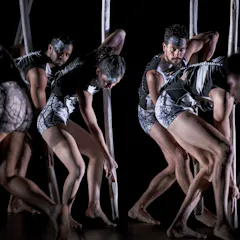
Through Sheltering, Bangarra Dance Theatre proves one of its greatest strengths is in nurturing talented new voices.
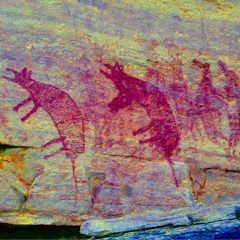
The rock art reveals the Thylacine’s deep significance to Aboriginal peoples.
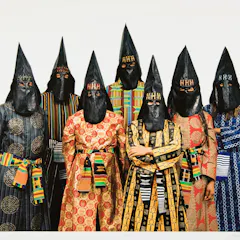
This exhibition is not driven by aesthetics alone. It is a coming together of rich individual identities voicing their history, knowledge and lived experiences.

New research details Aboriginal craftsmanship – along with accompanying wall art – at a remote site in the Cape York Peninsula.

Barak was an Aboriginal leader who witnessed the signing of the controversial 1835 Batman Treaty. He made many works during his life, but many are unaccounted for.

This new project has strong potential to be scaled up and delivered in other land and cultural heritage management contexts.
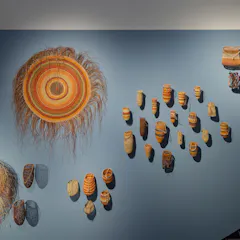
The re-opening of the Potter Museum of Art is an art event of major proportions – with the architectural clout to match.

In the 1970s, a huge concrete dome was built on Runit Island to cover some 85,000 cubic metres of radioactive waste dumped by the US. It still leaks radiation today.

Work by contemporary First Nations fashion designers advocates and showcases culture, craft, sustainability and a desire for truth-telling.
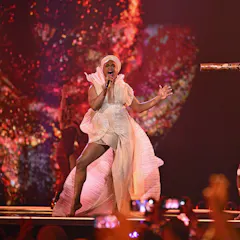
While they may have fallen short of Eurovision glory, Electric Fields still blazed a trail for First Nations representation.
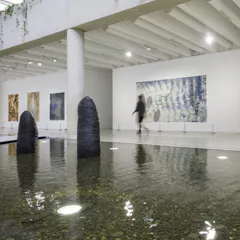
An expansive Queensland Art Gallery survey show of lyrical Indigenous artist Judy Watson, mudunama kundana wandaraba jarribirri, is both thought provoking and stunningly beautiful.

The theatre, dance and music works at this year’s festival have helped fulfil a three-pronged vision from some two decades ago.
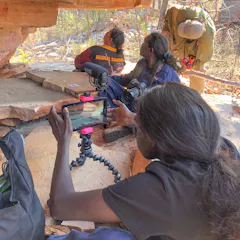
There are many programs where people can generate art using AI. However, this comes with a risk of non-Indigenous people generating Indigenous art, which negatively affects Indigenous artists.
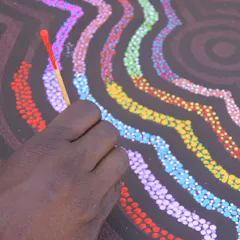
Remote art centres are central to the Indigenous contemporary art industry. They typically have a white art centre manager and other staff overseen by an Indigenous board.
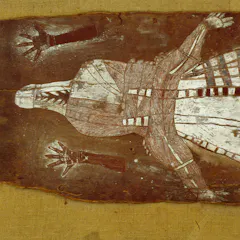
Majumbu’s work sits in the Melbourne Museum, but until now he has not been named as the artist.
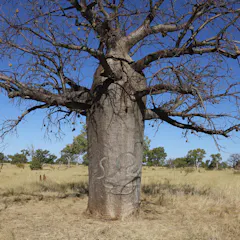
This artwork tells the incredible story of the Indigenous Traditional Owners who have long called the Tanami home.
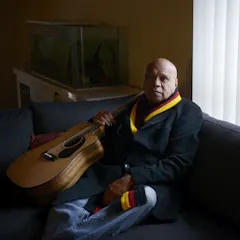
In Uncle Archie Roach, we find the most profound sense of an alternate masculinity. It is difficult to put words to this loss.
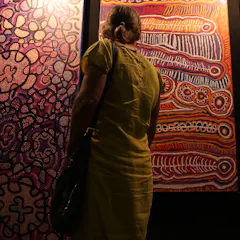
The Productivity Commission has proposed inauthentic Indigenous art should be labelled. But ‘fake art’ is only part of the problem.
Top contributors
-

Professor, College of Creative Arts, Design and Humanities, Adelaide University
-
Chair in Rock Art Research and Director of the Place, Evolution and Rock Art Heritage Unit (PERAHU), Griffith University
-
Professorial Research Fellow, Adelaide University
-
Senior Research Fellow, Centre for Social Cultural Research, Griffith University
-
Scientia Associate Professor and Co-Associate Dean Indigenous (ADA), UNSW
-
Adjunct professor, Adelaide University
-
Associate Professor Visual Communication, University of Technology Sydney
-
Adjunct Research Fellow , The University of Western Australia
-
Senior Research Officer Conservatorium of Music, University of Sydney
-
CEO, Yura Yungi Medical Service Aboriginal Corporation, Indigenous Knowledge
-
Aboriginal Lecturer and Researcher, Moondani Balluk Academic Centre, Victoria University
-
Senior Industry Affiliate, RMIT University
-
Professor Emerita of Archaeology, The University of Western Australia
-
Postdoctoral Research Fellow - Creative Arts Research Institute - Griffith University, Griffith University
-
Associate Professor (Archaeology and Centre for Rock Art Research + Management), The University of Western Australia