

Pupils who aren’t exposed to different perspectives won’t be equipped to participate in and contribute to a democratic society.
Articles on Apartheid
Displaying 221 - 240 of 500 articles
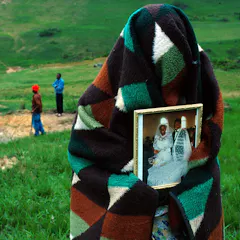
In both countries, neglect and misinformation at the highest levels of government led to undue tragedy.

It is vital that the latest move by government towards restructuring succeeds in making the industry safe, reliable and viable, contributing to the country’s economy.
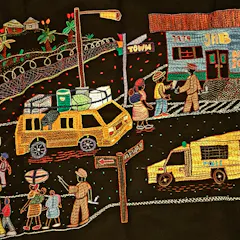
Persistent challenges of the past and the present burden women with unspoken traumas, but art such as needlework is a way to break the silence.

CC BY-NC-ND6.22 MB (download)
Reflecting on the life of George Bizos, one of South Africa's shining lights.
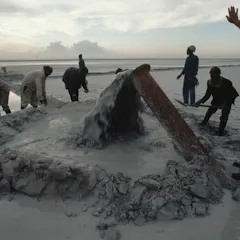
The life story of Mandlenkosi Makhoba represents the losers in the new South Africa, showing how inequality is produced and reproduced generationally.
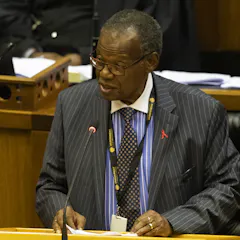
Mangosuthu Buthelezi deserves better than being dismissed as an apartheid stooge. But he deserves little praise as an advocate for human rights and civil liberties.
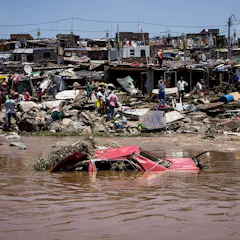
Local government and humanitarian actors are faced with tough choices of prioritising, managing and balancing resources, locations and constituencies.
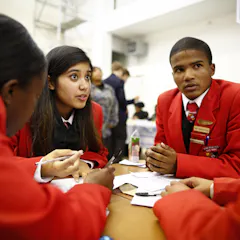
Students feel a generational responsibility to challenge racial stereotypes, a study finds.
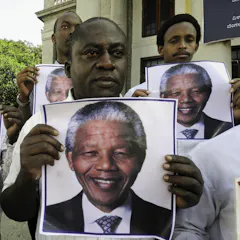
Mandela left at the right time in 1999, when the country still seemed in a healthy state, after which he consolidated his international reputation.
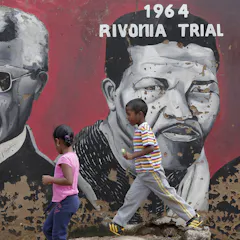
South Africa’s history shows that mobilising white privilege can be a useful tool for advancing the struggle against racism.
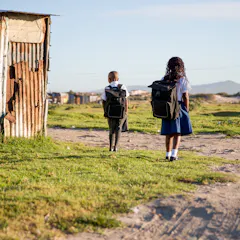
The inequalities in South Africa’s education are systematically being exposed at a scale not experienced before.
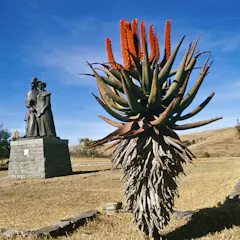
It is not hard to see the roots of 20th century apartheid policies in the legacy of the British settlers.
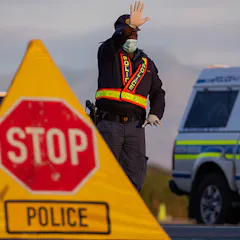
It is rare for a post-authoritarian society to get two chances to reconcile. This may be just that, for white South Africans in particular.
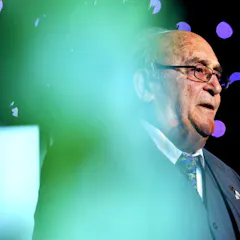
Goldberg was the youngest Rivonia triallist. Segregated prisons meant he was sent to Pretoria, while his fellow accused were incarcerated on Robben Island.
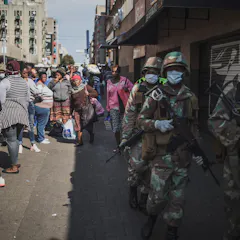
For the first time since the end of apartheid in 1994, citizens have had to accept stringent restrictions on their normal civil liberties.
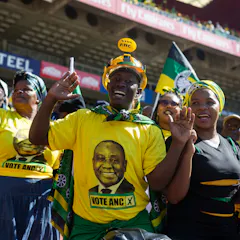
The election of Port Elizabeth’s first black mayor in 1995 signalled that the democratic change that had started in 1994 was irreversible. But problems lay ahead.
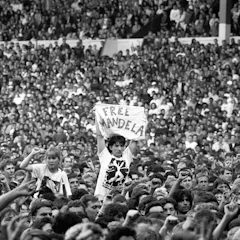
The British Anti-Apartheid Movement was founded 60 years ago. Here’s why it remains as relevant today as in its heyday.

Moe Shaik fancies himself as an analyst who can read people well. And yet, he has a rather large blind spot for his leaders – until they fall out with him.

Set in the army during apartheid, the South African film Moffie is a masterpiece. Oliver Hermanus, a black filmmaker, explores how toxic white masculinity breeds racism and homophobia.
Top contributors
-

Professor of Political Studies, University of Johannesburg
-
Associate of the Gordon Institute for Business Science, University of Pretoria
-
Extraordinary Professor, Department of Political Sciences, University of Pretoria
-
Associate Professor Sport History, Stellenbosch University
-
Professor of Sociology, University of the Witwatersrand
-
Senior Lecturer (Radical Humanities Laboratory, University College Cork), University College Cork
-
Senior Research Fellow, Centre for the Advancement of Scholarship, University of Pretoria., University of Pretoria
-
Political Scientist, University of the Western Cape
-
Distinguished Reserach Professor, Southern Centre for Inequality Studies, University of the Witwatersrand
-
Senior Research Fellow, Horn of Africa and Southern Africa, Institute of Commonwealth Studies, School of Advanced Study, University of London
-
Professor, Sociology, University of the Western Cape, Nelson Mandela University
-
Honorary Professor of International Relations, University of the Witwatersrand
-
Professor of Urban Governance, University of the Witwatersrand
-
Senior Lecturer in History, University of Dundee
-
Professor of Public Affairs, Tshwane University of Technology