

Now there’s more speculation about US President Joe Biden’s health. But a COVID diagnosis in 2024 is nothing like one back in 2020, even for someone of his age.
Articles on Antiviral drugs
Displaying 1 - 20 of 48 articles
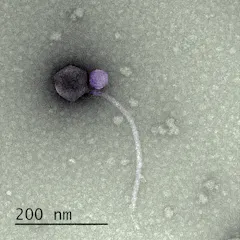
Researchers discovered a satellite virus latching onto the neck of another virus called MindFlayer. Studying the viral arms race between similar viruses could lead to new ways to fight infections.
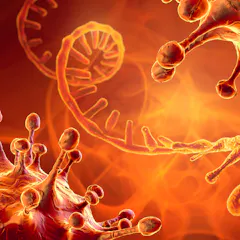
The human body has been making antivirals for eons, long before scientists did. A protein in your cells called viperin produces molecules that work similarly to the COVID-19 antiviral remdesivir.

It can be difficult to an appointment to see your GP. So when should you make the effort to see a GP for a prescription for influenza antivirals? And how effective are they?

Similar to the patterns seen with COVID-19, flu and RSV, HMPV is making a comeback after years of being repressed by people wearing masks and social distancing.
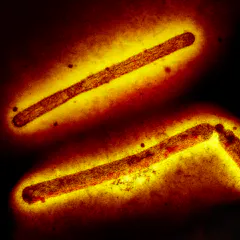
Avian influenza — commonly known as ‘bird flu’ — is infecting domestic and wild birds in Canada and around the world.

While RSV can become severe for any child, it poses a particularly serious threat for the youngest babies and for high-risk children.
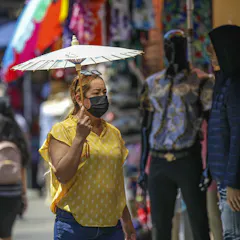
Face masks are still an effective way to help stop the spread of the BA.5 subvariant.
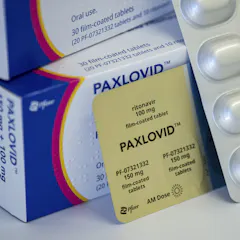
An infectious disease doctor discusses the use, benefits and availability of a drug to prevent severe COVID-19.

Earlier detection and treatment of COVID-19 by health care providers in pharmacies could help prevent surges in infection rates and severe illness.

The drug has been authorised for the use in the UK and elsewhere, but some are calling for further testing.

Substances found in algae, squid and fish all have potential antiviral properties.
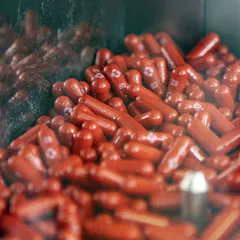
Merck announced preliminary data suggesting the drug reduced the risk of hospitalisation and death by 50%.
Molnupiravir is showing promise for treating and controlling the spread of COVID-19.
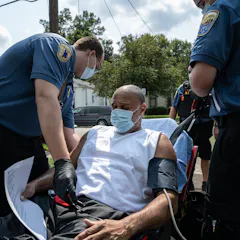
Medications to treat COVID-19 are in no way a substitute for the vaccine. But under the right circumstances, some show great promise for helping patients.
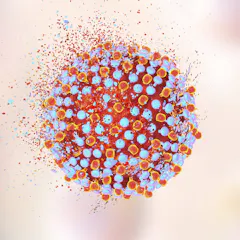
CC BY-NC-ND10.5 MB (download)
New direct-acting antiviral drugs would work successfully in countries where numerous different strains of hepatitis C are found.
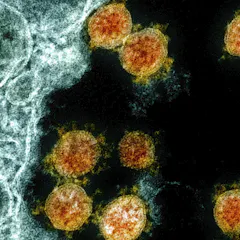
While the results are very promising, it has only been tested in mice. Human clinical trials will take some time to complete before we know whether a drug could become available.
The UK government has created an antivirus taskforce to develop new drugs against coronavirus.
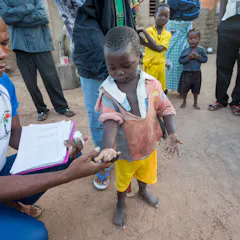
The antiparasitic drug was thought to be a potential treatment for COVID-19, but there isn’t sufficient evidence to recommend its use, despite widespread support online.
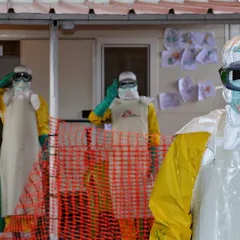
The virus is always present in nature and when circumstances allow, it may jump from one species to another.
Top contributors
-

Professor and Director of Quantitative Biosciences Institute & Senior Investigator at the Gladstone Institutes, University of California, San Francisco
-
Professor of Pharmaceutical Chemistry, Macquarie University
-
Deputy Director, WHO Collaborating Centre for Reference and Research on Influenza
-
Infectious Diseases Physician, St Vincent's Hospital, Sydney; Scientia Professor, Kirby Institute, UNSW
-
Assistant Professor of Infectious Diseases, University of Virginia
-
Virology Research Scientist, University of Washington
-
Melbourne Laureate Professor, University of Melbourne; Director, The Peter Doherty Institute for Infection and Immunity
-
Research associate, The Kirby Institute, UNSW
-
Biologiste, chargée de recherche au CNRS, École normale supérieure (ENS) – PSL
-
Dean and Hunterdon Professor of Public Health & Health Equity, School of Public Health, Rutgers University
-
Honorary Professor Faculty of Health and Medical Science, Univeristy of Sydney; Senior Researcher Sydney Institue for Infectious Disease, University of Sydney., University of Sydney
-
Professor in Public Health and Epidemiology, University of Bristol
-
Deputy Director, Burnet Institute, Adjunct Professor, Monash University, Burnet Institute
-
Doctoral Student in Biochemistry, University of Washington
-
Professor in Microbiology and Molecular Biology, UNSW