

New studies show men who have had COVID-19 could face serious reproductive health issues.
Articles on Anti-vaccination
Displaying 41 - 60 of 79 articles
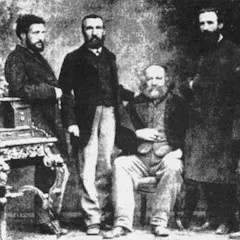
John Locke and John Stuart Mill don’t provide much in the way of justification for ignoring public health advice in a pandemic. Mikhail Bakunin, however…
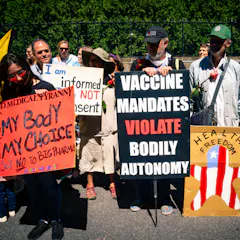
Vaccine resistance movements have always been led by white, middle-class voices and promoted by structures of racial inequality.
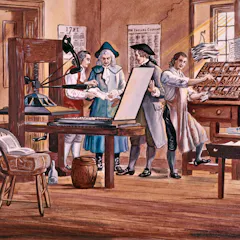
When Bostonians in 1721 faced a deadly smallpox outbreak, a new procedure called inoculation was found to help fend off the disease. Not everyone was won over, and newspapers fed the controversy.

Offering incentives to encourage good health behavior isn’t new, but it does raise concerns. A behavioral scientist explains how rewarding those taking a shot need not keep ethicists up at night.

From maternity wards to primary care, Canadian researchers are looking to find the positive motivations of vaccine hesitant people, whether they are new parents or other adults.
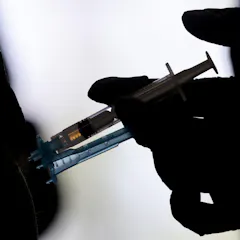
Christian nationalists are far less likely to be vaccinated than other groups, research has found. Some evangelical leaders are trying to counter vaccine misinformation.
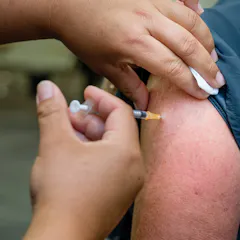
As New Zealand prepares to roll out COVID-19 vaccines to the general population, health authorities will need to reach those who remain hesitant through information sources they trust.
The anti-vaccine movement is the product of a structural problem, reflecting a lack of trust in the existing global vaccine governance.
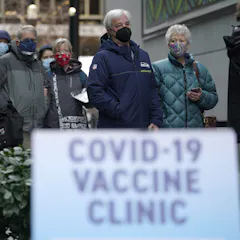
How will governments convince enough people to get vaccinated to achieve herd immunity?
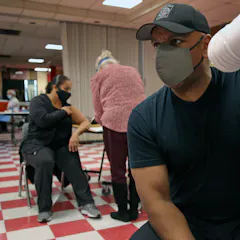
New guidelines take a broad definition of who can apply for a religious exemption to vaccinations. A lot will hinge on what constitutes ‘undue hardship’ to the employer.
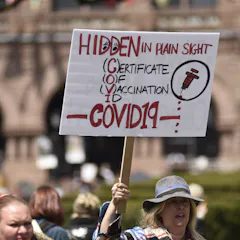
Currently, we don’t have the legal infrastructure or public forums needed to address the spread of coronavirus misinformation in Australia. A new proposal could help change that.
A ‘psychological vaccine’ has the potential to counter belief in COVID-19 conspiracies.
Memes that promote harmful conspiracies and memes that mock them are sometimes hard to distinguish.
Many people object to the added ingredients in vaccines. But pharmacists explain why those fears are unwarranted.
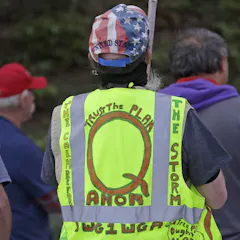
Computational methods could help identify conspiracy theories as they emerge.
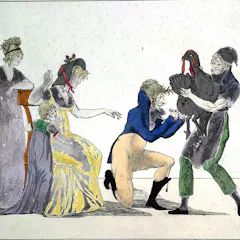
The history of anti-vaccination theories can help us understand how such claims capture a popular following. The same misinformation used against 19th century smallpox vaccine is still in use today.
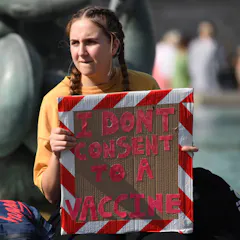
Australians who refuse vaccines spend a lot of time trying to understand vaccine choices and think they’re making evidence-based decisions.

Extremists are playing on people’s health fears to normalise their views.
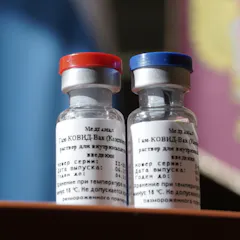
As Russia fast tracks a coronavirus vaccine, scientists worry about skipped safety checks – and the potential fallout for trust in vaccines if something ends up going wrong.
Top contributors
-

Professor, School of Social Sciences, The University of Western Australia
-
Doctoral Student, Centre for the History of Science, Medicine, and Technology, University of Oxford
-
Professor of Pharmacy, Washington State University
-
Professor, School of Public Health, University of Sydney
-
Associate Professor in Social Psychology, School of Psychology, University of Nottingham
-
Researcher and Policy Analysis in Public Health Laboratory, Ministry of Health Indonesia, Badan Kebijakan Pembangunan Kesehatan Kementerian Kesehatan
-
Postdoctoral Research Fellow in Public Health, Faculty of Health, University of Technology Sydney
-
NHMRC Research Fellow, University of Technology Sydney
-
Assistant Professor, Translation Studies, University of Oslo
-
Postdoctoral fellow, McGill University
-
Reader (Associate Professor) in Sociology, City St George's, University of London
-
Canada Research Chair in Health Law and Policy; Professor, Faculty of Law and School of Public Health; and Research Director, Health Law Institute, University of Alberta
-
Chair of Cognitive Psychology, University of Bristol
-
Professor of Paediatrics and vaccinologist, Royal Childrens Hospital, University of Melbourne and Murdoch Childrens Research Institute (MCRI); Associate Dean International, University of Melbourne, Murdoch Children's Research Institute
-
Research Fellow, Centre for Research on Evaluation, Science and Technology (CREST), Stellenbosch University