

Japanese macaques are smart social animals. We expect that Punch will be able to learn how to find a place in his monkey group.
Articles on Animals in captivity
Displaying 1 - 20 of 26 articles
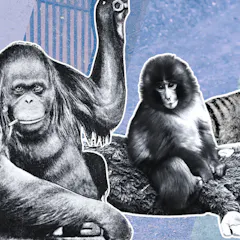
From the last thylacine to Mollie the drinking, smoking orangutan, little Punch the monkey is the latest in a long line of lonely zoo animals.

Whether capturing them on film, containing them in amusement parks, or subjecting them to scientific experiments, our curiosity about whales and dolphins has compelled us to capture them out of the ocean.
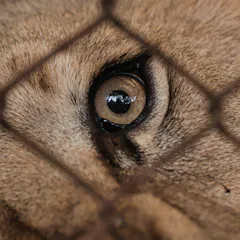
The incident should prompt a rethink of our approach to wild animals in captivity, and whether it’s right – or safe – to keep them there at all.
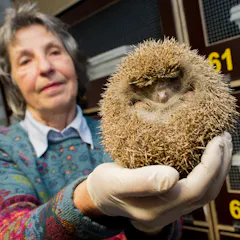
Hedgehogs that are out at night and appear healthy are best left alone.

I’ve studied stress in marsupials. Here’s why banning koala cuddles is a good idea – backed by the scientific evidence on koala handling and stress.
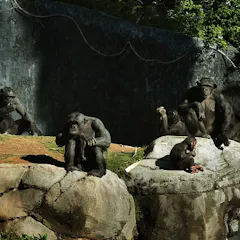
Zoo-based research can teach us about the needs of animals in our care.
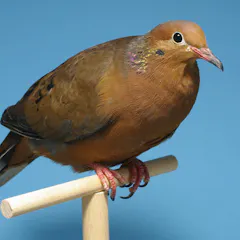
Surviving solely in zoos and botanic gardens are 33 animal and 39 plant species.
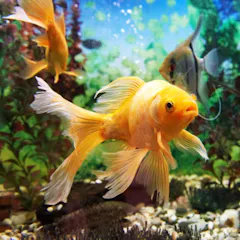
Why an exploding aquarium in Berlin should destroy prevailing myths about the inner lives of fish.
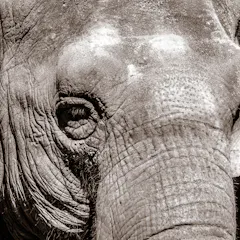
Courts already grapple with the consequences of AI sentience but ignore the same for animals.
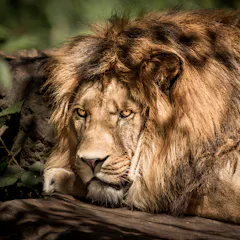
A growing body of research shows that COVID-19 protocols should be extended to areas in which there is a human-animal interface such as zoos, wildlife sanctuaries and game farms.
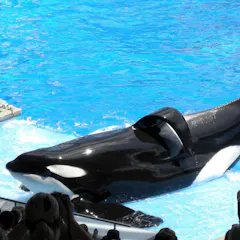
Blackfish struck an emotional chord over the plight of a traumatised performing whale, prompting real change.
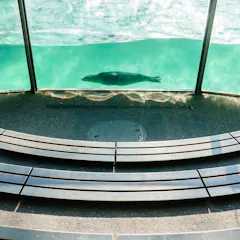
One aquarium in Japan has asked the public to make video calls to captive garden eels so they don’t forget about human visitors.

Some recent bad behaviour has been explained as being alpha but the scientist who coined the phrase discredits that theory. Instead, Prof. Sosteric suggests alphas are raised on toxic socialization.
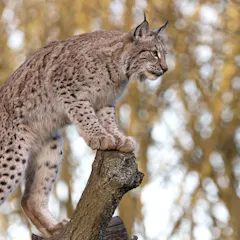
Ceredigion County Council in Wales claims it had no choice. What do the experts say?
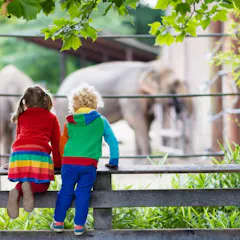
Zoos have come along way from their menagerie past. But society is increasingly demanding they become agents of conservation rather than entertainment.
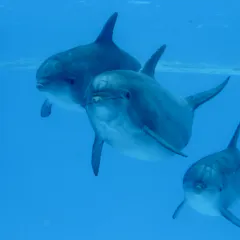
A new study of captive dolphins has found that those engaging in synchronised swimming make more optimistic judgements about an unknown event.

Some animals bred in captivity often lack the skills needed to survive in the wild. But the Tasmanian devil is showing it’s a natural born killer.
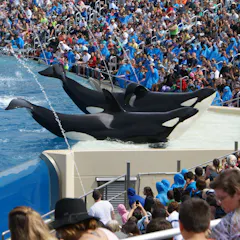
The history of displaying exotic animals seems to be one of evolving public expectations about what constitutes acceptable conditions. Is it a case of the more things change, the more they stay the same?
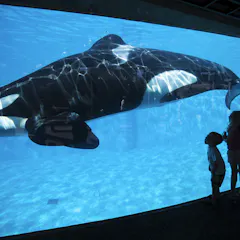
No one wants animals to suffer, but it is notoriously difficult to measure their welfare.
Top contributors
-

Professor of Wildlife Conservation, University of Salford
-
Regional Director of TRAFFIC East/Southern Africa and Honorary Research Fellow, University of the Witwatersrand
-
Professor of Zoo Animal Welfare & Legislation, Nottingham Trent University
-
Professor, Applied Evolutionary Ecology, Laurentian University
-
Professor of Wildlife Conservation and Director of the Wildlife Conservation Research Unit, University of Oxford
-
Kaplan Senior Research Fellow at Lady Margaret Hall, University of Oxford
-
Director of the Office of Undergraduate Research, University of Wisconsin-Milwaukee
-
Senior Lecturer in Wildlife, University of Salford
-
Lecturer In Large Wildlife Ecology, Rhodes University
-
University of York
-
Freelance academic and researcher in wildlife trade, University of the Witwatersrand
-
PhD student in Dolphin Behaviour and Welfare, Université Sorbonne Paris Nord
-
Research Fellow, The University of Melbourne
-
Professor Evolution & Ecology, UNSW
-
Director Wildlife Conservation and Science, Zoos Victoria, The University of Melbourne