

Pets, like guinea pigs, lead very different lives to humans – and that’s why they need very different eyes, too.
Articles on Anatomy
Displaying 121 - 140 of 152 articles

The short answer is we have evolved to have nails because they help us pick things up (like food) and pick things off (like bugs).
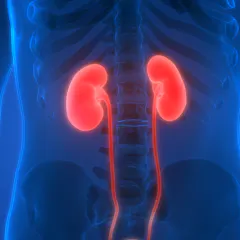
When my kidneys stopped working properly, my dad gave me one of his kidneys. Thanks, Dad.
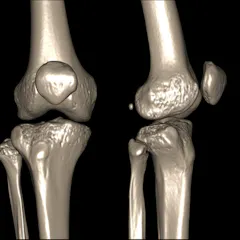
Clicking joints tend to run in families. Here’s what causes it.
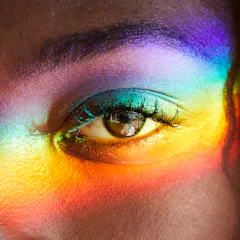
What colours we see depends not just on how things are in the world around us, but also on what happens in our eyes and our brains.

Pins and needles are a warning to tell us to move our limbs about, because long-term nerve entrapment can cause permanent damage.

Every human carries an instruction booklet with a very special code, called DNA. Our eyes cannot read the code, but our bodies can. The code tells our body what to do and how to look.

We don’t control our heart – it’s an involuntary muscle – but special pacemaker cells help keep it ticking away.
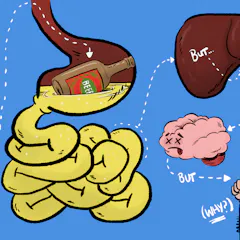
What is it that makes us feel drunk when we drink? And why do we keep drinking if it can make us feel so terrible?
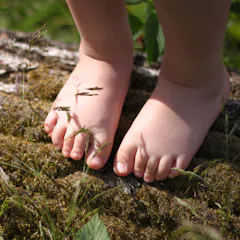
Many children in New Zealand grow up barefoot. Should all children follow this model?

Flying plays havoc with people’s ears. But it’s a lot worse if your cabin suddenly loses pressure.

The loud noise might be a warning that there is something falling nearby, or flying towards you. Our brain tells our eyes to quickly shut, to help protect them from any damage.

Does the heart really have cockles or heartstrings? An anatomist clears up some misconceptions…and lends credence to others.
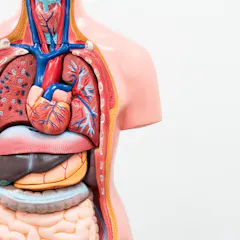
Basic anatomical knowledge can save lives.

We’ve come a long way since the dark days of grave robbing to provide bodies for dissection. Now, there are ceremonies and memorials to honour people who have donated their body to science.
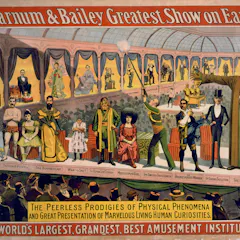
Most people don’t know if they have a hidden extra organ. But they’re surprisingly common and often harmless.

These birds spend long periods, often asleep, standing on one leg. Is it passive biomechanics or active nervous system control of their muscles that allows them to do easily what’s impossible for us?

Medical students are using virtual reality to help them learn anatomy. But is it the game changing technology some people say it is?
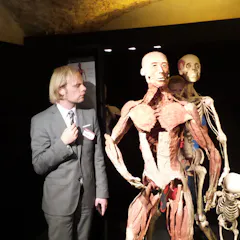
You don’t have to be a physician or anatomist to be curious about how bodies work. Exhibits of dead human specimens have been around for quite a while – capitalizing on our fascination with death.
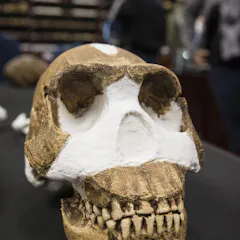
Despite claims about its age, puzzling combinations of features from Homo naledi gives it an uncanny resemblance to human beings.
Top contributors
-

Professor of Anatomy, Lancaster University
-
Professor of Anatomy, University of Bristol
-
Senior Lecturer, Anatomy and Pathology in the College of Medicine and Dentistry, James Cook University
-
Associate Professor in Anatomy, James Cook University
-
Adjunct Associate Professor, Anatomy, UNSW
-
Lecturer, Anatomy, University of Bristol
-
Senior Lecturer in Human Anatomy, School of Anatomy, University of Bristol
-
Senior Lecturer, School of Psychology and Neuroscience, University of Bristol
-
Lecturer in General Practice, University of Sydney
-
Senior Lecturer in Zoology, Bangor University
-
Lecturer in the School of Applied Sciences, Edinburgh Napier University
-
PhD Candidate (Biological Anthropology), University of the Witwatersrand
-
Lecturer/Curator, University of the Witwatersrand
-
University of Hull
-
Lecturer, School of Rural Medicine, University of New England