
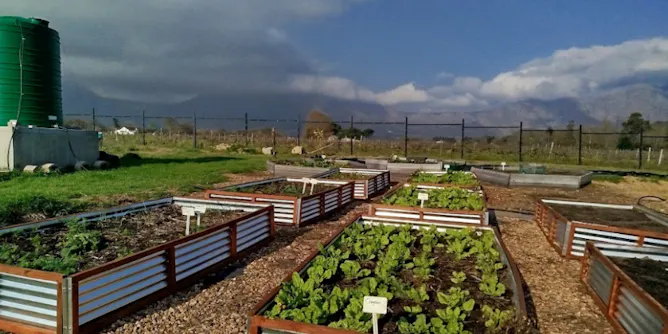
A test case in Franschhoek, South Africa has used natural filtering of polluted water to produce 50,000 litres a day that is safe for irrigation.
Articles on Ammonia
Displaying all articles
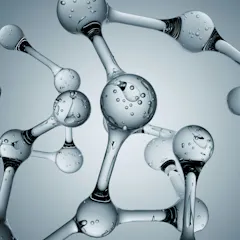
Scientific and engineering breakthroughs are allowing us to make ammonia from pollution rather than fossil fuels.
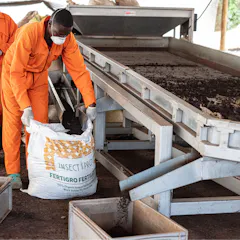
African food systems import 80% of the fertiliser they need. With Iran as a major producer, supplies are now limited and farming with less fertiliser is important.

TV adventurer Bear Grylls is famous for his survival hacks. But when it comes to rehydrating by drinking your own pee, was he right?

Several big green hydrogen projects have been shelved. An expert explains why Australia’s sky-high ambition for the industry is struggling to reach fruition.

A proposed shake-up of the global shipping industry would encourage the use of clean fuels and penalise companies that stick to cheaper, more polluting fuels.

With the right leadership, Australia can turn green hydrogen’s stumbles into a global triumph for heavy industry.
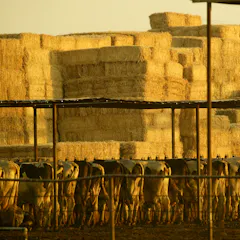
Reducing particle pollution can save thousands of lives, but states need more data to inform better controls. An atmospheric scientist explains what data and actions are needed.
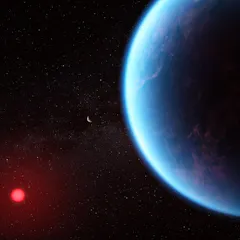
The results are intriguing, but analysing the atmospheres of exoplanets is no easy task.
There’s more to sustainability than net zero. Using green ammonia for fuel and as a way to transport hydrogen could add to nitrogen pollution that already exceeds safe planetary boundaries.
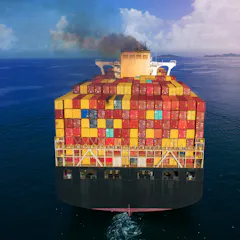
A lack of clarity over certain issues risks preventing the shipping industry’s energy transition from taking off.

A new energy deal between Canada and Germany could revitalize the Port of Churchill in Manitoba by increasing ammonia export traffic.
Any climate gains from Japan’s shift will be wiped out entirely unless Australia moves to zero-emissions ammonia production.
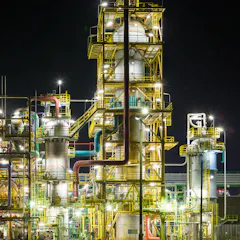
To understand the CO₂ shortage, we need to look at fertiliser production – and why it has stalled in the UK.
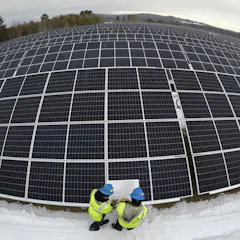
The US is generating more electricity than ever from wind and solar power – but often it’s not needed at the time it’s produced. Advanced energy storage technologies make that power available 24/7.
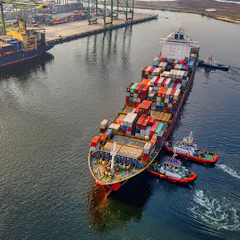
If shipping were a country, it would rank between Japan and Germany as the sixth-largest contributor to global carbon dioxide emissions.
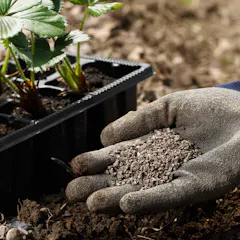
If rolled out worldwide, our method could replace a quarter of all the synthetic nitrogen fertiliser used in agriculture.
Making ammonia produces almost 2% of global carbon dioxide emissions.
Producing ammonia, which is a key ingredient in fertilizers, is one of the world’s most energy-intensive chemical manufacturing processes. Now there’s a new low energy option in development.
Top contributors
-

Assistant Professor of Physics, University of Central Florida
-
Senior Lecturer in Culture & Climate, The University of Melbourne
-
Professor of Civil and Environmental Engineering, Rice University
-
Postdoctoral Researcher in Environmental Engineering, Swedish University of Agricultural Sciences
-
Professor of Public Policy, Crawford School of Public Policy, Australian National University
-
Senior Researcher, Australian Centre for Water and Environmental Biotechnology, The University of Queensland
-
Professor of Chemistry, University of Oxford
-
Associate Professor of Medicine, Bond University
-
Senior Lecturer, School of Nursing and Midwifery, Griffith University
-
Professor of Supply Chain Management, University of Manitoba
-
PhD Candidate, Australian Centre for Water and Environmental Biotechnology, The University of Queensland
-
Senior Researcher, Swedish University of Agricultural Sciences
-
Professor of Environmental Engineering, Swedish University of Agricultural Sciences
-
Senior research fellow, Australian National University
-
Professor of Science Communication and Chemistry, University of Hull