

Today algorithms are ubiquitous, yet often misunderstood. Rather than mysterious entities, they’re closer to recipes, and the quality of the output depends on the input – in their case, data.
Articles on Algorithm
Displaying 241 - 260 of 291 articles

Methods stemming from decades of research on disordered materials are used to describe algorithmic phase transitions, and to design new algorithms in machine-learning problems.

The Supreme Court may soon hear a case on data-driven criminal sentencing. Research suggests that algorithms are not as good as we think they are at making these decisions.
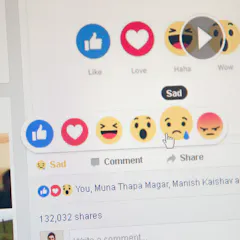
Advertisers want to know how you feel online through a process known as sentiment analysis, but it still has its limitations.

A man was recently sent to prison for six years at least in part by the recommendation of a private company’s secret proprietary software.

Crime data reflect only what crimes are identified by the police – not all the crimes that occur. So decisions based on crime data are necessarily biased and incompletely informed.

The Productivity Commission’s report on data availability and use is disappointing for consumers, who won’t be able to stop firms collecting their data or challenge automated decisions made using it.

Facebook wants to stop violent videos appearing in its feeds, but we must ensure human moderators don’t suffer.

Relying less on fossil fuels is one of the key challenges of energy transition, and taking weather variations into account can help increase the overall efficiency of a renewable-energy system.
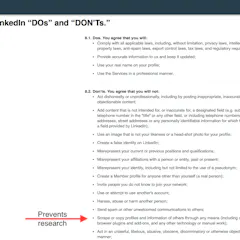
Algorithms can have enormous consequences on people’s lives, yet a federal law prevents us from studying whether they may be biased, unfair or discriminatory.
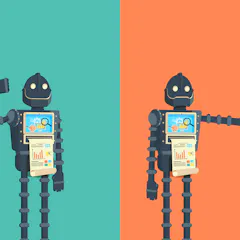
A European Union law will require human-understandable explanations for algorithms’ decisions. A team of researchers has found a way to provide that, even for complex calculations.

Data is becoming more and more important to the online advertising game. Soon, the ability to use data and algorithms will be a basic requirement in online advertising.

How do you know your search results or social media feeds aren’t being manipulated for political purposes? It’s not a crime to do so. But we believe it should be.
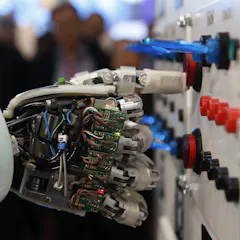
Artificial intelligence is surrounded by fear and mystery because very few understand its inner workings. But it’s actually rather intuitive and far simpler than it seems.

Despite its promises, people analytics has serious ethical implications and can adversely affect organisations and how people are treated at work.

When governments delay releasing information about disease outbreaks, algorithms come to the rescue.

Up to 50% of the people who take the efavirenz antiretroviral react particularly badly to it and need to change drug regimens.

The ethics and psychology of trust suggest ways we might learn to understand self-driving cars, but also show why doing so might be more challenging than we expect.

Politicians want to regulate the software that decides if we get a loan or a job, but existing laws can already protect us – if we know how to use them.

If the site is increasingly where people are getting their news, what could the company do without taking up the mantle of being a final arbiter of truth?
Top contributors
-

Professor of Informatics and Computer Science, Indiana University
-
Professor of Information Systems, Michigan State University
-
Professor of Data Science; Director, Adelaide Data Science Centre, Adelaide University
-
Senior Research Associate in Media and Communications, University of Sydney
-
Professor in Business Information Systems, University of Sydney
-
Senior Lecturer in Public Policy and Politics, UNSW
-
Scientia Professor of Evolution, UNSW
-
Associate Professor in Digital Media, Queensland University of Technology
-
Head of Art and Design, University of Hertfordshire
-
University of Hertfordshire
-
Professor, Real Estate, Université du Québec à Montréal (UQAM)
-
Lecturer in Computer Science/Co-founder Women Leading in AI, Keele University
-
Professor of Computer Science and Director of the Art & AI Lab, Rutgers University
-
Professor of Strategic Design, Queensland University of Technology
-
Visiting researcher, Alan Turing Institute