
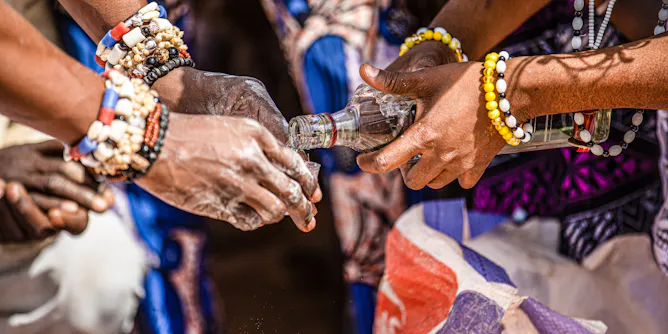
The victims in more than half of all the ritual murders reported in Ghana and Kenya were children.
Articles on Albinism
Displaying all articles
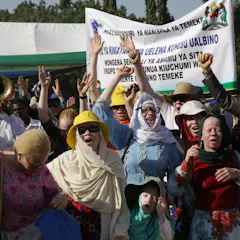
Upholding the rights of people with albinism would ensure that they are treated fairly and with respect.
The scariest thing about a black cat may be the way superstition and tradition shape people’s perceptions and prejudices about animals based solely on their color.
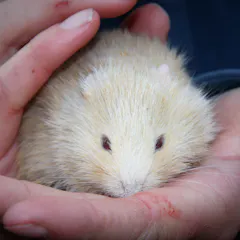
A chance discovery of an albino bush rat in Victoria’s Otway Ranges inspired a search for more fair beauties. Here’s what the survey of Aussie ecologists, museums and newspaper clippings revealed.
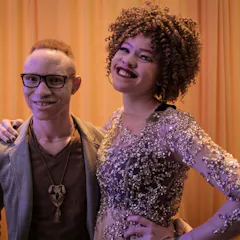
Because of their appearance, people with albinism in Tanzania are often socially excluded and frequently (and sometimes violently) discriminated against.
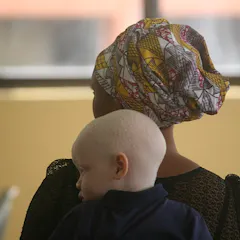
It’s important to unravel how disability is understood as a step towards improving the well-being of disabled people.
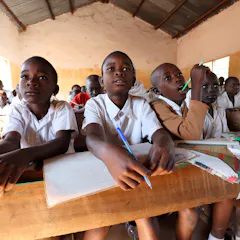
The needs of children with albinism aren’t met in the classroom and this often leads to them dropping out of school.
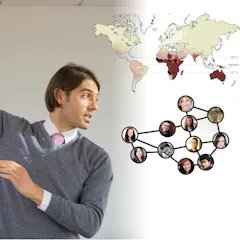
An international team of researchers is probing the links between skin diseases, including cancer, to speed the search for cures.
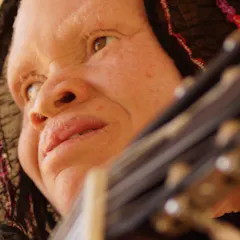
Singing, music, films and dances are crucial in promoting and protecting the human rights of Africans with albinism.
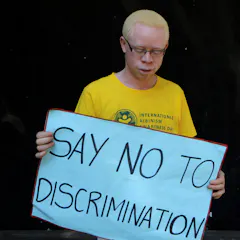
An upcoming UN meeting on witchcraft and human rights in Geneva is set to focus on the rising attacks on Albinos and the trade of body parts in sub-Saharan African.
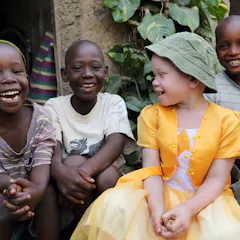
Tanzania has one of the highest rates of albinism in the world. The media in the country has an important role to play in protecting them from harm.
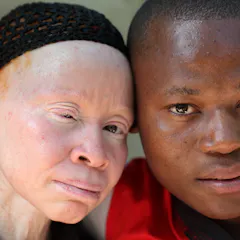
People with albinism tend to identify with the black rather than the white community. Their physical differences, though, mean they don’t fit into either race group.
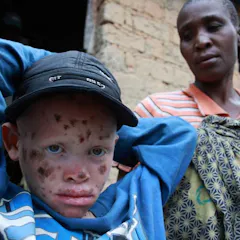
Children with albinism are teased and physically bullied by classmates who don’t understand their condition. They withdraw from learning – and many ultimately leave school early.
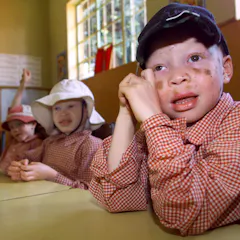
In Tanzania, where albinism is common, there’s plenty that ordinary teachers can do to support students with albinism – much of it quite simple.
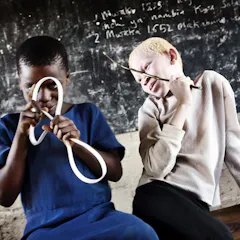
Children living with albinism are very vulnerable to attack, kidnapping, mutilation and murder. In Tanzania, fear is keeping many children away from school and costing them an education.
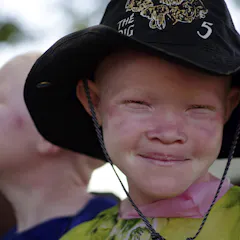
One in every 1000 people in Africa are born with albinism. Apart from facing social stigma, they also face health risks. Countries on the continent should have policies to aid this vulnerable group.

Albinism is a genetic condition that can cause problems with eyesight such as photophobia (sensitivity to light), involuntary eye movements, and skin sensitivity to the sun. But it is also life-threatening…
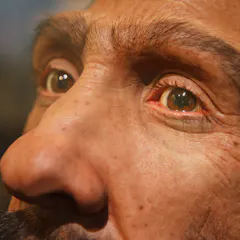
Many theories have been proposed for the evolution of dark skin pigmentation – and a new paper revives one of the oldest: that skin cancer was a more potent selective force for the evolution of protective…
Top contributors
-

Professor of French and Critical Disability Studies, Lancaster University
-
Post-Doctoral Research Fellow, SARChI in Higher Education and Human Development Research Group, University of the Free State
-
Senior Lecturer in Social Work, Australian Catholic University
-
Evan Pugh University Professor of Anthropology, Penn State
-
Assistant Professor of Systems Biology and Cancer Metabolism, University of California, Merced
-
Threatened Species Biologist, Wildlife Conservation & Science Department, Zoos Victoria, and Visiting Scholar, School of Life & Environmental Science, Deakin University
-
Researcher and Lecturer, Faculty of Psychology and Educational Sciences, Vrije Universiteit Brussel
-
Lecturer, Department of Philosophy, Ambrose Alli University
-
Living Earth Collaborative Postdoctoral Fellow, Washington University in St. Louis
-
Ph.D. Candidate in Environmental Science, Policy and Management, University of California, Berkeley
-
Doctoral Researcher and Lecturer, Aberystwyth University
-
Visiting Professor of Social Work, University of Johannesburg
-
Chief Specialist Scientist (Public Health), South African Medical Research Council