

Artificial intelligence systems have big environmental costs but are also finding ways to save energy and water, cut emissions and make businesses more efficient.
Articles on agriculture emissions
Displaying all articles
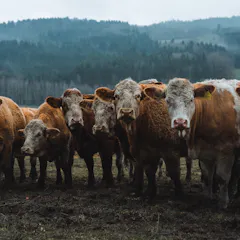
Removing so-called ‘short-lived climate pollutants’ from the atmosphere could reduce global warming – fast.

If Australia is to achieve net-zero emissions by 2050, the Coalition needs to stump up with a plan to decarbonise the entire economy.

Meat is cheaper than it should be – and alternatives are more expensive.
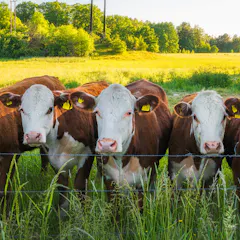
Research focused on short-term cooling risks greenwashing the industry – new study.

The outlook for potential emissions reduction is far better than in earlier assessments, thanks to the plunging costs of clean energy technologies.
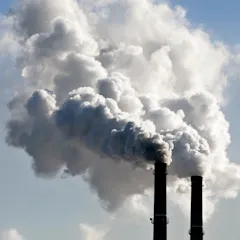
Targets for reductions in methane and other greenhouse gases should be guided by science, and set in line with the Paris deal.
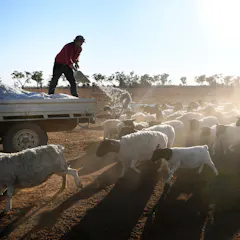
Some Nationals want agriculture carved out of any net-zero target. Cutting emissions from farms won’t be easy, but it’s essential.
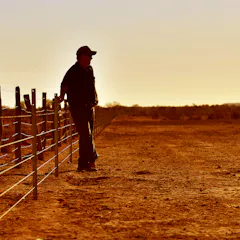
Adopting more environmentally conscious farm models would safeguard our agricultural exports, cut emissions and help protect nature.

Legumes have a superpower: they can convert nitrogen in the air into a form plants can use to grow.
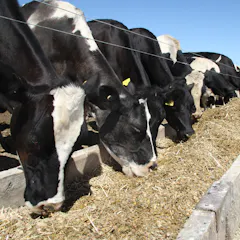
No-one says reducing emissions from the agriculture sector will be easy. But it must be done, or farmers will suffer the most.
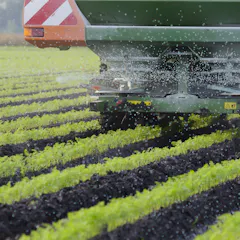
Agriculture is the dominant cause for the increasing N₂O concentrations. Emissions must be reduced if we hope to stabilise Earth’s climate.
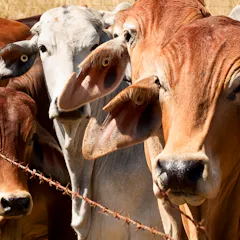
The National Farmers’ Federation has called on the Morrison government to commit to net-zero greenhouse gas emission by 2050.
In Australia, methane emissions from fossil fuels are rising due to expansion of the natural gas industry, whereas agriculture emissions are falling.
Top contributors
-

Senior Researcher, Center for International Climate and Environment Research - Oslo
-
Professor, Crawford School of Public Policy and Director, Centre for Climate and Energy Policy, Australian National University
-
Research Group Leader, CSIRO
-
Chief Research Scientist, CSIRO Environment; Executive Director, Global Carbon Project, CSIRO
-
Professor, Department of Earth System Science, and Chair of the Global Carbon Project, Stanford University
-
Associate Professor in Agri-Sustainability, University of Galway
-
Thomas Wiedmann is a Friend of The Conversation.
Professor of Sustainability Research, UNSW
-
Assistant Professor of Botany, Trinity College Dublin
-
Assistant Professor, Institute of Environmental Sciences (CML), Leiden University
-
E-Mobility Research Fellow, The University of Queensland
-
Adjunct Professor, University of New England
-
International Institute for Applied Systems Analysis (IIASA)
-
Professor & Director, Primary Industries Climate Challenges Centre, The University of Melbourne
-
PhD Candidate, Department of Industrial Ecology, Leiden University
-
Director, ANU Institute for Climate, Energy & Disaster Solutions, Australian National University