

The ideas and movement for the abolition of transatlantic slavery began largely among Africans.
Articles on Afro-Brazilians
Displaying all articles
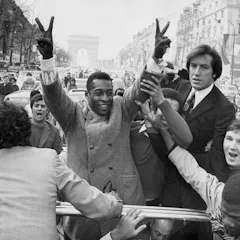
Although Brazil is formally a democracy, the practice of torture is ongoing, especially for Black Brazilians. Soccer creates an illusion of fairness is which is increasingly hard to sustain.

A race-changing scandal raises suspicion about the motivations of 4,580 newly elected city council members and mayors who only recently began to identify as Black.
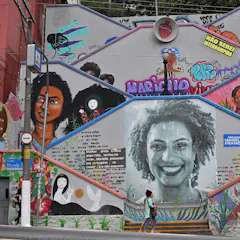
The 2018 murder of Rio city councilwoman Marielle Franco inspired record numbers of Black women to get involved in politics. Winning proved harder – but it isn’t the only point of their campaigns.

Jair Bolsonaro’s government has put forward laws that could put Indigenous land into the hands of mining, agricultural and timber businesses.
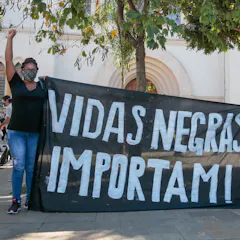
In Brazil, black COVID-19 patients are dying at higher rates than white patients. Worse housing quality, working conditions and health care help to explain the pandemic’s racially disparate toll.
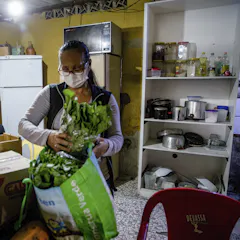
Maids were among Brazil’s earliest COVID-19 victims, infected by employers who had been to Italy. Now 39% of Brazilian ‘domésticas’ have been let go, most without severance or sick leave.

As evangelicalism spreads across Brazil, some of Rio de Janeiro’s most notorious gangs see minority religions as an affront to God. And they’re using guns to spread their gospel.

The Confederate flag debate has arrived to Brazil, pitting black activists against the Brazilian descendants of soldiers who fled the South after the Civil War.
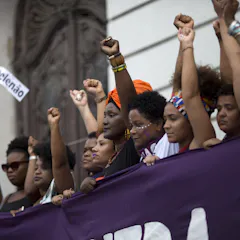
In Brazil, a record 1,237 black women will stand for office in Sunday’s general election. As in the US, their campaigns reflect deep personal concern about rising racism and sexism in politics.

As Brazil’s black women become more conspicuous and powerful, they are bullied and threatened in social media’s modern-day pillory.
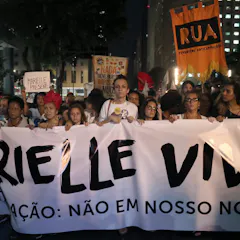
Black lives in Brazil are devalued and subject to violence on a horrific scale.
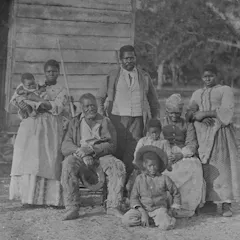
On Juneteenth, the day that commemorates the ending of slavery in the US, a historian dispels myths about the ‘peculiar institution’ of slavery.
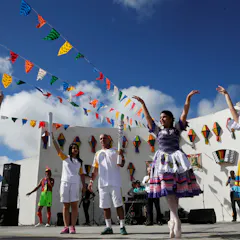
Being Brazilian in the US means navigating an identity that doesn’t neatly fit into a single check-box, and can be perceived in vastly different ways depending on what part of the country you’re in.
Lula led an unprecedented shift in the country’s foreign policy towards the global South. He also helped elevate Brazil to the status of a global player. But, six years on, disillusionment reigns.
Top contributors
-

Professor, African, African American, and Diaspora Studies, University of North Carolina at Chapel Hill
-
PhD in Sociology, University of Southampton
-
Professor of History and Michael Douglas Dean of Humanities and Fine Arts, University of California, Santa Barbara
-
Doctoral researcher, Institute of Development Studies
-
Research Associate, School of Social Sciences, University of Manchester
-
Visiting Scholar, Dartmouth College
-
Professor of Public Health and Epidemiology, Universidade Estadual de Feira de Santana (UEFS)
-
Assistant Professor of Political Science, University of Florida
-
Professor of Social Anthropology, University of Manchester
-
Associate Professor in Sociology, University of Toronto
-
Visiting Assistant Professor of Geography, Macalester College
-
Richard von Weizsäcker Fellow na Bosch Academy e Co-fundador, Instituto Igarapé; Princeton University
-
Assistant Professor, Global Development Studies, Queen's University, Ontario
-
Doutorando, Desenvolvimento Socioambiental, Universidade Federal do Pará (UFPA)
-
Associate Professor of Public Policy & Political Economy, University of Wisconsin-Milwaukee