

There’s no doubt South African universities need to undergo a real shift. But are the country’s current intellectual and academic forces up to the task?
Articles on African universities
Displaying 21 - 40 of 70 articles

Computer programming is best learned through practice, but students in developing economies don’t always have access to desktop or laptop computers. Mobile phones may be the solution.

In both the global North and South, economics tends to be taught with micro- and macroeconomic models that are disconnected from sociopolitical realities. We suggest new ways of teaching economics.

More than two decades after apartheid ended, South African universities still tend to offer a view of the country and continent that is rooted in colonial and apartheid thinking.

If researchers pose the right questions about transformation, this can lead to better answers, stronger policies and, ultimately, real change.
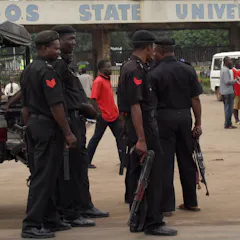
The politicisation of academia definitely contributes to a decline in academic standards. This is a situation South Africa must work hard to avoid. It can learn from others on the continent.
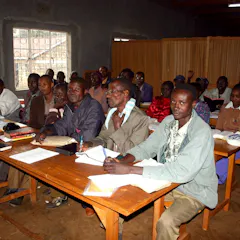
Kenya has moved to phase out part-time lecturers in a bid to improve the quality of university education.
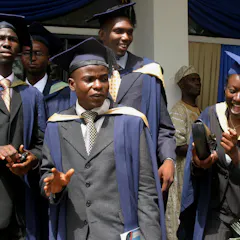
Global economic realities shouldn’t deter African universities from continuing to push for massification. But they must do so armed with knowledge, lessons from elsewhere and strong funding models.

Knowledge is power. If you own it, you can control those without it. Since so much knowledge about Africa doesn’t sit on the continent, it’s apparent that Africa lacks power in this regard.

Decolonising the curriculum is far more nuanced than replacing theorists and authors. Universities first need to define how they approach the development and dissemination of curricula.

MOOCs are an opportunity for African universities to bring the continent’s thinkers and theories to the world. They also have great benefits for full-time students to experience a flipped classroom.

Much of academic philosophy, even on the African continent, is openly and unashamedly in love with the idea of the West as destiny.

Adopting an African philosophy of education can be a powerful tool to help the continent’s universities create real social change and justice.

It is arrogant and hypocritical for ranking institutions to declare that they’re building Africa’s legacy or its global partnerships on the continent’s behalf.

Africa’s universities must avoid collaborative programmes with the North that become mere tick-box exercises that only benefit Northern researchers and organisations.

There is a risk that because of fatigue, frustration and silencing the important moment created by South Africa’s student movements will pass by with no proper, long-term structural change.

Curriculum transformation has to happen. But it has to go further than simply borrowing ideas and concepts.
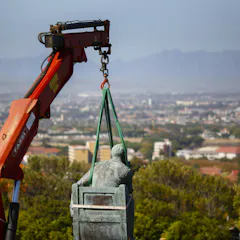
Calls for the decolonisation of countries, institutions, the mind and of knowledge are not new. In South Africa, these changes are crucial and long overdue. But they must be carefully thought through.
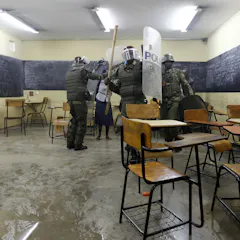
Africa’s universities supposedly became more independent after the early 1990s. But it appears they haven’t achieved much more than cosmetic autonomy from political interference.

Financial institutions in Africa are worried that universities aren’t producing graduates with relevant skills for the industry.
Top contributors
-

Professor of Higher Education, University of KwaZulu-Natal
-
Associate Professor, University of the Witwatersrand
-
Professor of Research, Foundations & Higher Education, Northern Arizona University
-
Associate Professor, School of Education, Aarhus University
-
Educator, Researcher, Mentor, Kenya Methodist University
-
Researcher, Nelson Mandela University
-
Professor, University of Cape Town
-
Rector and Vice-Chancellor, Stellenbosch University
-
South African Research Chair in Teacher Education; Director of Centre for International Teacher Education (CITE) & Professor of International Education and Development Policy (University of Sussex, UK), Cape Peninsula University of Technology
-
Professor in Cultural and Social Analysis, Western Sydney University
-
Associate Professor, School of African and Gender Studies, Anthropology and Linguistics, University of Cape Town
-
Professor of English Language Teaching and Literacy Development, Rhodes University
-
Researcher in TESOL & Literacy, University of Notre Dame Australia
-
Distinguished Professor, Stellenbosch University
-
Honorary/Visiting Fellow, Lancaster University