

Tsetse flies move between a broad range of animals. They connect wildlife, livestock and humans in complex transmission networks.
Articles on African sleeping sickness
Displaying all articles

A new study explores the genetics of chronic kidney disease across diverse African populations.
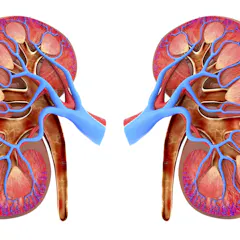
A study shows a significant genetic risk factor for kidney disease in people from Ghana and Nigeria.
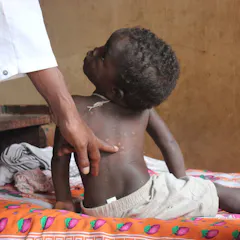
Neglected tropical diseases are often associated with social exclusion as well as physical suffering. One billion people around the world suffer from these diseases.

Our bodies are able to perceive time thanks to our internal clocks, which are also used by the other living beings with which we interact.
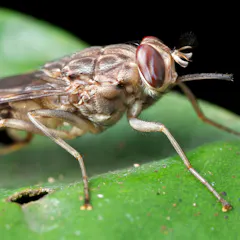
New research on what attracts blood-feasting flies to blue objects could help minimise the impacts of those insects on people and animals.
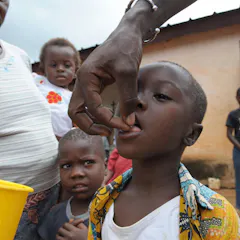
While Nigeria has made progress in controlling some neglected tropical diseases, it should do more as it carries a heavy burden of these diseases.
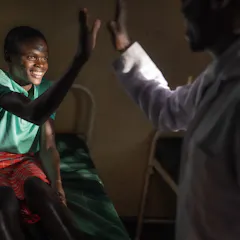
Every year, 1.7 billion people, most in the world’s poorest areas, are affected by NTDs. The diseases cause suffering, stigma, disability and sometimes death.

Progress against neglected tropical diseases is now at real risk of reversal as a result of the COVID-19 pandemic.
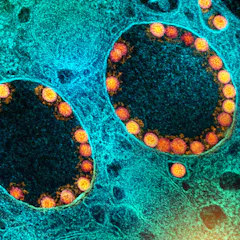
COVID-19 variants are the products of the evolution of the SARS-CoV-2 virus. They arise via mutations, but other forces also have roles to play in the generation and transmission of variants.
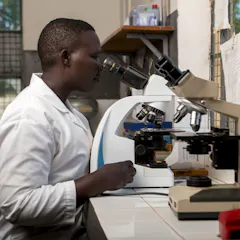
Many of these diseases cause tremendous suffering and death – yet there’s still a lack of effective tools to diagnose, treat, and prevent them.

With all the attention focussed on combating the spread of COVID-19 it’s easy to forget the other health challenges that could affect us all.
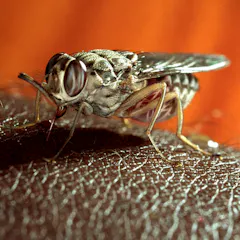
This insect’s unique reproductive biology could lead to new ways to control the species in the environment – and prevent the deadly sleeping sickness it spreads to people.

Mathematical modelling tools may predict where tsetse flies are being driven to extinction.

A new finding may shed light on how sleeping sickness has avoided elimination and could help finally beat the deadly disease.
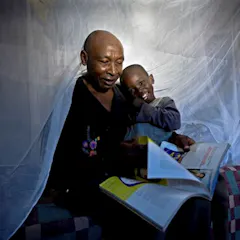
Although there have been global efforts to eliminate parasites, some parasites and vectors will have survived attack because they have evolved resistance.

Perhaps because we all need sleep, we have an enduring interest in sleep disorders such as narcolepsy, which causes a constant irrepressible need for sleep.

New research upends the previous theory that tsetse flies – and the disease they carry – were the main reason the spread of livestock domestication in Africa stalled out for a thousand years.
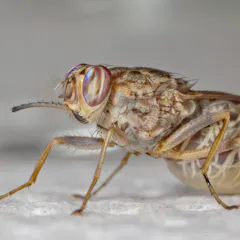
After a decade of research, an international team decoded the genes of the tsetse fly – the transmitter of trypanosomiasis, or sleeping sickness. Human trypanosomiasis is a widespread tropical disease…
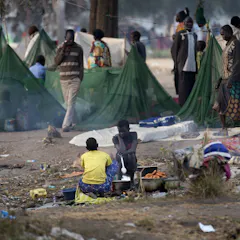
Since mid-December the nascent South Sudanese state has collapsed into inter-ethnic violence, sparked by a skirmish within the country’s Presidential Guard. At least 1,000 people have been killed and around…
Top contributors
-

Researcher, Kenya Medical Research Institute
-
Professor of Parasitology and Epidemiology, Federal University of Agriculture, Abeokuta
-
Senior Research Fellow in Global Health, University of Southampton
-
Associate Professor of Human Rights, University of Winnipeg
-
Research Associate, focus on health rights, laws and policies, Simon Fraser University
-
Graduate Teaching Assistant in Biology, University of Utah
-
Group Leader, Neglected Tropical Diseases, Wellcome Trust Sanger Institute
-
Senior Research Fellow, South African Centre for Epidemiological Modelling & Analysis (SACEMA)
-
Assistant Professor, Department of Nursing Foundations, MacEwan University
-
South African Centre for Epidemiological Modelling & Analysis (SACEMA)
-
Senior Lecturer in Parasite Epidemiology, School of Natural and Environmental Sciences, Newcastle University
-
Professor of Dermatology, University of Lome
-
Wellcome Trust Senior Research Fellow at the Institute of Biodiversity Animal Health and Comparative Medicine, University of Glasgow
-
Assistant Professor of Entomology and Nematology, University of California, Davis
-
Research Associate at the Institute of Biodiversity Animal Health and Comparative Medicine, University of Glasgow