

Low salaries are part of the reason biodiversity remains understudied in Africa.
Articles on African research
Displaying all articles

There is plenty of work to do to ensure that other species, geographical areas and ecosystems across Africa are better understood through bioacoustics.

The creation of a Research Excellence Barometer for Africa would contribute to retaining talent and expertise and ensure that Africans benefited from their own research efforts.

CC BY-NC-ND10.7 MB (download)
It is crucial to improve research training in Africa. This can help solve complex issues on the continent.
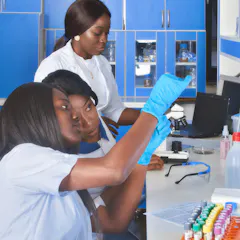
Some of the priorities were drawn from the World Health Organisation’s Roadmap; others were expressed by researchers in and from Africa as being important to the continent’s many contexts.
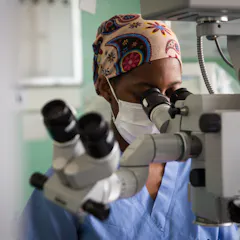
Given Africa’s projected population growth, management of its environment must be a global priority
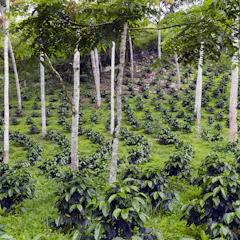
Because the interactions between trees, soils, crops and livestock can be positive or negative, their relationship must be balanced and understood.
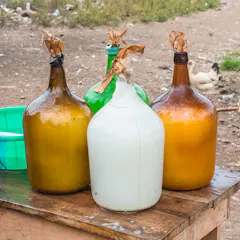
Although still hugely popular in rural areas, we found that there is little or no support from the government to develop the local brew industry because it’s viewed as unhygienic and hard to tax.
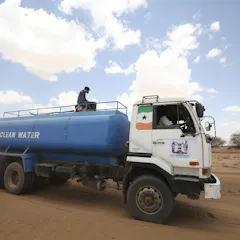
Changes in weather patterns have made life a great deal more precarious for pastoral communities.
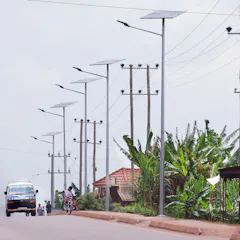
Solar lights can help local governments drastically reduce their spending on electricity bills.
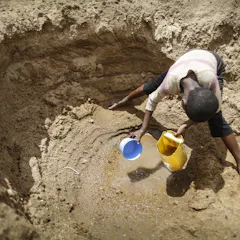
In recent years, the delay and failure of rains in Kenya has become a norm.
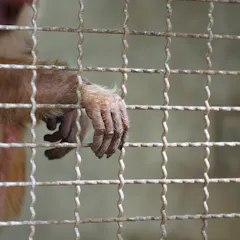
Social media offers good conditions for wildlife trafficking to thrive.
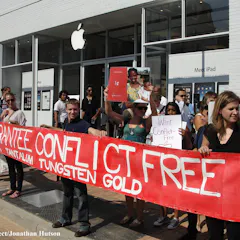
Responsible mineral sourcing programmes in the DRC have their flaws.
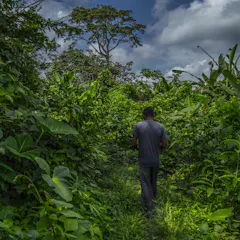
Forest communities have seen little or no change in improving livelihoods and stopping deforestation.

In Africa’s education sector, public-private partnerships have been largely limited to infrastructure developments and the provision of education.
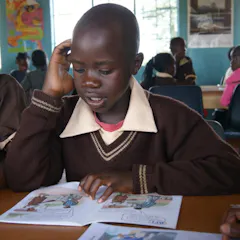
An easily accessible database that consolidates studies by researchers based in sub-Saharan Africa aims to raise its visibility and impact.

Sub-Saharan countries have unprecedented opportunities to substantially improve health outcomes within a generation, largely with their own resources.

Researchers have found a small piece of a “lost continent” buried underneath the lava on Mauritius.

Africa’s complex and seemingly insurmountable social and economic problems are a golden opportunity to demonstrate the value that research can bring. Scientists need to rise to the challenge.
Top contributors
-

CGIAR
-
Research Assistant, University of Cambridge
-
Professor, International Education and Director, Research for Equitable Access and Learning (REAL) Centre, University of Cambridge
-
Assistant Professor, Université Mohammed VI Polytechnique
-
Senior Research Fellow and Field Director, Makerere University Biological Field Station, Makerere University
-
Scientist, Center for International Forestry Research – World Agroforestry (CIFOR-ICRAF)
-
Professor, New York University
-
Professor in Global Health Infection and Immunity. and co-Director of the Global Health Academy, University of Edinburgh
-
Research scientist, Te Herenga Waka — Victoria University of Wellington
-
Programme Manager for Grand Challenges Africa, African Academy of Sciences
-
Professor of Internal Medicine, Makerere University
-
Senior Lecturer/Researcher, University of Rwanda
-
Assistant Director and Climate Change researcher, Kenya Agricultural & Livestock Research Organisation
-
Dornsife Endowed Professor of Global Health, Drexel University
-
Lecturer in Comparative and International Education, University of Bristol