

A commanding presence on the global literary stage, Ama Ata Aidoo was a powerful feminist voice with a prolific output.
Articles on African literature
Displaying 41 - 60 of 87 articles
His books bring north Africa into conversation with sub-Saharan Africa about lived queer experiences.

Born 100 years ago this year, Africa’s most legendary filmmaker - and a prolific novelist -remains relevant through his beautifully crafted political works.
Playing out in an animal kingdom, Glory is a devastating political commentary on Zimbabwe today.
Indigenous knowledge, African languages, queer rights and Afrofuturism are some of the issues discussed in the new book.

Banned 45 years ago, and its author detained, the Gikuyu language play Ngaahika Ndeenda profoundly shaped the literary legend.
Abundantly talented and flawed, apartheid-era writer Can Themba wasn’t afraid to put his body on the line for a story.
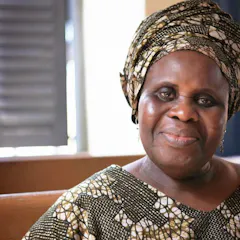
Ama Ata Aidoo recognises the differences between humans and the existence of a history in which some humans are dehumanised.
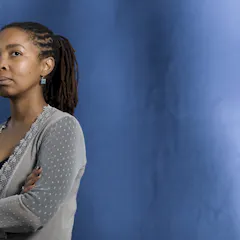
Female Fear Factory by Pumla Dineo Gqola sees gender violence as a sophisticated ecosystem kept alive by socially manufactured fear.
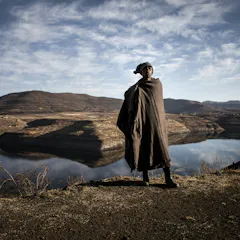
Set in the music wars of Lesotho, the new novel by the South African author tells of a wandering minstrel whose hit song leads to his downfall.
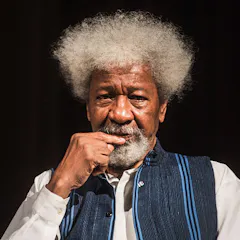
Tanzania might be in the news for producing East Africa’s first Nobel laureate for literature, but there are other compelling authors that also merit attention.
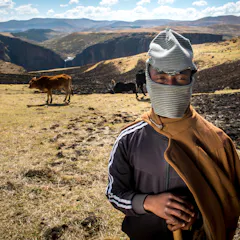
Lesotho’s famo music is known for the use of accordions - and gang violence. In Wayfarers’ Hymns, Zakes Mda explores this tradition.

He is the first writer from sub-Saharan Africa to lift the Prix Goncourt, one of the book world’s most important prizes. And his win matters.
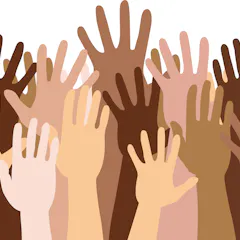
For parents, skin colour is often a difficult subject and dealing with it through storytelling can be a useful aid.
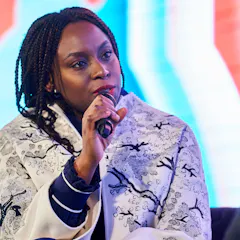
The public politics of African writers has been in the spotlight again due to the bitter disagreement between Chimamanda Ngozi Adichie and Akwaeke Emezi over transgender issues.

There is something beautiful about African languages carrying science, fictionalised of course, into imagined futures.

Undocumented for decades, black South African feminists are increasingly visible. The essays in Surfacing present 22 leading thinkers.
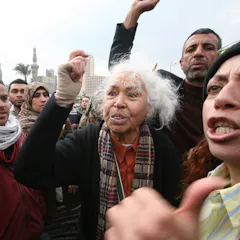
She believed that writing is an act of speaking the truth, an act of courage, that must serve the people and not those in power.
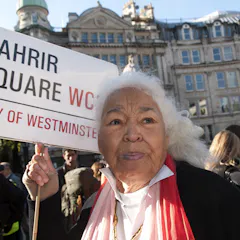
To understand her contribution to public debate, it’s important to see her in the context of the historical moment that made her work possible, necessary and provocative.
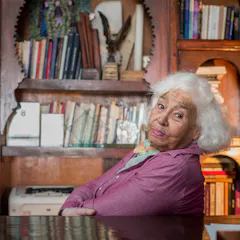
A firebrand activist for women’s rights, her novels espoused truths that made her hugely unpopular with the government.
Top contributors
-

Assistant Professor, Harvard University
-
Associate Professor, Department of Literary Studies in English, Rhodes University
-
Senior Lecturer, Stellenbosch University
-
Research Associate, University of Johannesburg
-
Associate professor, University of Johannesburg
-
Professor of Practice, Aga Khan University Graduate School of Media and Communications (GSMC)
-
Adjunct Professor, Richmond American International University
-
Lecturer in African and African Diasporan Literature, University of Lagos
-
Assistant Professor, American University of Paris (AUP)
-
Professor, Department of Literary Studies in English, Rhodes University
-
Senior research fellow, University of the Western Cape
-
Lecturer, School of Languages and Literatures, University of Cape Town
-
Assistant Professor of World Anglophone Literature, Johns Hopkins University
-
Lecturer in English, City St George's, University of London
-
Associate Professor, University of Cape Town