

A new book explores the country’s history, from world famous rock art to colonial genocide and the struggle for freedom.
Articles on African independence
Displaying all articles
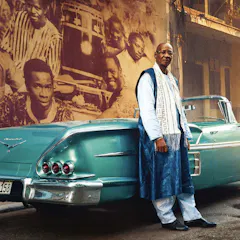
One of ten young Malian musicians chosen to study in Cuba, he would pioneer his own brand of African salsa.

Few Basotho remain who witnessed colonial life. Even fewer went on to build institutions that shaped independent governance and education.
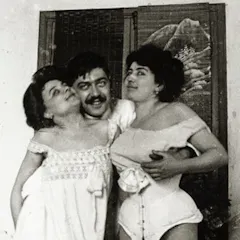
French authorities allowed sex work because they believed brothels could help prevent interracial relationships from developing.
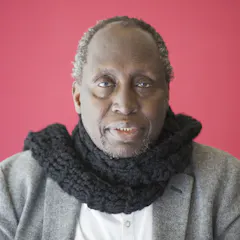
From the late 1950s a new generation of African writers challenged colonial systems and used their work to imagine a new world.
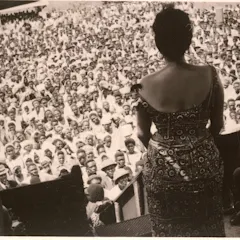
Andreé Blouin was erased from history despite her pivotal role in African independence. Today she has a book prize named after her.

A Cold War coup, an Indigenous residential school, #MeToo trials and war in Ukraine and Palestine: a guide to the Oscars 2025 documentary nominees.
Fanon’s famous book was translated to isiZulu by South African writer and scholar Makhosazana Xaba.
Guinness adverts show how African men’s search for validation can enrich western corporations.
African states won new power when they demanded New Zealand withdraw because of their rugby tour of apartheid South Africa.
With a dramatic political history, radio is today the number one source of news in Africa.

At independence, adults were reading decolonial classics - but children were reading Enid Blyton. A generation of unsung women writers changed that.

In the Copperbelt the category of ‘expatriate’ recreated a dual wage structure that still persists.
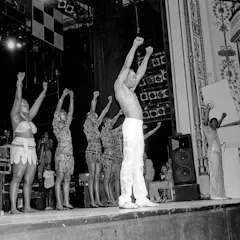
Nigerian popular music - Afrobeats - is storming the world’s stages. But it’s just the latest stage in a vibrant century of recorded music in the country.
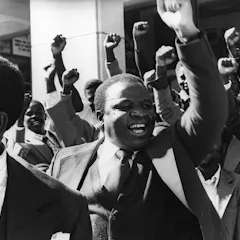
Despite being almost erased from history, Sithole’s ideas are still relevant today.
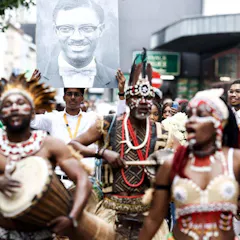
All that remains of the political icon is a tooth, but it represents much more than just a human trophy.
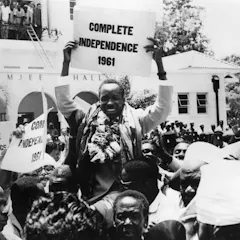
Over two millennia, Swahili has built bridges among people across Africa and into the diaspora.
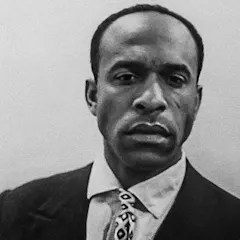
Fanon was brutally honest in his criticism of militants and Africa’s post-independence elites.
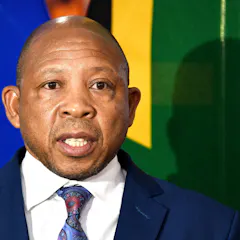
The fundamental structure of the current constitution, which is cast in classical Westminster conceptions, is unsuited for modern-day constitutionalism.
Top contributors
-

Assistant Professor, Harvard University
-
Lecturer in Music, University of Nigeria
-
Senior Research Fellow, Institute for Humanities in Africa, University of Cape Town
-
Professor of Interdisciplinary Studies, Emerson College
-
Professor, Harvard University
-
Senior lecturer in Philosophy and Media Studies, University of Nairobi
-
Associate professor, University of the Western Cape
-
Professeur ordinaire à l’université de Lausanne (Unil), chercheur au Centre d’histoire internationale et d’études politiques de la mondialisation (Unil), co-directeur du Groupe de recherche Achac., Université de Lausanne
-
Head of Department, Public and Environmental Law Department, University of Limpopo
-
Post-Doctoral Research Associate in History, University of Edinburgh
-
Ohio University
-
Associate Professor in Language and Communication Studies, University of Media, Arts and Communication, Ghana Institute of Journalism
-
Researcher, Leiden University
-
Associate Professor of History, Indiana University
-
Senior Lecturer in Media and Communication, University of Mauritius