
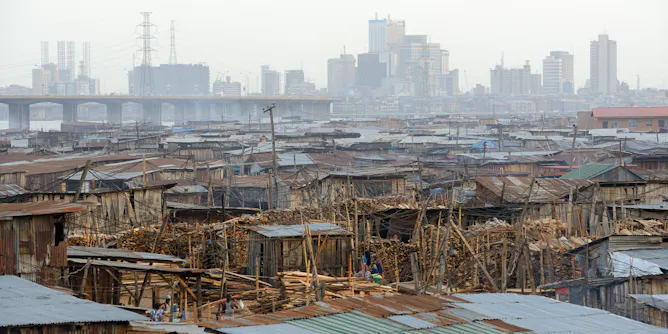
If we learn from COVID-19, there are three key areas to tackle to make cities safer from outbreaks of future infectious diseases.
Articles on African cities
Displaying 41 - 54 of 54 articles
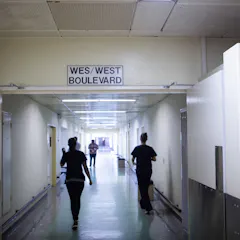
The study of two hospitals was a first for researching the microbiology of the built environment in South Africa – a multi-disciplinary approach to understanding how to design healthier buildings.
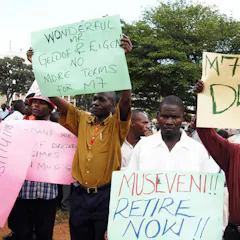
Trouble in Africa’s cities is due to the fact that electoral competition drives leaders to be biased towards rural areas.
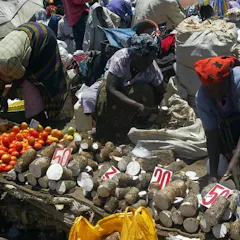
Safe rural migration programmes are not a substitute for formal social protection. But they could buy governments some time.
CC BY-NC-ND3.8 MB (download)
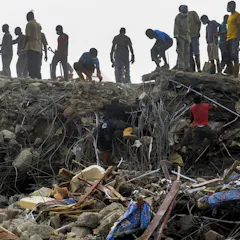
The more people come to a city, the bigger demand for buildings. These buildings need to be safe.
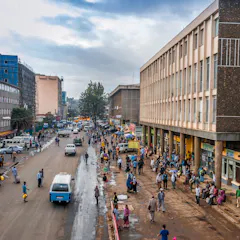
Development should not be pursued at the expense of the very people who helped to create value and meaning in the city.

The more people come to a city, the more demand for buildings is amplified.This demand creates pressure from which a range of agencies, motivations and causes arise.
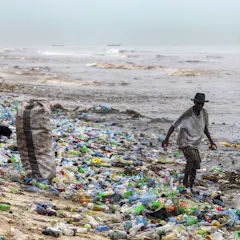
Focusing on everyday politics can help explain why powerful interest groups undermine policies that might improve the public good.
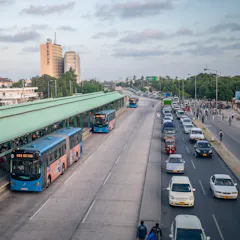
Bus Rapid Transit has powerful supporters around the world – but shouldn’t public transport be designed in the public interest?
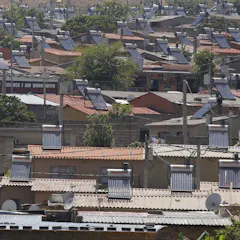
The value of green technologies and systems is that they are largely decentralised or semi-decentralised.

Urban consumers in Africa are rapidly growing and they are demanding high quality, pesticide free food.
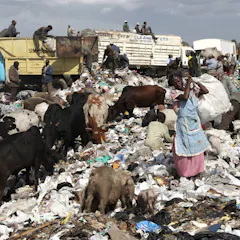
Africa’s cities are melting pots of activity and interaction. There are fears that the continent’s next major modern disease crisis will emerge from them.

Involving the public in data collection - through crowd sourcing - to produce critical public services such as maps and transit apps helps build new conversations on how the system can be improved.
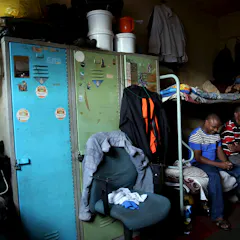
Architects and those working on the built environment can learn valuable lessons about their discipline – how it’s taught, and how it’s carried out – from the 2015 student protests.
Top contributors
-

Research associate at African Centre for Cities, University of Cape Town
-
Senior Research Associate, University of Oxford
-
Professor of Architecture and SARChI: DST/NRF/SACN Research Chair in Spatial Transformation (Positive Change in the Built Environment), Tshwane University of Technology
-
Associate Professor of Urban Planning, The University of Melbourne
-
Senior Lecturer, Department of Planning, Kwame Nkrumah University of Science and Technology (KNUST)
-
Senior Lecturer, Department of Planning, Kwame Nkrumah University of Science and Technology (KNUST)
-
Associate Professor, Allan Gray Centre for Values-Based Leadership, GSB, UCT; Executive Head,Centre for Analytics and Behavioural Change, University of Cape Town
-
Lecturer and Researcher at the African Centre for Cities, University of Cape Town
-
Academic Fellow & Lecturer in Architecture and Cultural Heritage, Nottingham Trent University
-
Researcher, Gauteng City-Region Observatory
-
Lecturer at the National School of Architecture and Urbanism, Université de Carthage
-
Visiting senior lecturer, University of the Witwatersrand
-
Senior lecturer in Sustainable and Climate Responsive Architecture, University of Pretoria
-
Associate professor, UCL
-
Professor of Atmospheric Chemistry and Air Quality, UCL