
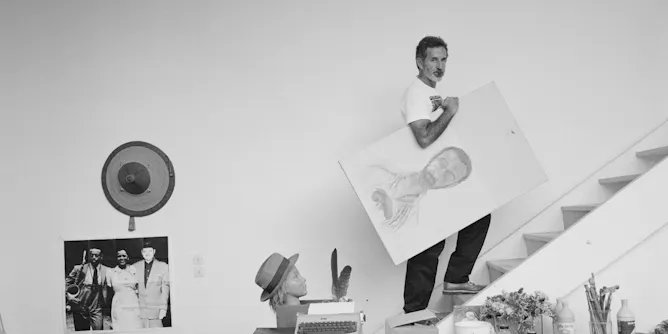
The celebrated South African writer and poet Breyten Breytenbach has died at 85. He used his art to fight for justice for marginalised people throughout his life.
Articles on African books
Displaying 41 - 59 of 59 articles
Nthikeng Mohlele is a unique voice in South African literature. Revolutionaries’ House is his most political work so far, but far from his best.

A new generation has been disrupting traditional publishing using new technologies and marketing methods.

A Colonial Boy is a welcome book for Eppel scholars, but some readers may be put off by its use of literary sketches.
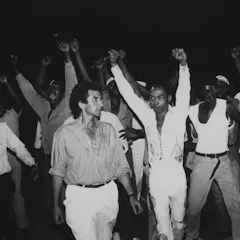
Stein’s memoir Moving Music is as colourful and compelling as the famous artists he toured with.
Fanon’s famous book was translated to isiZulu by South African writer and scholar Makhosazana Xaba.
The award-winning South African playwright has written a masterful short story about a woman having to play a challenging theatre role.
After a messy break-up, Mangi loses his job and finds himself destitute in downtown Johannesburg. That’s where his transformation begins.
Repatriation of looted African art is no longer a marginalised topic, but reaps few rewards.

Kenya’s first post-independence president used his writings to present himself as a leader of an exceptional sort.
The Long Shadow of German Colonialism tells of a brutal history, and how this past lives on today.

Women were banned from playing football in many countries, but that’s just one of many barriers they have overcome.
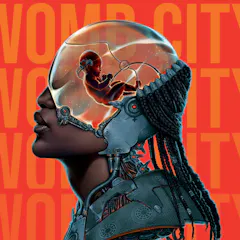
Tlotlo Tsamaase’s first novel adds to an exciting and growing body of African science fiction.
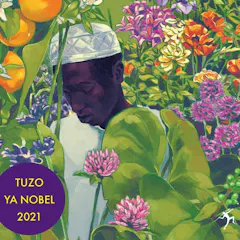
Swahili readers who have not encountered Abdulrazak Gurnah’s work in other languages are in for a great treat.
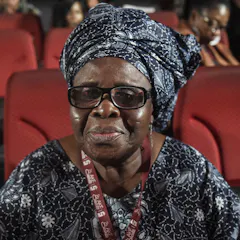
A commanding presence on the global literary stage, Ama Ata Aidoo was a powerful feminist voice with a prolific output.

Buys, the award-winning novel by Willem Anker, uses lines without credit from the Irish writer - not the first such literary controversy it has raised.
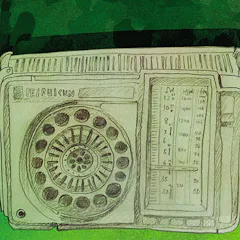
The role played by guerrilla radio in the liberation struggle will not be lost to history, thanks to books like this.
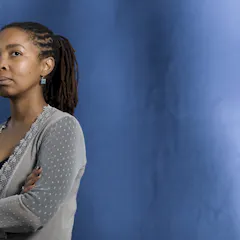
Female Fear Factory by Pumla Dineo Gqola sees gender violence as a sophisticated ecosystem kept alive by socially manufactured fear.
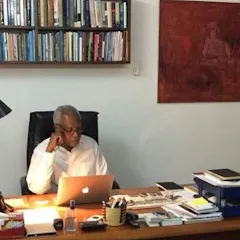
Despite a succession of different challenges, Bgoya’s approach has been consistent.
Top contributors
-

Assistant Professor, Harvard University
-
Research Associate, University of Johannesburg
-
Senior Lecturer, Stellenbosch University
-
Extraordinary Professor, Department of Political Sciences, University of Pretoria
-
Associate Professor, Department of History, University of the Witwatersrand, Johannesburg, University of the Witwatersrand
-
Associate professor, University of Johannesburg
-
Senior Lecturer in International Political Economy, University of Manchester
-
Senior Lecturer in Media Studies, University of Cape Town
-
Associate professor, University of the Free State
-
Associate Professor of English and Liberal Studies, Winston-Salem State University
-
Associate Professor of Practice, Faculty of Humanities, University of Johannesburg
-
Assistant Professor, Ethnomusicology, University of Minnesota
-
Postdoctoral Research Fellow, Department of English Literary Studies, University of Cape Town
-
Professor and Head of the Department of Afrikaans, University of Pretoria
-
Honorary Research Associate, Department of English, University of Cape Town