
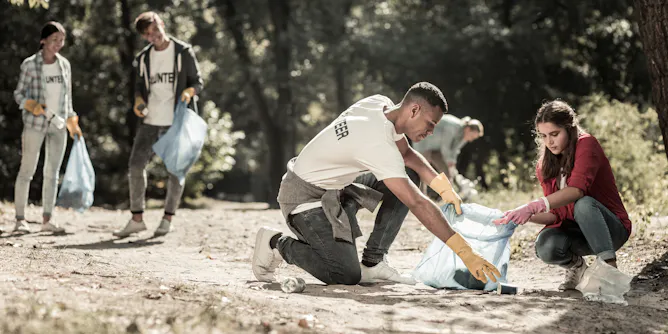
Teens get a bad rap as selfish, dangerous risk-takers. But neuroscience and psychology research is revising that image: Adolescents are primed to help those around them, with positive benefits for all.
Articles on Adolescence
Displaying 81 - 100 of 103 articles

Navigating friendships as a teen can be hard. Parents can help by modelling good behaviour and making sure their teen feels they can talk to them about their friendships.

As their kids get older, should parents should be more – not less – vigilant?

Almost a third of American adolescents have anxiety disorders. Researchers in developmental neuroscience are figuring out that how the brain matures over time may be part of the reason why.

The notion that religious groups are opposed to sex-ed is simply not true. And our youth need it more than ever to take control over their lives, their bodies and their decisions.

Psychology researchers found that daily acts of kindness were linked to increases in positive mood – especially for teens who felt depressed.

‘Emerging adulthood’ offers a contemporary view of young adults, as perceptions and definitions shift worldwide.

Young people need more protection while they’re growing up.

When it comes to neuroscience, there’s no such thing as an ‘average’ teenager.

The panic about British children reaching puberty younger is unwarranted. Medieval skeletons provide a different answer.

Adolescents have important developmental work to do. Despite what worried grownups think, taking needless risks isn’t the goal for teens. Being risky is part of exploring and learning about the world.

Instead of trying out for band or the hockey team, adolescents might do better to choose a part-time job as an extracurricular activity. Research shows it pays big dividends later in life.

Should parents be worried that many teens are putting off traditional rites of passage like working, driving and dating?
A new book on puberty has explored why we find it so difficult to talk about puberty, and why we need to start talking about it earlier.

There are four key styles to parenting high school students, and parents will likely need to move between two of them as their children grow up.

Baby boomers preferred drugs and alcohol, but the younger generation are ruining their health with social media.
Social media use is weakly associated with depressed mood in the young, but it’s not clear which way cause and effect runs.

Teenage rats that drank sugary beverages were less able than adult rats who drank the same to remember a specific location leading to an escape hatch.

Electronic baby simulators given to schoolgirls as part of a sex education program may make teenage girls more, not less, likely to become pregnant, a new Australian study has found.

Reassuring your child you love and support them unconditionally is crucial for a healthy relationship.
Top contributors
-

Senior Lecturer in Humanities, University of Southern Queensland
-
Professor of Psychology, San Diego State University
-
Scientia Professor and Professor of Educational Psychology, UNSW
-
Assistant Professor of Psychology, Wayne State University
-
Founder and Executive Director of the Center for Scholars & Storytellers and Assistant Adjunct Professor in Psychology, University of California, Los Angeles
-
Associate Professor at the Health Services Management Centre, University of Birmingham
-
Visiting Clinical Research Fellow in older people's substance use and mental health, King's College London
-
Ph.D. Student in Psychology, Yale University
-
Senior research fellow, Murdoch Children's Research Institute
-
Assistant Professor of Management/Family Business, University of Hawaii
-
Associate Professor, Principal Research Fellow, The Australian Research Centre in Sex, Health and Society, La Trobe University
-
Professor of International Development and Director, Young Lives, University of Oxford
-
Professor of Psychiatry & Psychology, University of California, Los Angeles
-
Associate Professor of Psychology, University of Oregon
-
Senior Research Fellow, Jean Hailes Research Unit, School of Public Health & Preventive Medicine, Monash University