
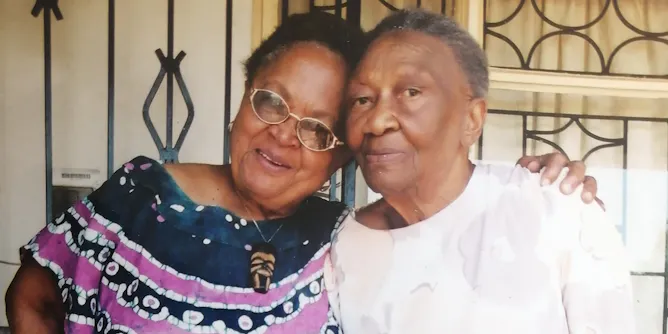
She was a trusted mentor to young militants whose 1976 uprising shaped the country forever.
Articles on Activists
Displaying all articles
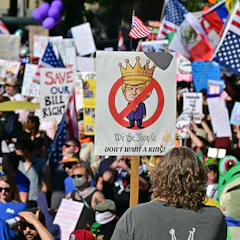
History suggests that boycotts are uniquely suited to expand public participation enough to spur political change.
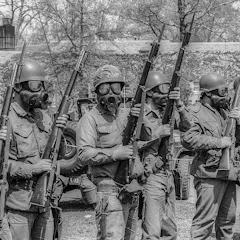
In 1970, National Guard troops killed four protesters at Kent State University. In 2026, federal agents killed two Minneapolis protesters. Public reaction to the deaths was significantly different.
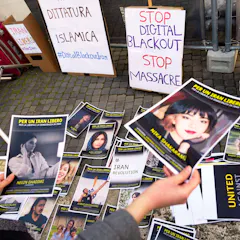
By cutting internet access during uprisings, the Iranian regime turns connectivity itself into a mechanism of control.

The country’s long-running conflict continues to impact life in many rural areas, which also face threats from illegal mining and other extractive industries.

Activists-in-exile bring with them not only their personal stories and attitudes of resilience, but also their expertise in governance, human rights and social justice.

Two legal experts explore the arrest and potential extradition of Sea Shepherd Founder and anti-whaling activist Paul Watson on a Japanese warrant from 2010.

The poems go beyond protest songs – there is skill and craft to them.
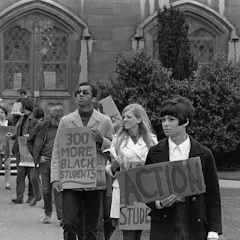
Washington isn’t a state that typically comes to mind in discussions about student-led protests from the Civil Rights Movement. A Black history professor seeks to change that with a new book.

A Catholic historian writes about nuns who protested against nuclear weapons. Even when convicted of sabotage, they used prison time to serve fellow inmates and push for justice.

In Latin America, common citizens have often donned outlandish outfits and comic book-inspired personas to lead demonstrations and promote social change.

A PR veteran explains four key takeaways from a survey of communicators and activists taken earlier this year and what they mean for today’s anti-racism protests.
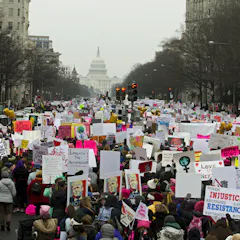
A parody of ‘the Washington Post’ announcing that Donald Trump had resigned was recently handed out in Washington, D.C.

Chhaupadi, the practice of exiling menstruating women and girls from their home, often to a cow shed, is still practised in some areas of Western Nepal.
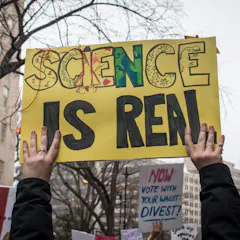
In the wake of the Flint water crisis and with a new notably anti-science president, U.S. scientists are reevaluating how to navigate the tension between speaking out and a fear of losing research funding.
Firms targeted by labor activists are more likely to be ‘shamed’ if they are large, have prominent, well-known brand images…
Top contributors
-

Adjunct Faculty for Advanced Academic Programs, Johns Hopkins University
-
Distinguished Journalist In Residence, Arthur Carter Journalism Institute, Retraction Watch
-
Assistant Professor, Mount Saint Vincent University
-
University of Southern California
-
Reader in Gender Studies, Liverpool John Moores University
-
Director, Center for Public Relations, USC Annenberg School for Communication and Journalism
-
Associate Professor of African American History, California State University, San Bernardino
-
Reader in Development Studies, Liverpool John Moores University
-
Carole Sargent is a Friend of The Conversation.
Literary Historian, Georgetown University
-
PhD candidate, Communication Studies and Media Arts, McMaster University
-
PhD candidate in English, University of Sheffield
-
Professor of Hispanic Studies, Virginia Tech
-
Associate Professor of Law, National Security College, Australian National University
-
Associate Professor, Deakin Law School, Deakin University
-
Thomas and Karole Green Professor of Law, Washington University in St. Louis