
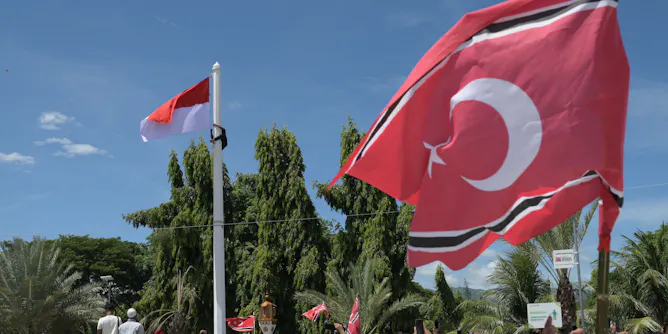
A decades-long insurgency in the Indonesian province ended after 2004’s devastating tsunami. But pro-independence talk is on the rise again.
Articles on Aceh Tsunami
Displaying all articles

While economic and security crises coincide with an uptick in terrorist activity, the opposite is true when it comes to natural disasters.
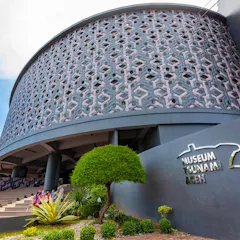
Building monuments is one way to preserve the memory of the disaster. However, many survivors feel less connected to the monuments because they do not evoke their personal memories of the tsunami.

Acehnese women have contributed to post-conflict and tsunami development. However, existing policies have not covered what they need, and even tend to discriminate against them.
Technology and globalisation help diversify the channels for the smong narrative but also risk eroding this local wisdom – if we do not try to preserve it.
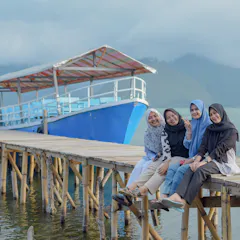
Two decades of post-disaster and conflict learning should be enough to remind us of the importance of meaningful access and participation for Acehnese women. The facts are yet to reflect this.
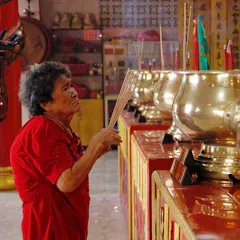
From armed conflict to the devastating 2004 tsunami, Aceh Chinese’s existence is almost forgotten despite having settled in the province for centuries.
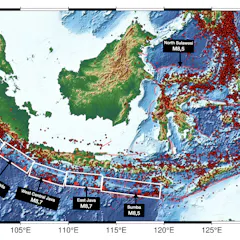
The 2004 Aceh Earthquake and Tsunami was one of the biggest natural disasters in history. This tragedy provided important lessons for improving disaster risk mitigation.
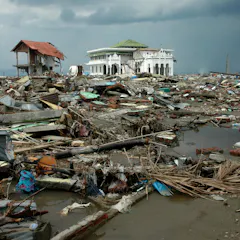
Making the word smong part of the Indonesian vocabulary does not mean removing the word tsunami. Smong should be a source of pride in how local knowledge protects us from disaster.
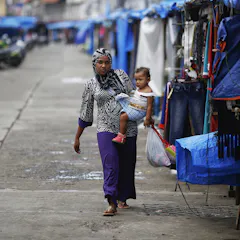
Post-tsunami the position of women in Acehnese society has in many ways changed and, arguably, worsened compared to their historically high status.
Top contributors
-

Senior Lecturer and Director of the Research Center for Social and Cultural Studies (PRISB) at Universitas Syiah Kuala, Indonesia, and a researcher at the Tsunami and Disaster Mitigation Research Center (TDMRC), Universitas Syiah Kuala
-
Dosen Program Studi Ilmu Komunikasi, Universitas Islam Indonesia (UII) Yogyakarta
-
Associate Professor, Global Geophysics Research Group, Institut Teknologi Bandung
-
PhD Candidate, Lund University
-
Peneliti di Tsunami and Disaster Mitigation Research Center (TDMRC) dan Pusat Riset Ilmu Sosial dan Budaya (PRISB) Universitas Syiah Kuala, Universitas Syiah Kuala
-
Dosen Fakultas Teknik / Kepala Pusat Riset Perubahan Iklim USK, Universitas Syiah Kuala
-
PhD Candidate in Political Science, Binghamton University, State University of New York
-
Professor of Political Science, Binghamton University, State University of New York
-
Lecturer in Family Violence, Public Law and Human Rights, La Trobe University
-
Ph.D. candidate in Political Science, University of Illinois Urbana-Champaign; Universitas Gadjah Mada
-
Adjunct associate in archaeology, Flinders University