
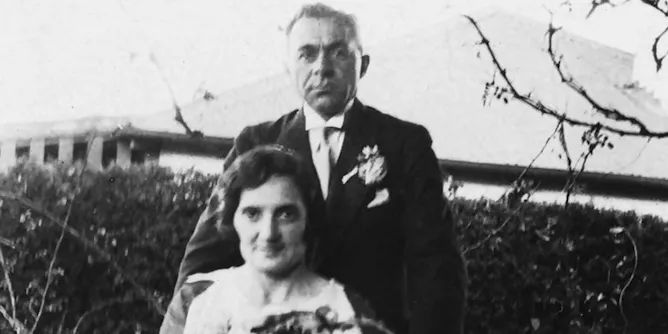
Not all early 20th century Jewish immigrants to South Africa were commercially successful.
Articles on Academic writing
Displaying all articles

ChatGPT and other AI writing tools can make researchers more productive – but quality control is essential.

Academic literacy is a mode of reasoning that aims to develop university students into deep thinkers, critical readers and writers.

It’s possible to work with restricted resources to design and implement creative initiatives to serve the particular needs of Indigenous students at university.

We ought to want student essays to reflect understanding, judgment and caring, something beyond ChatGPT.

Research about both social and technical aspects of work can guide critical thinking about when and how business leaders and MBA students might use generative AI.
What’s judged to be plagiarism may shift as students rely on more sophisticated forms of technology for writing support.

Can college professors rap their way into academic publishing? One professor makes an album to prove they can.

Grammatical metaphor is different to what we understand to be “metaphor”. It’s a way of converting words and shortening clauses, so more information can be packed into fewer characters.

An academic should be able to use “I” in an essay which offers their point of view. In this way, they take responsibility for their argument.

Academic language wasn’t always rigorous – and it led to people hugging trees to cure their illnesses.

South Africa is ahead of the pack when it comes to research output in Africa. But this ranking is not a celebration.
Scientific articles are the way in which scientists communicate their results to their peers.

Writing groups provide a space where the “rules of the game” of academia become clear.

There are many exciting new publishing opportunities opening up for academics who want to take their work beyond traditional spaces like journals.
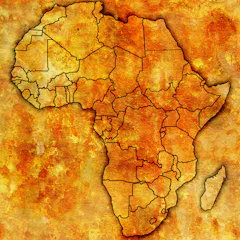
African academics should be leading the pack when it comes to producing research and information about the continent. So what’s holding them back?
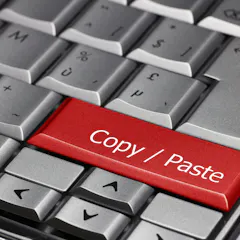
More handwritten tasks could force students to avoid the dreaded cut and paste.

With the public’s confidence in the news media wavering, it’s a tough line to toe.
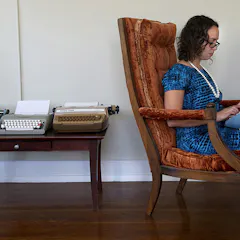
Two scholars discuss the joys of writing for a lay audience. So why aren’t more academics writing for the public?
Top contributors
-

Professor of Higher Education, Rhodes University, South Africa, Rhodes University
-
Ph.D. Candidate in Psychology, Northwestern University
-
Research Professor and Executive Director of the World Peace Foundation at The Fletcher School, Tufts University
-
Senior lecturer, Rhodes University
-
Professor of Communication, University of Washington
-
Associate Professor of Education Policy and Psychology and 21st Century Chair, University of Arkansas
-
Teaching Fellow, Royal Holloway, University of London
-
Previous Vice President of the Academy of Science of South Africa and DSI-NRF SARChI chair in Fungal Genomics, Professor in Genetics, University of Pretoria, University of Pretoria
-
Associate Professor in Education & Technology, University of KwaZulu-Natal
-
Senior Lecturer in English Curriculum and Pedagogy, University of Tasmania
-
Philosophy PhD Student, University of Guelph
-
Assistant Teaching Professor, Academic and Technical Writing Program, University of Victoria
-
PhD Student, Anthropology, University of Victoria
-
Senior Lecturer, School of Computing and Mathematics, Keele University
-
Senior Lecturer in Philosophy and Education; Curriculum Director, UQ Critical Thinking Project, The University of Queensland