
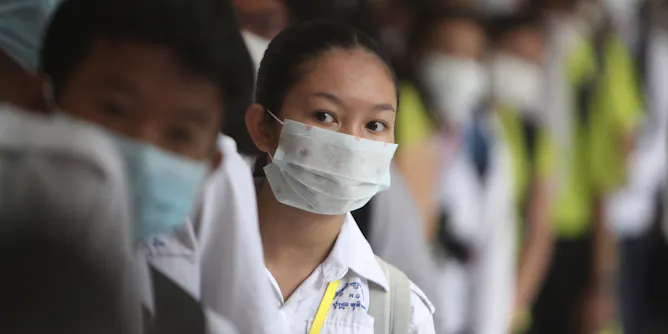
China’s coronavirus outbreak is stoking fears that it could become the next great global pandemic. As the World Health Organization declares a global emergency, it’s also fanning a pandemic of fear.
Articles on 2019-nCoV
Displaying 41 - 60 of 66 articles

Australian scientists have grown the Wuhan virus in a lab, and that will speed up the search for a vaccine. It also will help scientists understand how the virus is transmitted from person to person.
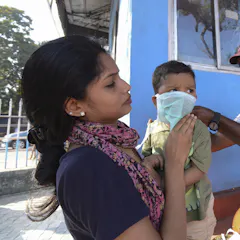
The World Health Organization declared the new coronavirus to be a public health emergency on Jan. 30, 2020. Does the action really change anything? An expert answers four questions.
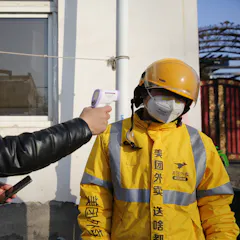
The novel coronavirus is officially a global health emergency. Other countries should not adopt China’s approach to containing the disease.

Asian students were bullied and excluded during the SARS outbreak. Here’s how we can get schools to help prevent that happening again.
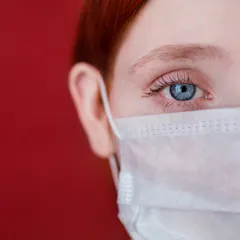
People panic-buying face masks to protect themselves from coronavirus risk running down stocks should we really need them.
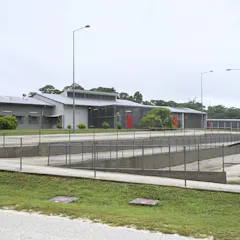
An ancient practice to prevent the spread of infectious disease looks likely to make a comeback in modern-day Australia. Here’s the rationale behind quarantining Australians returning from Wuhan.

During a crisis, communities seek to come together. But quarantined residents of Wuhan at the epicentre of the coronavirus epidemic have had to show their encouragement in a different way.

Social media has allowed researchers around the world to collaborate and co-ordinate their efforts to fight the outbreak and contain its spread.
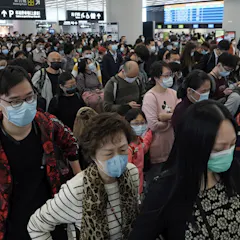
The novel coronavirus spreading outward from Wuhan, China, will get an assist from a subset of infected people who transmit it to many others.
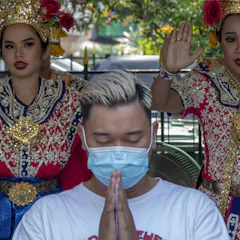
Scientists do not yet know the severity of the current coronavirus. A biologist who worked on the 2009 flu pandemic offers insights on that outbreak as well as the SARS outbreak.
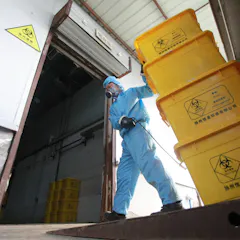
Parliament will reopen in the final month of a summer of horror for the country in general and Scott Morrison in particular.
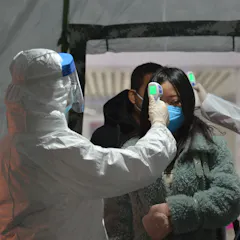
China’s strategy to contain the coronavirus just might work because of the way cities and infrastructure have been developed.
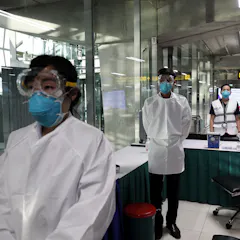
The preliminary evidence suggests the Wuhan coronavirus is less deadly than SARS. But with social media, panic can now spread more rapidly and further.
One of the dangers of the new coronavirus is that there is no treatment – and no vaccine. But researchers had already been at work on vaccines for close-related viruses.
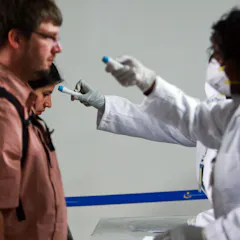
Airport public health officials have got better at screening at ports of entry especially for international arrivals.
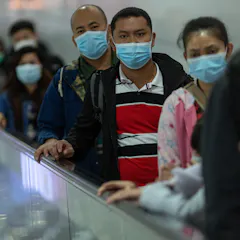
There’s no evidence you can spread the Wuhan coronavirus before showing symptoms, but one study suggests it’s possible for children and young people to be infectious without ever having symptoms.
The 1918 Spanish Flu, the 1957-1958 Asian Flu and the 2001-2002 SARS pandemic give us a frame of reference.

The World Health Organization decided that the coronavirus outbreak in China is not a public health emergency of international concern. At least, not at the moment.
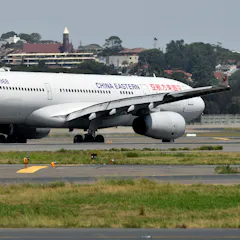
Four people in Australia have tested positive to the Wuhan coronavirus so far. So how does it spread, who is most at risk, and what is Australia doing to reduce transmission?
Top contributors
-

Professor of Public Health, University of Michigan
-
Virologist, The University of Queensland
-
Assistant Professor of History, University of Pittsburgh
-
Senior Lecturer and Coordinator, Health and Medical Humanities, University of Sydney
-
Assistant Professor of Epidemiology and Biostatistics, University of Nevada, Las Vegas
-
Professor of Infectious Diseases, Monash University
-
Adjunct Associate Professor, Faculty of Medicine
-
Professor, University of Waterloo
-
Professor of Global Biosecurity, NHMRC L3 Research Fellow, Head, Biosecurity Program, Kirby Institute, UNSW
-
Professor of Consumer Psychology, Anglia Ruskin University
-
Director of the National Institute for Health Research (NIHR) Health Protection Research Unit in Emerging and Zoonotic Infections, and Professor of Neurology, University of Liverpool
-
Professor of Biomedical Sciences and Vice President for Research, Colorado State University
-
PhD, Behavioural Neuroscience, Concordia University
-
Professor of Marketing and Product Innovation, Brock University
-
Professor of Biomedical Sciences, Colorado State University