
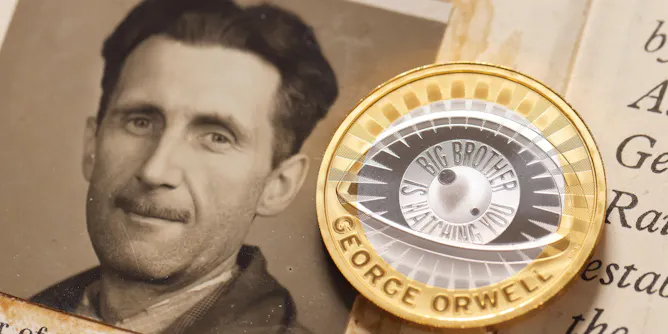
Orwell argued that you don’t have to be a scientist to think more scientifically.
Articles on 1984 (novel)
Displaying 1 - 20 of 22 articles
Donald Trump aims to rewrite America’s official history, including at one of the nation’s key sites of public history-making: the Smithsonian. George Orwell would recognize Trump’s impulse.
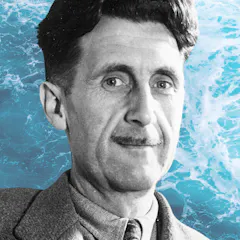
Nineteen Eighty-Four filled with references to sinking ships, drowning people and the dread of oceanic engulfment
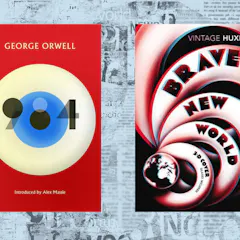
In an era when all sorts of systems of control limit our freedoms, many don’t quite fit the template that Orwell or Huxley imagined – but combine elements of both.
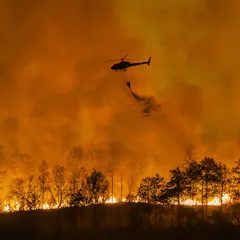
Withdrawing support for research and scrubbing climate data from US government websites has repercussions for Australia and the world. But there are ways around it.
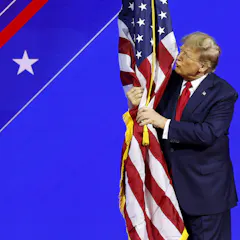
George Orwell, who wrote about war, totalitarianism, nationalism and patriotism in the 1940s, would have had a lot to say about Donald Trump’s campaign rhetoric.
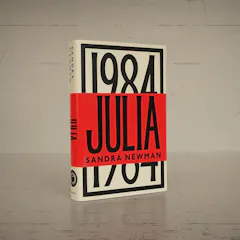
Julia offers contemporary readers new ways of thinking about Orwell’s novel.
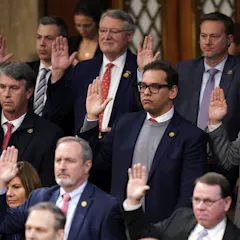
When candidates can get elected to Congress based on a mountain of lies they’ve told, is it time to reconsider whether such lies are protected by the First Amendment?
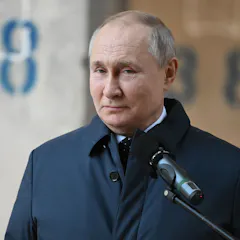
Putin often uses words to mean exactly the opposite of what they normally do – a practice diagnosed by political author George Orwell as ‘doublespeak,’ or the language of totalitarians.
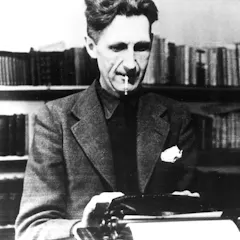
George Orwell’s “Animal Farm” was an instant success when it was first published. His writings on totalitarianism and socialism continue to be relevant today.

‘Dystopia’ is a term that’s gained popularity during the coronavirus pandemic. But it’s not a synonym for ‘a bad time,’ and a government’s poor handling of a crisis does not constitute dystopia.
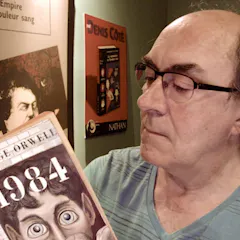
In the year 1984, there was self-congratulatory coverage that the dystopia of the novel had not been realized. However, an expert argues that the technologies described in the novel are here and watching us.
George Orwell’s dystopian classic can tell us a lot about contemporary politics and power, from Donald Trump to Facebook.
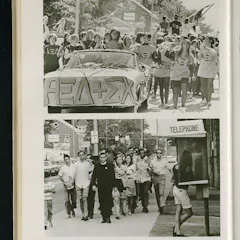
Recent blackface scandals that involve college yearbooks have overshadowed how yearbooks also chronicled important turning points in the history of US higher education, a historian argues.
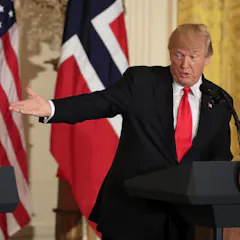
Donald Trump’s language has disturbing similarities to the words and verbal tactics used by fascists, including his cries of “fake news” and his obsessive exaggerations about his achievements.
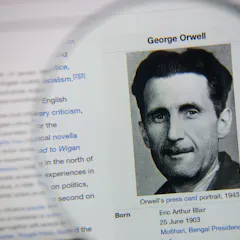
Boris Johnson and Michael Gove may not be the stuff of Orwell’s dystopian nightmare, but they clearly know how to talk in ‘doublespeak’.

Alternative facts owe more to Aldous Huxley’s Brave New World than Orwell’s 1984.

Every crystal ball has a shelf life, even the most prescient.
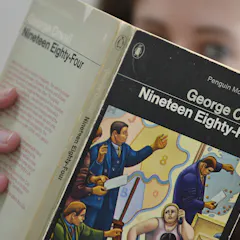
The best selling book on Amazon is ‘1984’ – which was originally published in 1949. A historian from Case Western Reserve University considers how the novel helps us think about our present moment.
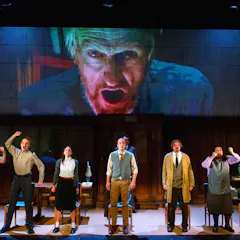
Orwell’s 1984 is a heavily laden text, which turned the author’s name into a byword for authoritarian nightmare. So what can we take from the 2015 stage version at the Melbourne Festival?
Top contributors
-

Associate Professor of Philosophy and Law, Wayne State University; Institute for Humane Studies
-
Professor, School of Culture and Communication, The University of Melbourne
-
Senior Lecturer in English Literature, Keele University
-
Chaired professor for Scholarship in the Public Interest in the Department of English and Cultural Studies, McMaster University
-
Lecturer in American Studies, University of Hull
-
Reader in Digital Communication, University of Essex
-
Adjunct professor, UNSW
-
Emeritus Professor in English and Writing, University of Sydney
-
University Research Professor, University of Kentucky
-
Associate Professor of Political Science & International Relations, Valparaiso University
-
Professor of Law and Associate Director of the Drake University Constitutional Law Center, Drake University
-
Professor of Modern History, University of Bristol
-
Associate Professor of Political Science, Rutgers University
-
Assistant Professor of Cinema and Media Studies, University of Washington
-
Professor Emeritus of History, De Montfort University