

Two months after Defense Secretary Pete Hegseth made the flu vaccine optional in the military, an outbreak has led several branches of the military to make it mandatory again.
Articles on 1918 flu pandemic
Displaying 1 - 20 of 45 articles
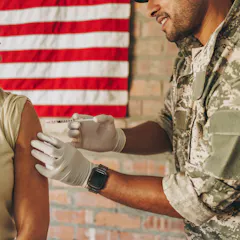
The US military helped create the first flu vaccine to keep service members in action – and the logic for requiring vaccination has not changed.
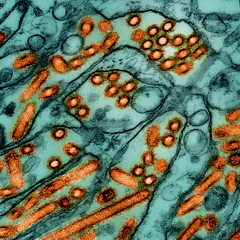
COVID-19 exposed the many ways in which we were ill-prepared to prevent and respond to pandemics. Are we applying those lessons to prevent a bird flu pandemic?
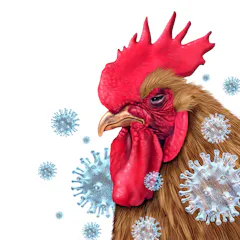
The three flu pandemics of the 20th century originated from birds, making it critical to fight bird flu. Breakthroughs in gene-editing chickens show promise for eliminating the disease in the future.
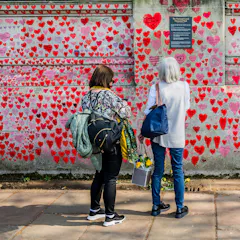
Memorialising a pandemic that is still underway is a challenge. Official commemoration needs to be about remembrance and preparedness.
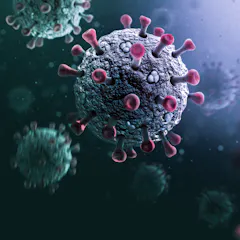
With the emergency phase of the COVID-19 pandemic in the rearview mirror, at least for now, we look back on a handful of stories that provided sharp insights at key moments in the pandemic.
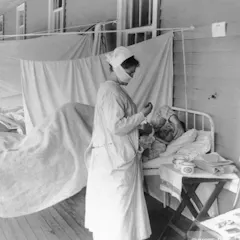
During the 1918 flu pandemic, white people died at similar rates to Black Americans, according to a new study – a very different pattern than what occurred during the COVID-19 pandemic.
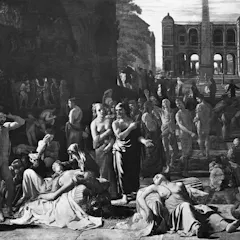
A scholar of ancient Greek literature goes back to the account of Greek historian Thucydides on the spread of plague and finds parallels in the American response to the health crisis today.
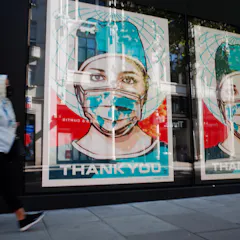
None of our authors can see the future, but many do have expertise that offers insights about what’s reasonable to expect.

How the pandemic is reported by the media can influence people’s behaviour.

Accounts of previous epidemics – by Samuel Pepys, Daniel Defoe and Katherine Porter – warn of mistakes that we risk repeating.
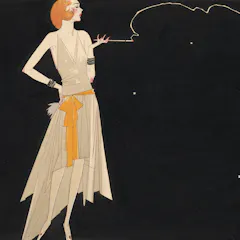
A century ago, the end of the 1918 flu pandemic was followed by a period of prosperity, cultural flourishing and social change known as the Roaring ‘20s. Will the end of COVID-19 launch a similar era?
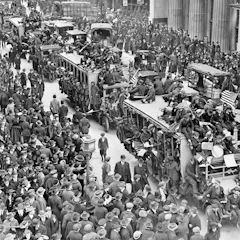
Americans were tired of social distancing and mask-wearing. At the first hint the virus was receding, people pushed to get life back to normal. Unfortunately another surge of the disease followed.

After recent suspected COVID-19 cases and with repatriation flights postponed, Samoa takes no chances.

This isn’t the first time America’s schoolchildren have studied remotely – and Chicago’s 1937 ‘radio school’ experiment shows how technology can fill the gap during a crisis.

The radical hope we find in the arts, culture and literature is often a reflection of the times. Drawing from the past there are many examples of how dreams can become a form of resilience.

Narratives throughout history illustrate how pandemics make people grapple with their faith, leading them to deepen religious beliefs or reject them altogether.
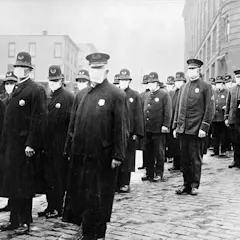
As the US battled the 1918 influenza pandemic, some communities staged contentious battles against wearing masks. Sound familiar?

It’s always dangerous to put present-day events into historic perspectives. That’s especially true when political leaders have compared the coronavirus pandemic to a war effort.
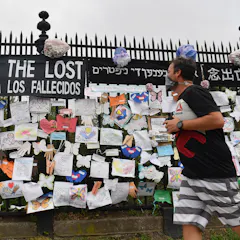
There’s no scientific definition for a wave of disease – and no evidence that the original onslaught of coronavirus in the US has receded much at all.
Top contributors
-

Assistant Director of the Center for the History of Medicine, University of Michigan
-
Assistant Professor of History, University of Pittsburgh
-
Pediatric Infectious Diseases Fellow, University of Pittsburgh
-
Chancellor's Professor of Medicine, Liberal Arts, and Philanthropy, Indiana University
-
Associate Professor of History, Rutgers University - Newark
-
Assistant Professor of Epidemiology and Biostatistics, University of Illinois Chicago
-
Professor of Film Studies, Bangor University
-
Research Fellow, American University School of Public Affairs
-
Assistant Researcher at the School of Arts, Culture and Language, Bangor University
-
Professor of Linguistics, Bangor University
-
Emerita Professor, Pharmacology and Toxicology, Dartmouth College
-
Professor of Infectious Disease and Global Health, Cummings School of Veterinary Medicine, Tufts University
-
Associate Professor, Infectious Diseases, University of Florida
-
Associate Dean For Global One Health, College of Veterinary Medicine & Biomedical Sciences; and Director, Pandemic and Biosecurity Policy Program, Scowcroft Institute for International Affairs, Bush School of Government and Public Service, Texas A&M University
-
Research Assistant in Media Communications and Critical Discourse Analysis, Bangor University