

A series of Supreme Court cases based on racist language and reasoning still govern the lives of 4 million Americans.
Articles on 14th Amendment
Displaying 41 - 54 of 54 articles

New state laws in the US banning teaching about systemic racism raise the question: Does the Constitution protect public school teachers’ right to choose how and what to teach?
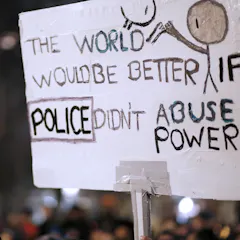
Since Tyre Nichols’ death there are renewed calls for Congress to pass police reform legislation. But the federal government has almost no control over state and local police departments.

Section 3 of the 14th Amendment was first used against Confederate leaders after the Civil War to expel seditionist politicians. Now it could be used against Donald Trump.
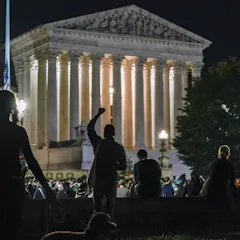
A 6-3 conservative court will hear a broader range of controversial cases, shift interpretations of individual rights and put more pressure on local democracy to make policy decisions.
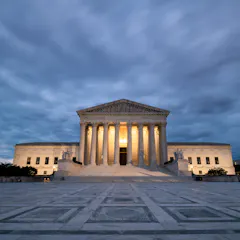
Amid what will likely be a flood of charges, countercharges and a lot of heated rhetoric, there are prescribed legal processes that will play out in the event of election challenges.
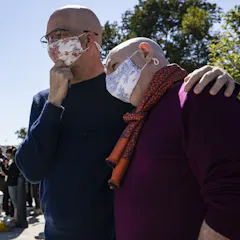
Ruth Bader Ginsburg’s death sparked many tributes to her work ending sex discrimination against women. That work also paved the way for successes in the fight for equal rights for the LGBTQ community.
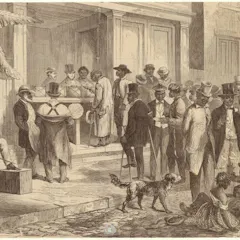
The radical potential of the 14th amendment has been underestimated.
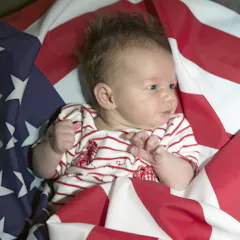
If upheld, a federal court ruling would solidify birthright citizenship as the law of the land, and overturn more than a century of federal refusal to grant American Samoans citizenship status.
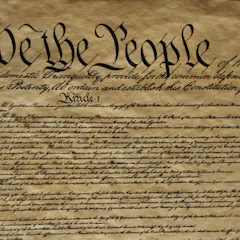
The growing number of self-taught, right-wing experts on the Constitution believe not only in the rights of white people, but have a comprehensive – if not comprehensible – view of the Constitution.

Federal courts have long declined to enshrine the right to education into federal law. A careful look at the history of the 14th Amendment shows why that may be the wrong approach.
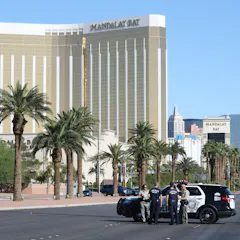
Trump’s America is marked by the clash of intransigent, bitter opinions. And it’s not just about gun control.
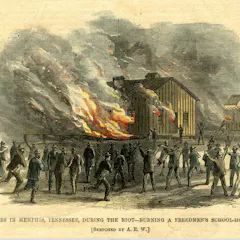
The struggle for equal rights for black citizens in the U.S. today is backed by the promise of the 14th Amendment. A historian takes us back to the grassroots movements that led to its passage.
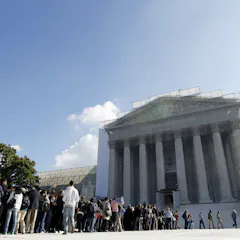
In the Fisher case judgment, the Supreme Court has reminded institutions to assess race-neutral policies. But evidence shows race-neutral policies could worsen racial inequalities.
Top contributors
-

Associate Professor of Law, Quinnipiac University
-
Professor of American Civics, University of Tennessee
-
Professor of Law, University of Notre Dame
-
University System of Maryland Regents Professor of Law, University of Maryland
-
Assistant Professor of Law, University of Houston
-
Professor of Political Science and Women’s, Gender and Sexuality Studies, University at Albany, State University of New York
-
Assistant Professor of History and Africana Studies, University of Tennessee
-
President, Dickinson College
-
Foundation Professor of Law and Political Science, Arizona State University
-
William Nelson Cromwell Professor of Jurisprudence and Political Science, Amherst College
-
Professor Emeritus of Government, Wesleyan University
-
Professor of Law, Indiana University
-
Ph.D. Student in History, Johns Hopkins University
-
Richter Professor Emerita of Political Science, Swarthmore College
-
Professor of History, Morehouse College