

Tanya Plibersek’s corridor altercation with Craig Kelly was a political win for both of them. But ‘debates’ like this don’t really get us anywhere. Here’s how to engage more constructively.
- Senior Lecturer, Australian National Centre for the Public Awareness of Science, Australian National University
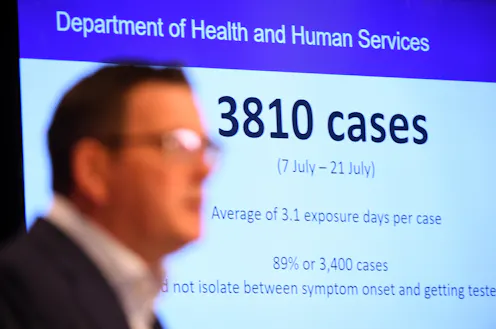
The COVID-19 pandemic has highlighted how much modern societies are governed by statistics. Despite their objective appearance, these numbers gain their strength from very human relationships.

Trump doesn’t just ignore science, he attacks it. Australia’s experts have an obligation to speak out on crises such as the coronavirus pandemic, even if it means picking a side in our politics.
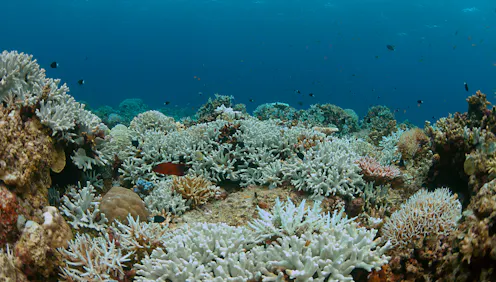
We might need to ignore climate change right now if only to save our sanity, but it certainly hasn’t been ignoring us.

Every day, new “alternative facts” are peddled in the public realm. But misinformation is not solely a modern problem - its origins are as old as humanity.

We asked 252 Australian Greens party supporters and 252 One Nation party supporters to do some simple maths. Their answers changed when we told them it was climate change data.

Scott Morrison’s new ministry includes a few new faces and several new roles for familiar cabinet members. Our experts take a closer look at each portfolio.

Life in the human herd is complex, and we are unavoidably inter-dependent when it comes to our health. Population health science looks at the things that cause ill-health in the first place.
Brain-zapping, the curious case of the n-rays and other stories of evidence
The Conversation, CC BY70.4 MB (download)
You've had an x-ray before but have you had an n-ray? Of course not, because they're not real. But people used to think they were. Today, on Trust Me, I'm an Expert, we're bringing you stories on the theme of evidence.

A few tips and tricks on how to make the best use of your one minute chance to get your message across.

Players in the climate science game ‘CO2peration’ become a particle of sunlight, and travel on a journey to find out why we have liquid water at Earth’s surface.
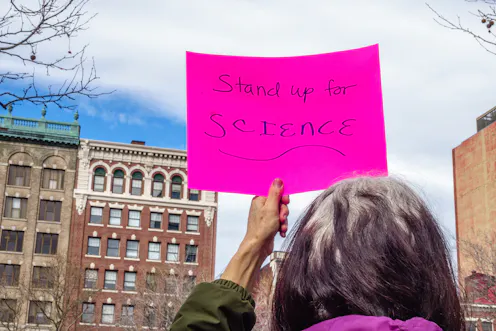
If those Marching for Science muddle their message, it may backfire on them. So here are some tips to help make sure the message is heard loud and clear by the right audience.

The Conversation asked eight authors from across its sections to tell us about their favourite podcasts – and why you should tune in.
Over three-quarters of Australians now accept climate change is happening, according to a new survey from the Climate Institute.

Well, here we are again. Lazy swipes by lazy blowhards at lazy academics lazing their way through hyper competitive granting procedures.

We asked our experts to appraise the political and policy performances of the federal cabinet and shadow cabinet.

Everyone loves to hear a story, says actor Alan Alda, and that’s what every scientists should learn if they are to better communicate their work to a wider audience.
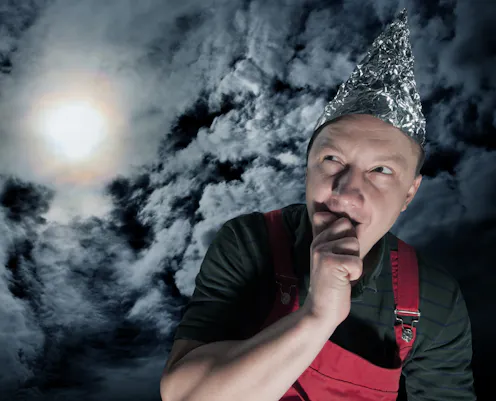
Some scientists refuse to debate or appear with those they consider to be unscientific. But is this the best approach to combat anti-science narratives?

Any shift in the focus of climate change research at CSIRO should look at how to stop the problem and reduce its impact on Australia.

Nobel Laureate Peter Doherty’s new book explores why so many people today selectively reject science, and in the process gives a behind the scenes look at how science really works.

The history of climate change is writ large in literature - and not just scientific journals. An analysis of Google’s vast library shows a rise in use of phrases such as “unusual weather” and “heat wave”.

“More research needed” is a familiar cry in science. But in the case of the Senate’s call for yet more scrutiny of wind farms, there are signs that experts are being ushered in a preconceived direction.

A recent hoax study suggesting chocolate helps people lose weight highlights many problems with the way science is conducted and reported by the media.

Everyone’s looking for an audience for their videos on YouTube, and there are plenty of science videos out there. But not all are popular so what makes one more interesting than another?
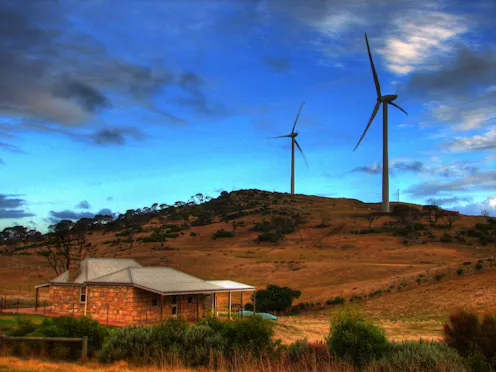
There is no direct evidence that wind turbines affect physical or mental health, according to a review of the evidence by the National Health and Medicine Research Council (NHMRC). The review found no…
Contact Will for
- General
- Media request
- Speaking request
- Consulting / Advising
- Research collaboration
- Research supervision
- Location: Canberra, Australia
- X (formerly Twitter): @willozap
- Article Feed
- ORCID
- Joined
