Professor, Department of Earth System Science, and Chair of the Global Carbon Project,
Stanford University
Bois e bombas de petróleo numa fazenda australiana: atividades humanas como a criação de gado, a mineração e a extração de gás natural contribuem com cerca de 65% de todas as emissões de metano no mundo.
Ramon Cliff/Shutterstock
Pep Canadell, CSIRO; Marielle Saunois, Université de Versailles Saint-Quentin-en-Yvelines (UVSQ) – Université Paris-Saclay, and Rob Jackson, Stanford University
As atividades humanas são responsáveis por dois terços de toda a liberação de metano para a atmosfera, e esforços internacionais para estancar o fluxo ainda não estão dando resultado
Pep Canadell, CSIRO; Marielle Saunois, Université de Versailles Saint-Quentin-en-Yvelines (UVSQ) – Université Paris-Saclay, and Rob Jackson, Stanford University
En la actualidad, dos tercios de las emisiones de metano a la atmósfera se deben a actividades humanas, y nuestros esfuerzos por contener el flujo aún no han dado frutos.
Pep Canadell, CSIRO; Marielle Saunois, Université de Versailles Saint-Quentin-en-Yvelines (UVSQ) – Université Paris-Saclay, and Rob Jackson, Stanford University
Human activities now account for two-thirds of all methane venting to the atmosphere – and our efforts to staunch the flow are not yet bearing fruit.
Kencangnya laju emisi mengurangi jatah CO2 yang bisa kita lepaskan untuk membatasi suhu Bumi 1,5°C. Dengan tingkat emisi saat ini, bujet karbon kita tersisa 7 tahun lagi.
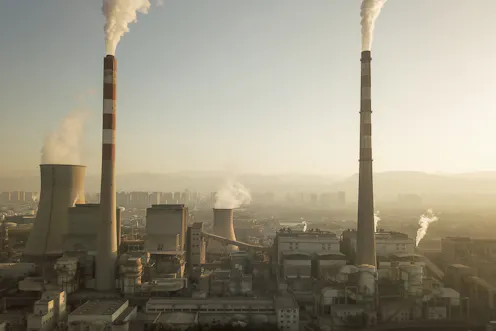
Les émissions de CO2 d'origine fossile continuent d'augmenter, mais le pic semble proche.
ChinaTopix/AP/AAP
Les quantités de CO₂ que nous pouvons encore émettre tout en respectant l’objectif de l’accord de Paris se réduisent à une peau de chagrin : au rythme de 2023, nous aurons épuisé ce budget carbone dans sept ans.
Record emissions are fast shrinking the remaining amount of carbon dioxide we can emit if we are to limit global warming. At current rates, we’ll use up the budget for a 1.5°C outcome in seven years.
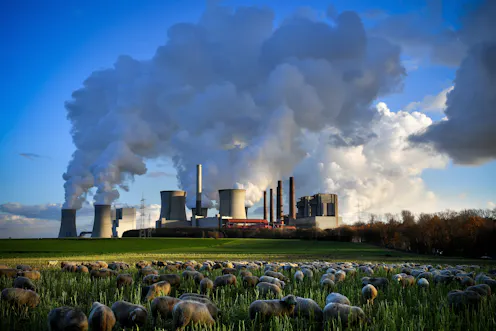
Le 12 novembre 2022, une jeune femme observe la mine de Garzweiler (Allemagne) où l’on extrait la lignite à ciel ouvert.
INA FASSBENDER/AFP
Aux niveaux actuels d'émissions, il y a 50 % de chances que la planète atteigne la hausse de température moyenne mondiale de 1,5 °C dans les 9 ans à venir.
Con los niveles actuales de emisiones, hay un 50 % de posibilidades de que el planeta alcance el 1,5 °C de aumento de la temperatura media global en sólo nueve años.
Après une forte baisse des émissions en 2020 due à la pandémie de Covid-19, 2021 témoigne d’une inquiétante reprise, souligne la nouvelle étude du Global Carbon Projet.
Preocupa especialmente la tendencia al alza a largo plazo de las emisiones de CO₂ procedentes de la quema de combustibles fósiles, que están lejos de llegar a cero en 2050.
The pandemic, along with other recent trends such as the shift towards clean energy, have placed us at a crossroad: the choices we make today can change the course of global emissions.
The report by the World Meteorological Organisation shows that with large and rapid emissions cuts, we can still avoid the most severe climate change. But worryingly, we also have time to make it far worse.
Nuestros últimos estudios sugieren que el metano, un gas de efecto invernadero más potente que el dióxido de carbono, se está acumulando en la atmósfera debido a la actividad humana.
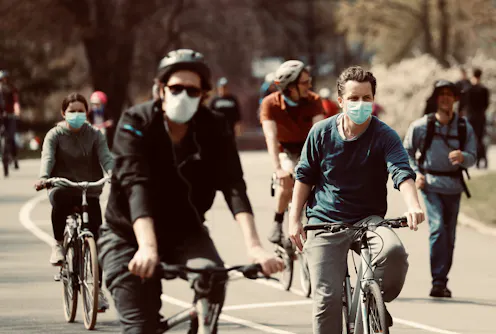
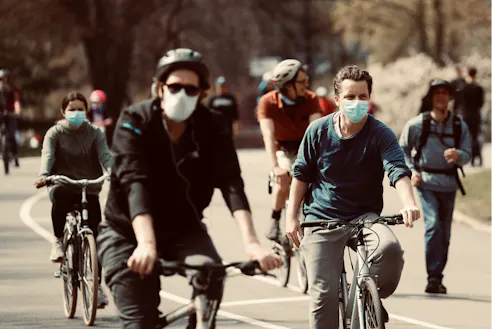
New research reveals which sectors of the global economy fuelled the emissions decline during COVID-19. We have a narrow window of time to make the change permanent.
Una nueva investigación analiza los sectores económicos responsables de la caída global de emisiones debida a la COVID-19. Tenemos una pequeño margen de tiempo para hacer el cambio permanente.
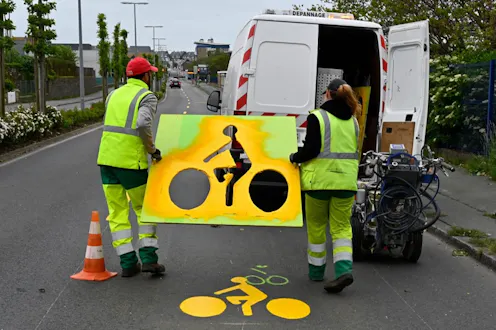
Le 11 mai 2020, à Saint-Malo, marquage d’une piste cyclable.
Damien MEYER/AFP
Carbon emissions will hit a record high for the second year in a row, but there is a small silver lining: the rate of emissions growth has slowed dramatically.
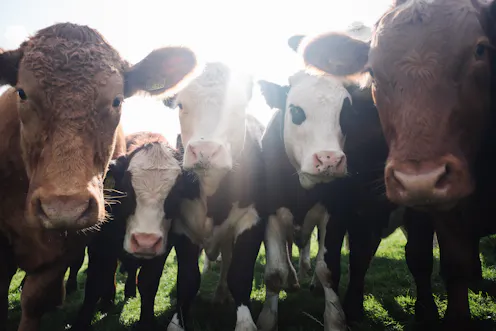
It’s not cows’ fault they fart, but the methane they produce is warming the planet.
Robert Bye/Unsplash
Removing human-related methane from the atmosphere could reduce global warming by 15%.
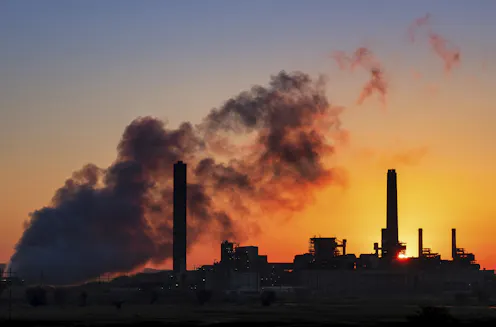
À l’occasion de la COP24, le Global Carbon Project publie une évaluation annuelle peu encourageante des rejets de CO2 pour l’année 2018.
AAP Image/Mick Tsikas
Pep Canadell, CSIRO; Corinne Le Quéré, University of East Anglia; Glen Peters, Center for International Climate and Environment Research - Oslo; Robbie Andrew, Center for International Climate and Environment Research - Oslo, and Rob Jackson, Stanford University
La demande énergétique en hausse est l’un des facteurs explicatifs de cette tendance.