
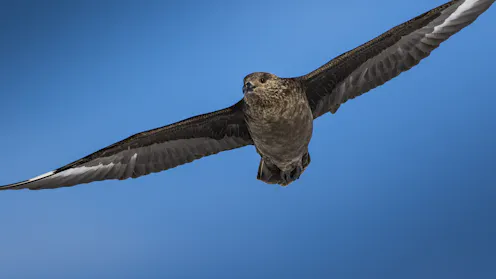
The confirmation of the bird flu virus in a brown skua appears to be a single detection. Ongoing surveillance will be essential to detect any further cases.
- Distinguished Professor of Infectious Disease Epidemiology and Public Health, Te Kunenga ki Pūrehuroa – Massey University

Teens and young adults are more likely to be asymptomatic carriers of the bacterium that cause meningococcal disease, making university students a high-risk group.

Bird flu is spreading globally and getting closer to New Zealand. Its arrival may be a matter of when, not if – and the risks are significant.

Over-subscription of a topical antibiotic likely led to the emergence of a superbug which is now the leading cause of resistant infections.

The first sign of a new bird flu might be a dead seabird or marine mammal. Better surveillance of migratory birds and wildlife – and better public awareness – is crucial.

As Omicron cases soar in New Zealand, most people can still avoid getting infected. Even if you share a household with an infected person, catching the virus is not at all inevitable.

As more genomes are sequenced, it will become clearer when and how the Delta variant slipped through the New Zealand border. The greater the diversity in genomes, the older and larger the outbreak.

The rapid increase in the number of infections is the most obvious reason why new variants of the virus have been emerging recently. Case numbers doubled in just two months at the end of 2020.

From a global cattle disease that can devastate herds to water-borne pathogens causing severe food poisoning, genome sequencing has become an important tool in the control of infectious diseases.
Contact Nigel for
- General
- Media request
- Speaking request
- Consulting / Advising
- Research collaboration
- Research supervision
- Location: Palmerston North, New Zealand
- Website
- X (formerly Twitter): @nigel_epilab_NZ
- Article Feed
- ORCID
- Joined
