

Scientists have made a third detection of gravitational waves, again caused by the merger of two black holes. But they think there’s something different about the black holes in this case.
- Postdoctoral research fellow in Gravitational Wave Astrophysics, Monash University
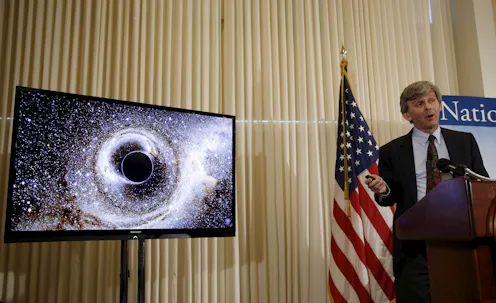
The discovery of gravitational waves involved a team of more than 1,000 scientists from across the globe, including Australia. So how does such an international collaboration work?
Contact Letizia for
- General
- Media request
- Speaking request
- Consulting / Advising
- Research collaboration
- Research supervision
- Location: Melbourne, Australia
- Article Feed
- Joined
