

Nowhere is safe from forever chemical pollution – not even the middle of the ocean. PFAS levels are on the rise in the world’s whales and dolphins.
- Lecturer in Biological Sciences, University of Wollongong
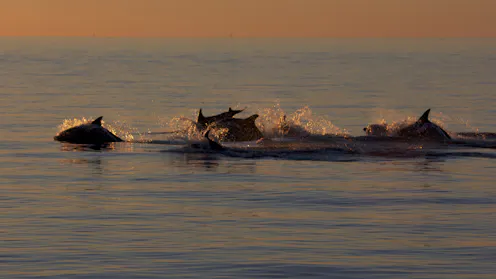
Like friendship itself, the slower ageing is more than just skin deep.
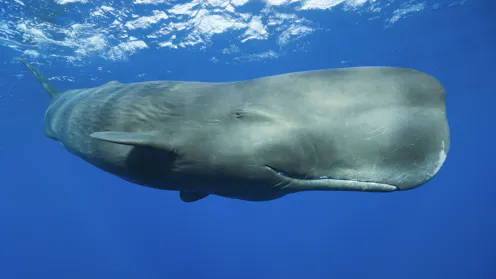
The sex and age of an animal turn out to be stronger predictors than habitat for higher PFAS levels, suggesting they accumulate over a lifetime.
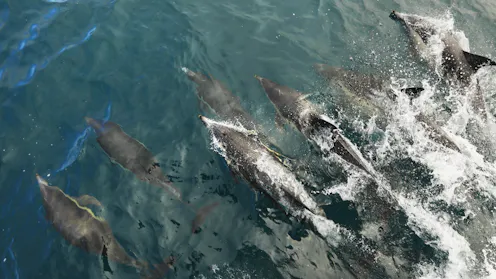
New research has developed the first molecular ‘clock’ for common dolphins. It could be a game-changer for conservation.
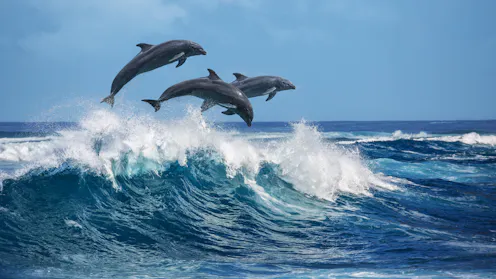
Ever seen images of dolphins jumping out of the waves and performing impressive acrobatics? Let’s explore why they do it.
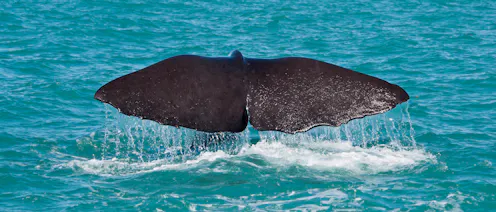
Sperm whales support ecotourism in Kaikōura and blue whales come to feed off the New Zealand coast – but both may become a rare sight as ocean temperatures continue to rise.

A drying climate and the arrival of people together finished off Australia’s megafauna.

An infestation as a chick leads to enlarged nostrils in the beak of Darwin finches, and that affects their mating call.
Contact Katharina for
- General
- Media request
- Speaking request
- Consulting / Advising
- Research collaboration
- Research supervision
- Location: Wollongong, Australia
- Website
- BlueSky: @kjpeters.bsky.social
- LinkedIn: katharina-j-peters-b47b5370/
- Article Feed
- ORCID
-
- Joined
