
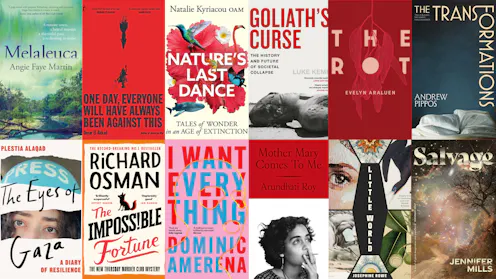
We found out the favourite 2025 books of 35 expert readers – and the Books & Ideas team shares our own picks, too.
- Emeritus Strategic Professor in Palaeontology, Flinders University

A new book, Goliath’s Curse, will reset everything you thought you knew about the rise and fall of civilisations – with worrying implications for our world now.
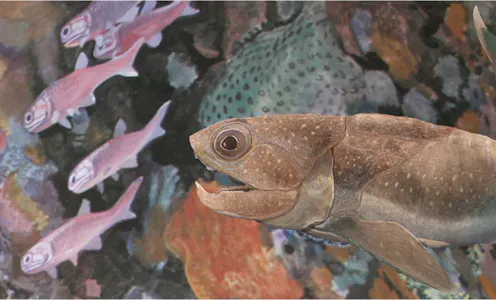
A new study of ancient, extinct fish known as placoderms provides another piece of the evolutionary puzzle about our deep time, aquatic ancestors.

A biography of scientists Carl Linnaeus and Georges-Louis LeClerc explores the complex, disparate lives of two brilliant men who shaped the study of natural history.

White sharks suffered great declines after the Jaws movie was released. But these iconic predators must be protected.
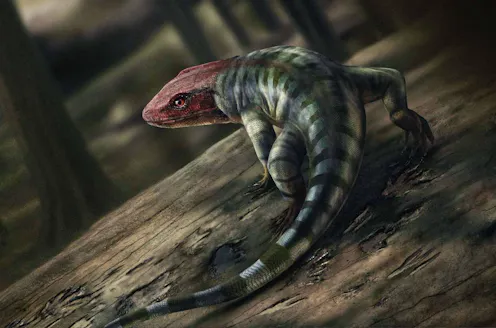
Where did the ancestors of all reptiles, birds and mammals emerge? A newly discovered fossil slab from Australia throws the entire timeline into question.

In The Decline and Fall of the Human Empire, science writer Henry Gee considers how long we’ve got, and how we can extend our time on Earth.

We’ve invited writers, from fields as diverse as wildlife ecology, politics and literature, to nominate their best books of 2024. And this year, the Books & Ideas team share their own picks, too.
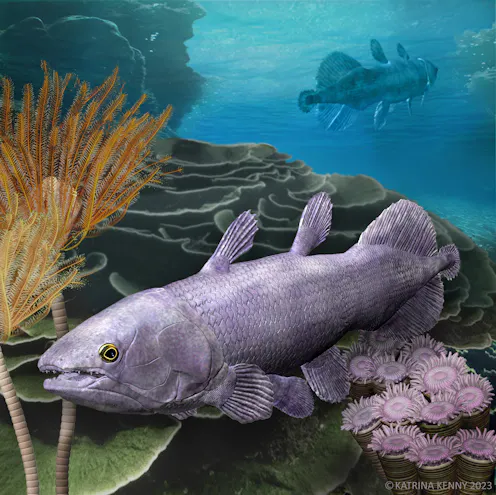
Researchers have discovered a new extinct species of coelacanth that lived 380 million years ago.
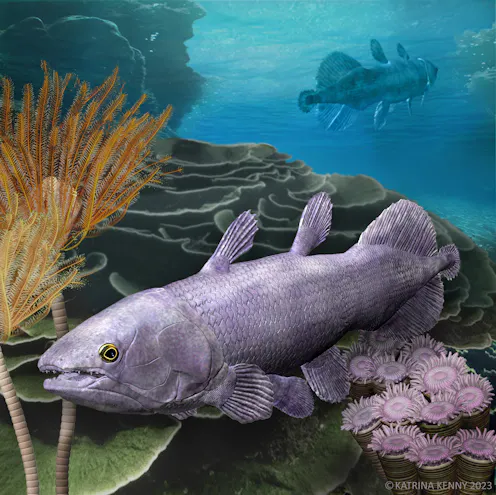
Des chercheurs ont découvert une nouvelle espèce fossile de coelacanthe datant de 380 millions d’années.
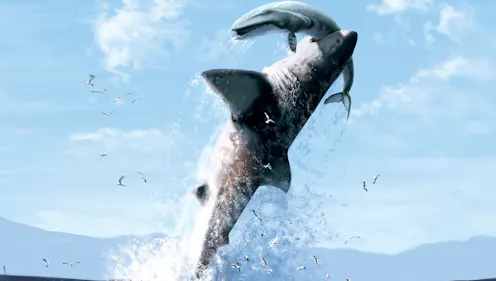
Megalodon, the giant shark species that disappeared around 3.6 million years ago, was the most ferocious creature that ever lived. What do we know about it?

A new Australian coelacanth find has revealed a surprising force behind the slow evolution of these ‘living fossils’.
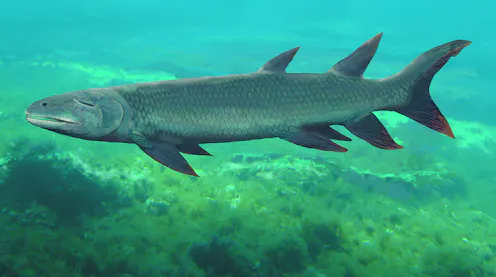
For decades, the sandstone in central Australia yielded tantalising segments of some sort of fossil fish. Now, we have finally pieced together a complete picture of this remarkable species.
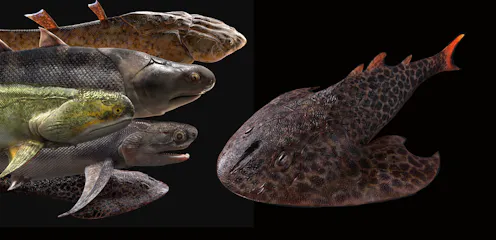
Spectacular finds of the world’s oldest jawed fishes from China push back the origins of jaws and teeth, and suggest how limbs might have evolved.
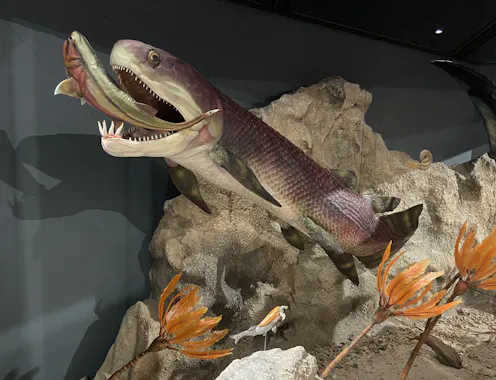
Des fossiles australiens de poissons à mâchoire permettre de mieux comprendre notre évolution.
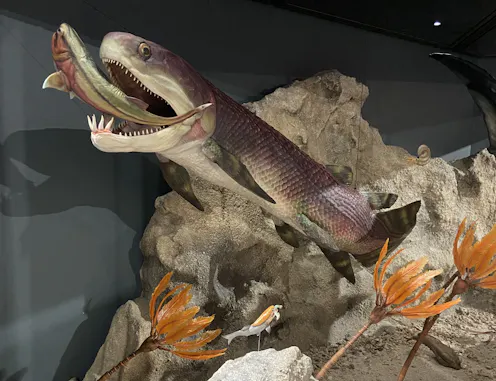
The findings come from placoderm fish fossils found in Western Australia’s Kimberley region. This extinct order of fish represents some of our earliest jawed ancestors.

Two museum exhibits, one in the Smithsonian and one in Australia, have opened public displays featuring the spectacular meg. But while both models are mega impressive, they’re not the same. Why?
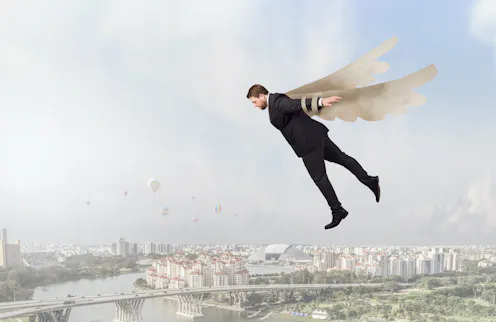
Human genes are one of the main reasons we can’t grow wings. And even if humans did have wings, they wouldn’t necessarily allow us to fly.

The arrangement of bones in our specimen’s fins are the same as those of ‘fingers’ in tetrapods. The only difference is the digits are locked within the fin, and not free moving.
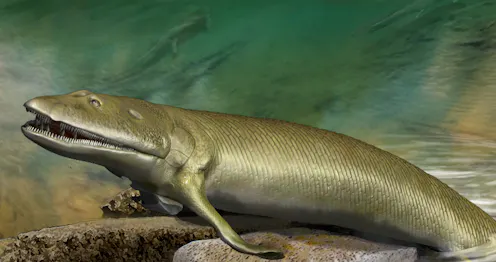
Une espèce qui a vécu il y a 380 millions d'années révèle l'origine de nos mains. Il est le plus proche de ce que l’on pourrait considérer comme un « chaînon manquant ».
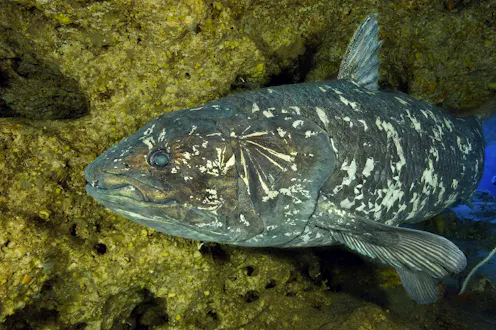
Espèce menacée vivant dans les profondeurs marines, le cœlacanthe passionne depuis sa découverte en 1938.
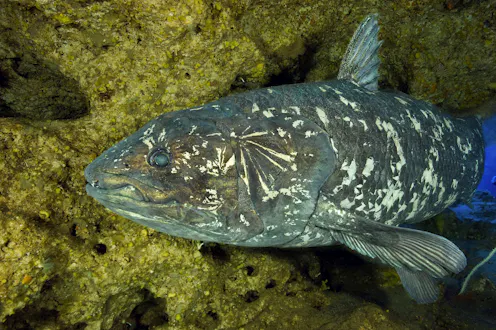
The discovery of a living coelacanth fish rocked the world in 1939, as scientists thought they had died out with the dinosaurs. A new study illuminates how its skull and tiny brain develop.

New research shows shallow, near-land seas similar to Bass Strait were critical in the early days of fish evolution. These are the waters we need to protect now to ensure ongoing biodiversity.
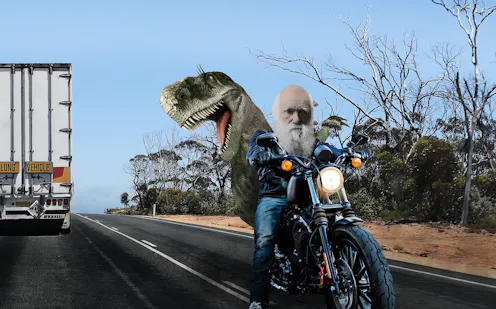
Travel from Perth to Melbourne and every kilometre you go represents 100 million years of life on Earth. So let’s take a ride, on a motorcycle of course.
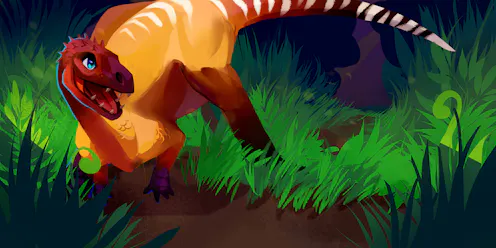
We know of about 900 valid dinosaur species that existed. ‘Valid’ means scientists know the dinosaur from enough of the skeleton bones to feel pretty sure that it differs from other known dinosaurs.
Contact John for
- Media request
- Speaking request
- Consulting / Advising
- Research collaboration
- Location: Daylesford, Victoria, Australia
- Website
- BlueSky: @fossilfish
- Facebook: Books by John Long
- LinkedIn: John Long
- Article Feed
- ORCID
- Joined
