
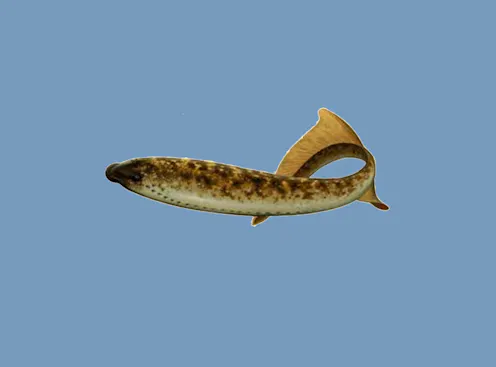
Sexual organs similar to what we see in sharks and rays today appeared many millions of years ago in much more primitive ancient fishes than was previously thought.
- Emeritus Strategic Professor in Palaeontology, Flinders University
The latest in the Jurassic World film franchise sees dinosaurs pitched as future weapons. So who’s behind that monster idea?
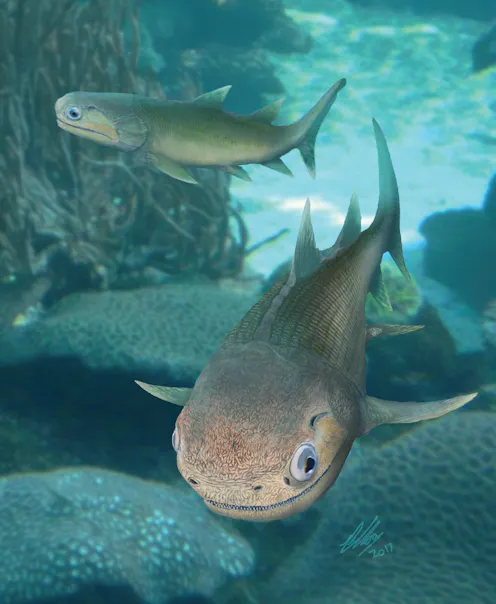
A 400 million year old fossilised fish skull gives us very early and previously unknown clues about how boney fishes evolved into the vertebrates we see today on Earth - including us humans.
Many living vertebrates have the ability to detect electric fields, especially in other animals when hunting. But what can the fossil record tell us about the origins of this sensory system?
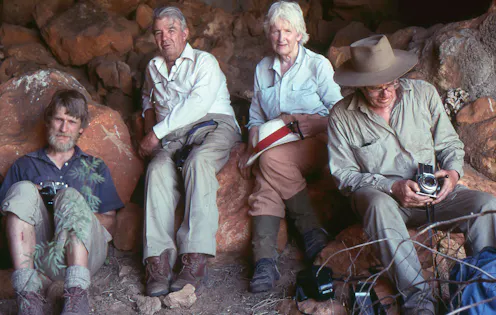
One of Australia’s most distinguished palaeontologists will be farewelled at a funeral in Canberra today.
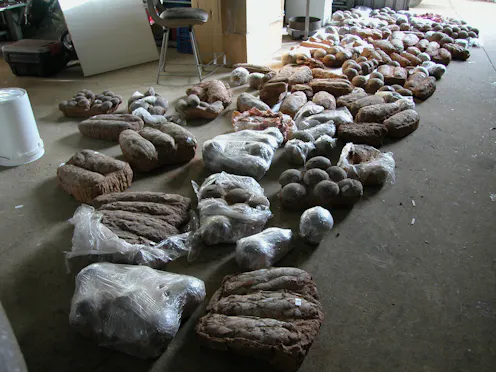
A new, “baby dragon” dinosaur revealed in a fossil returned to China is a striking example of the discoveries that might be lost when scientific specimens are illegally removed and traded.
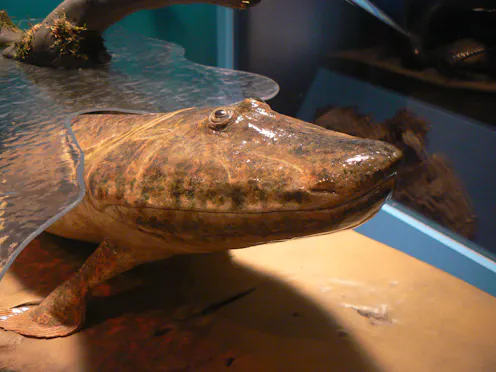
The first truly terrestrial animals evolved from ancient fishes that left the water for land. But what prompted to move has been a mystery.
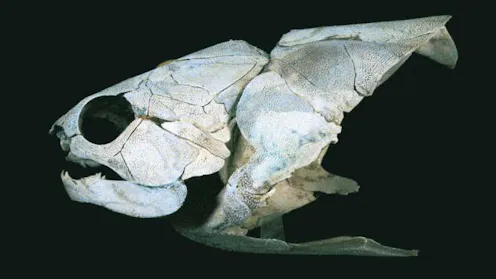
Scientists have long believed that our distant cousins are the placoderms, and ancient group of armoured fish. But a new study is casting doubt on that view.
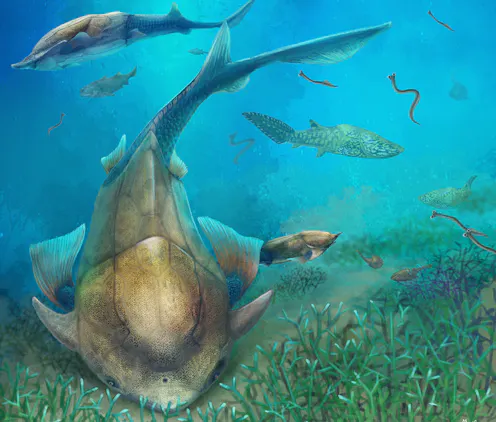
Next time you bite down on something you’re eating, spare a thought for the evolutioniary leap made by an ancient fish that gave rise to our jaws.
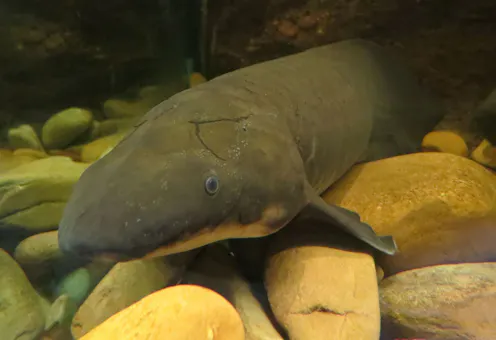
To understand how some creatures evolved, you need to see how their brain developed over millions of years. That’s now possible thanks to some clever use of scanning technology.
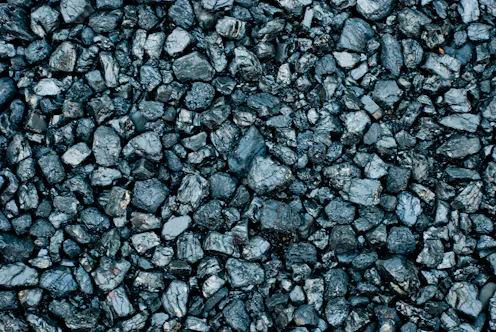
Despite its insidious influence on the climate and our health, coal has a lesser-known positive side to its otherwise dark soul. It has provided us with some stunning fossils.
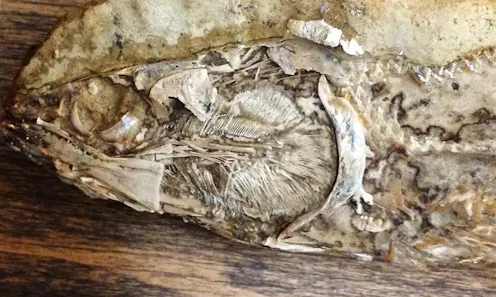
For centuries, the fossil remains of back-boned animals were studied primarily from their hardened bones. Now palaeontologists can study the softer side of these ancient creatures.
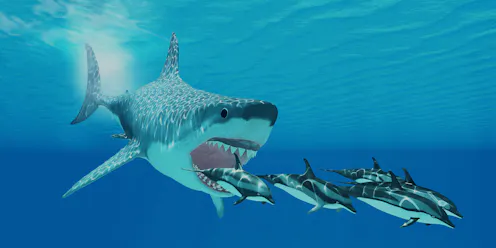
Giant sharks did once exist in our oceans – many millions of years ago. But rumours persist that some may still be alive today.
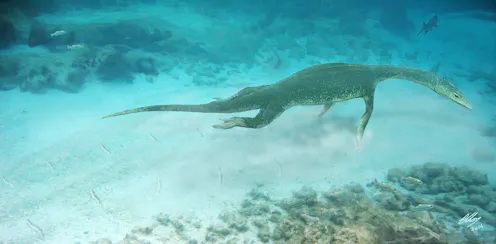
A fall in vital trace elements in our oceans could be one of the driving forces behind a number of mass extinction events during Earth’s history.
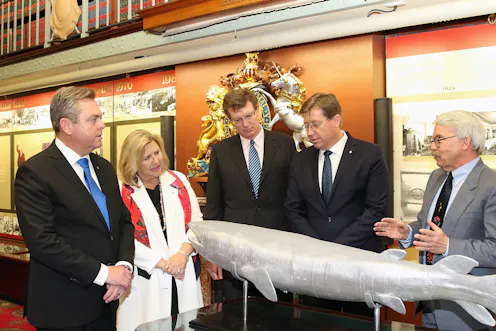
Every state and territory in Australia should have one: a fossil emblem. Not only can they be good for tourism but they can also help teach people about the ancient history of the regions.
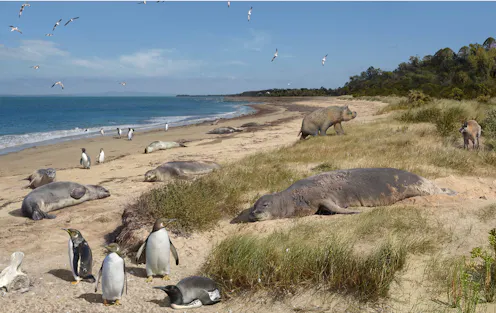
Palaeontologists say it’s rare to find a rich fossil site in an urban area. That’s why they’re worried such a site near Melbourne could be threatened by proposed development.

The rise and fall of the essential elements for life could have influenced the way life evolved over many millions of years.

Plenty of action in the new dinosaur movie Jurassic World, in cinemas from Thursday. But how realistic are the dinosaurs and who are the real monsters when we play around with nature?
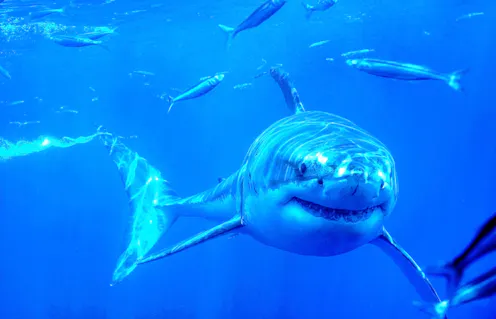
We used to think of sharks as primitive fish because the had cartilage instead of bones. Turns out there was a good reason why and it makes them anything but primitive.
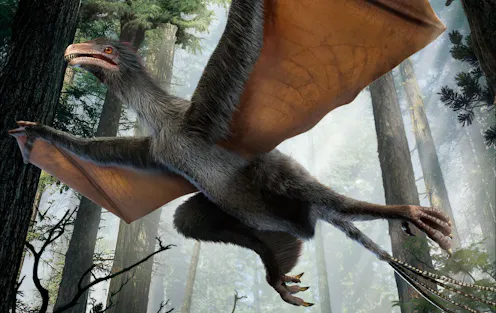
The discovery of a new winged dinosaur from more than 160 million years ago shows how they experimented with different forms of flight.

Scientists in the new Jurassic World movie have taken scary to a new level with genetically modified hybrid dinosaurs. But is any of this possible?
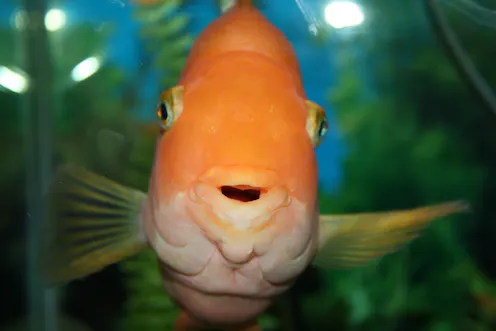
The intimate act of copulation is old – very old. In fact, it first evolved in ancient armoured placoderm fishes called antiarchs 385 million years ago. Fossils of the antiarch Microbrachius dicki…
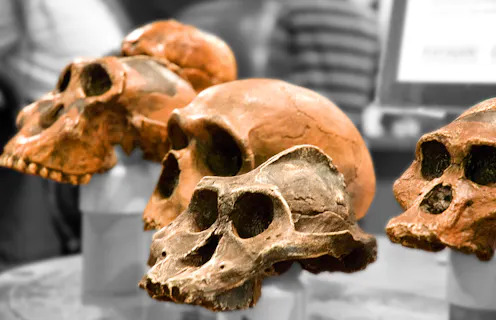
Charles Darwin’s Theory of Evolution, first published in 1859, offered a bold new explanation for how animals and plants diversified and still serves as the foundation underpinning all medical and biological…
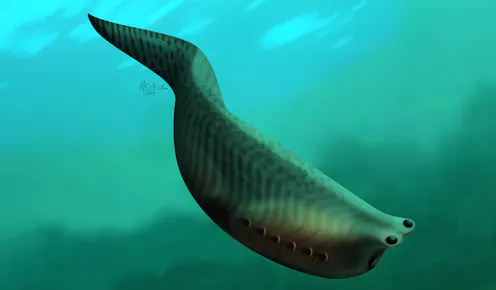
It looked more like the worm on an angler’s hook than any living fish we might recognise today but it still takes the record for the oldest known fish to date. The first fossil fishes are known from scant…
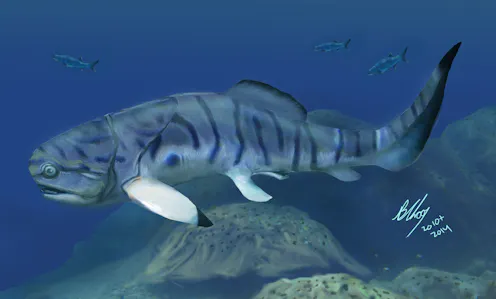
We humans use the euphemism for sex that “we like to get a leg over” but the first jawed vertebrates – the placoderms – they liked to get a leg in. They were the first back-boned creatures to evolve male…
Contact John for
- Media request
- Speaking request
- Consulting / Advising
- Research collaboration
- Location: Daylesford, Victoria, Australia
- Website
- BlueSky: @fossilfish
- Facebook: Books by John Long
- LinkedIn: John Long
- Article Feed
- ORCID
- Joined
