

The government is returning to some unfinished business: strengthening its social media age restrictions.
- Professor of Digital Communication, Director of QUT Digital Media Research Centre, Queensland University of Technology

People should have meaningful choices about the systems organising their attention.
Just as important as creating a duty of care is knowing if it’s working.

Increasingly, digital advertising is designed to dissolve into the flow of the content you consume online.

Having digital autonomy is more important than ever, and the European Union is showing how it can be done.

Email is as much about performing competence as actually communicating information. What happens if humans leave the system?
The age of AI is leading to barriers being put up across the open web. This could be the fix.

Online ads targeting parents in Australia prey on anxieties about their babies’ nutrition and wellbeing.

Download your data, make plans to stay connected to friends, and decide where you’re going next.

Your social media is no longer a personal space. It may be used by governments to determine whether you fit with their values.

New data shows how groups with benign-sounding names like ‘Mums for Nuclear’ are running political ad campaigns online. But they don’t even have to be truthful.

The ban will affect platforms such as Facebook, Instagram, TikTok and Snapchat. But the bill is vague about how exactly these platforms must comply.
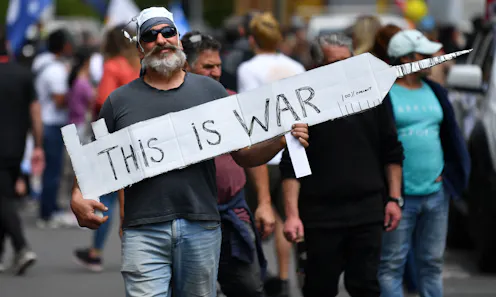
The law makes many of the same mistakes as the government’s other recent attempts to reduce online harms.

Prime Minister Anthony Albanese said ‘parents are worried sick’ about kids and social media as he announced he would introduce a ban this year.

The new Australian Internet Observatory will shed crucial light on the inner workings of social media platforms.

Daniel Angus, a professor of digital communication, explains how artists are trying out data poisoning to protect their intellectual property. Listen to The Conversation Weekly podcast.
Generative AI has changed the ways we work, study and even pray. Here are some highlights of an astonishing year of change – and what we can expect next.

As AI developers indiscriminately suck up online content to train their models, artists are seeking ways to fight back.
With the World Cup under way (bringing in more traffic) and more than 1,000 employees having reportedly resigned, concerns for the platform’s future are warranted.

None of the major digital platforms lets the public see what advertising they carry and how it’s targeted, according to a new report.

From voting info to risqué quips, this election, online political ads are more pervasive than ever before.

Footage claiming to document the situation in Ukraine may not necessarily be genuine. Here’s how to treat viral footage with the right level of scepticism before sharing it on social media.

In one past example, Facebook allowed an ad targeting ‘Jew haters’. A new Australian initiative will collect data on its dubious targeted advertising practices closer to home.
If this is just one experiment among of tens of thousands, as Google has admitted, in what other ways might users have been manipulated in the past?
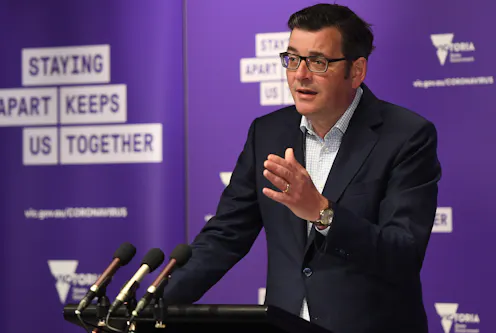
It only took a relatively small number of Twitter accounts to get hashtags #DictatorDan and #DanLiedPeopleDied trending. And “bots” weren’t really a part of the story.
Contact Daniel for
- General
- Media request
- Speaking request
- Consulting / Advising
- Research collaboration
- Research supervision
- Location: Brisbane, Australia
- Website
- X (formerly Twitter): @antmandan
- Article Feed
- ORCID
- Joined
