Christopher P. Scheitle

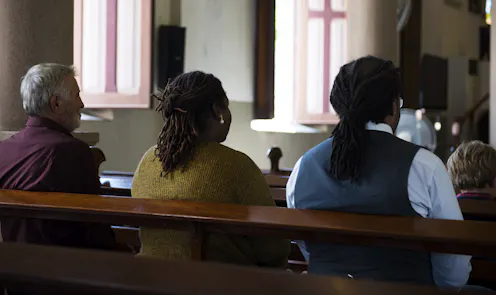
Many of the Americans who go to more than one congregation do so to experience a different worship style or because friends attend. Rawpixel/iStock via Getty Images Plus

Attending multiple places of worship is the norm for many Americans

Surveys about religion often ask a single question about how often people go to services. That means researchers miss an important piece of the puzzle.
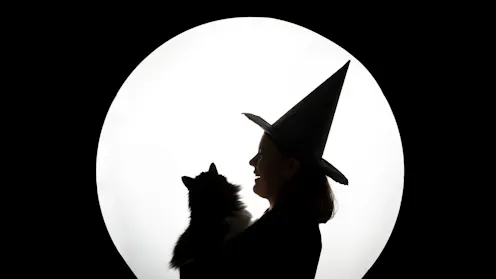
Mulheres, jovens adultos e pessoas LGBTQ+ são as pessoas que mais tendem a buscar orientação e significado para suas vidas na astrologia, que veem como parte espiritualidade, parte prática cultural, parte entretenimento e parte linguagem para compreender a si mesmas e aos outros. We Are/DigitalVision via Getty Images

Astrologia, uma pseudociência que ganha força em tempos de incertezas

Assim como as gerações anteriores recorriam à oração ou a rituais, muitas pessoas hoje estão se voltando para as estrelas em busca de significado.
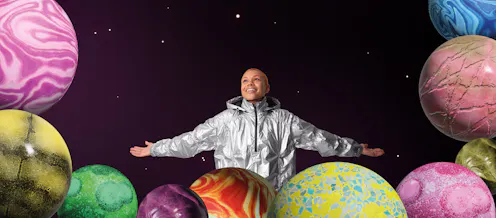
Education, income and demographics shape our views of the unseen world, a survey found. karetoria/Collection Moment via Getty Images

Angels, witches, crystals and black cats: How supernatural beliefs vary across different groups in the US

Sociologists who measured supernatural beliefs in the US found that higher education and higher income are associated with lower levels.

Many students have strong feelings about where they want to move after graduation. Tony Garcia/Stone via Getty Images

Where tomorrow’s scientists prefer to live − and where they’d rather not

A survey of graduate students found that California and New York are the most desirable destinations. Over half of survey-takers said they’d be unwilling to move to Alabama, Mississippi or Arkansas.

Many Black Americans want to bring their faith to work but face discrimination. Keeproll/E+ via Getty Images

Black Americans are more likely than other racial groups to express their faith in the workplace

Researchers found that when Black Christians mentioned their faith at work, they feared they would be discriminated against because of both their race and their religion.
Many offices make a point to celebrate diversity, but what does that look like when it comes to faith? FatCamera/E+ via Getty Images

Religion in the workplace is tricky – but employers and employees both lose when it becomes a total taboo

Workers from minority religious traditions in the US tend to be more affected by restrictions about bringing up faith at the office.
Fewer people are affiliated with religion in the United States, but that hardly means that they’re all atheists. Anthony Bradshaw/Photographer's Choice RF via Getty Images

The number of religious ‘nones’ has soared, but not the number of atheists – and as social scientists, we wanted to know why

Social factors, from wealth to politics, may shape whether people who do not believe in God identify as an atheist.

Many religious graduate students in science say they keep quiet about that aspect of their identity. Sean Anthony Eddy/E+ via Getty Images

The challenges of being a religious scientist

Stereotypes about religion vs. science are overblown – but those assumptions can create challenges for religious grad students, a sociologist finds.

Widespread skepticism toward COVID-19 vaccines took some scientists by surprise. Eric Lee/The Washington Post via Getty Images

Religion shapes vaccine views – but how exactly? Our analysis looks at ideas about God and beliefs about the Bible

Specific beliefs may have more to do with people’s vaccine views than their religious affiliation – but it depends on which vaccine you’re talking about.
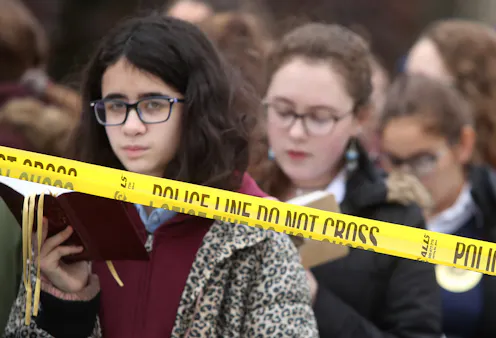
Prayers outside the Tree of Life synagogue. Reuters/Cathal McNaughton

How safe is your place of worship?

A national survey of over 1,300 congregations found that religious leaders struggle to balance security concerns with carrying out a mission to be open to the communities they serve.

Contact Christopher for

  • Media request
  • Speaking request
  • Consulting / Advising
  • Research collaboration
  • Research supervision