

A persistent government strategy to sow fear through punitive measures has corroded freedom and democracy.
- Adjunct Lecturer in Public Policy, Harvard Kennedy School
- Lecturer in Public Policy, University of Toronto

People are using generative AI to flood courts with filings, legislatures with constituent letters and publications with submissions. AI detectors are no silver bullet.

AI companies are gearing up to follow the social media model of monetizing their platforms through advertising. The danger for consumers with AI goes beyond data privacy to covert manipulation.
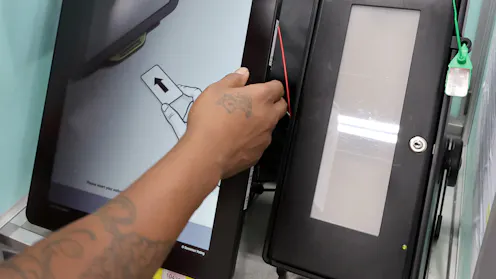
A study found that viewing news of a cyberattack lowered voter trust in election integrity – even when the voter’s candidate won and even if the attack wasn’t on voting systems.
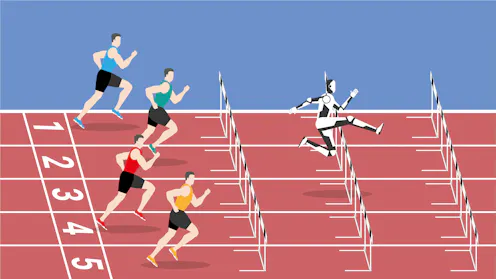
AI’s advantage over humans comes down to 4 dimensions: speed, scale, scope and sophistication. Whether AI can replace you depends on how much one or more of the S’s matter in what you do.
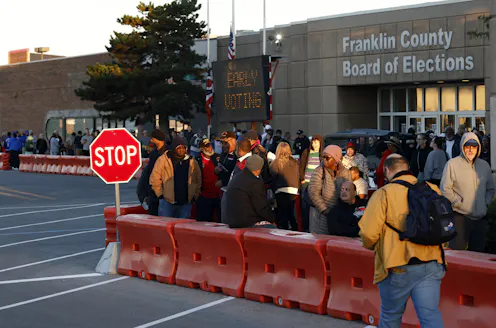
Like it or not, AI is now part and parcel of elections, from helping with mundane campaign functions to enabling politicians to speak to constituents in multiple languages at once.
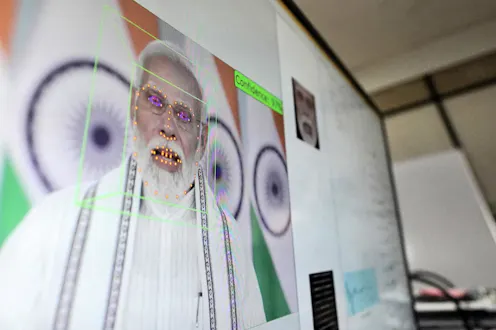
Campaigns used deepfakes to connect with voters rather than deception, and AI also helped them break through language barriers.
Using disinformation to sway elections is nothing new. Powerful new AI tools, however, threaten to give the deceptions unprecedented reach.

Life is full of hidden bottlenecks that result from logistical trade-offs between efficiency and your unique needs and desires. AI promises to change this taken-for-granted equation.
ChatGPT and its ilk give propagandists and intelligence agents a powerful new tool for interfering in politics. The clock is ticking on learning to spot this disinformation before the 2024 election.

The modern representative democracy was the best form of government mid-18th-century technology could invent. The 21st century is a different place scientifically, technically and socially.
It’s difficult to see how artificial intelligence systems work, and to see whose interests they work for. Regulation could make AI more trustworthy. Until then, user beware.
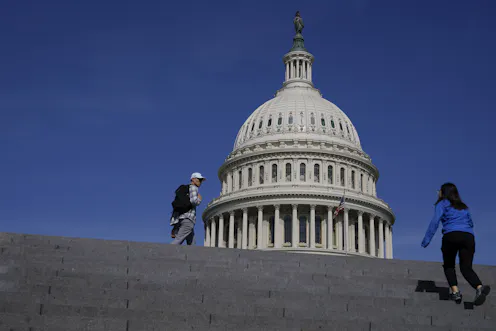
Public comment could soon swamp government officials and representatives, thanks to AI, but AI could also help spot compelling stories from constituents.
Contact Bruce for
- General
- Media request
- Speaking request
- Consulting / Advising
- Research collaboration
- Research supervision
- Location: Cambridge, Massachusetts, U.S.
- Website
- Article Feed
- Joined


