

Volcanic rocks might contain much more exciting fossils than previously believed.
University of Milan

The University of Milan is a public teaching and research university, which - with 8 faculties and 2 schools and a teaching staff of 2000 professors - is distinguished by its wide variety of disciplinary fields.
A leading institute in Italy and Europe for scientific productivity, the University of Milan is the largest university in the region, with approximately 64,000 students; it is also an important resource for the socio-economic context of which it is a part.
Milan is, in fact, the capital of Lombardy, one of the most dynamic and international regions in the European Union, a leader in the national economy that stands at the Italian forefront of research and development investments and commitment to technological innovation.
The University of Milan also possesses a remarkable artistic and cultural heritage that includes important historic buildings, inherited and acquired collections, archives, botanical gardens and the old Brera Observatory commissioned by Maria Teresa of Austria. The University’s departments are housed in important historic edifices in the centre of Milan and in modern buildings in the area known as Città Studi (the City of Studies).
Among the palazzos that house the University’s facilities are the old “Ca’ Granda” (“the big house”) – a monumental complex from the 15th-century in the heart of the historical city centre - the 18th-century Palazzo Greppi designed by Giuseppe Piermarini – who built the Scala Theatre in Milan – and the 17th-century Sant’Alessandro College commissioned by the Arcimboldi family.
The book collection, which is one of the richest in the region, is preserved in 52 libraries, while the APICE Centre collects rare and valuable book stocks and archives.
The University also has a Choir and its own Orchestra, which actively contributes to the cultural life of the city and receives international acknowledgements on an increasingly frequent basis.
Links
Articles

Les indicateurs pour surveiller les inégalités devraient tenir compte de l’échelle régionale. L’analyse de la situation en Égypte change par exemple du tout au tout selon ce prisme.

La question de savoir si l’intelligence artificielle pourrait potentiellement anéantir la civilisation humaine détourne l’attention de défis plus urgents.
The question of whether artificial intelligence could, hypothetically, wipe out human civilisation is counterproductive and diverts attention from more pressing challenges.
Plantearnos si la inteligencia artificial podría, hipotéticamente, acabar con la civilización humana, es contraproducente. Porque desvía nuestra atención de los graves retos reales que la IA plantea en la actualidad y genera un pánico innecesario.

Political interests have informed conservation policies in one of East Africa’s most important water towers, the Mau Forest Complex.

La Commission européenne examine actuellement un projet d’amendement qui interdirait aux producteurs de lait d’avoine ou de soja de faire référence à des produits laitiers sur les briques et les pots.

Oatly and Flora are fronting a petition to stop the EU getting even tougher on their packaging.
Implausible theories give believers control over a puzzling and threatening world.
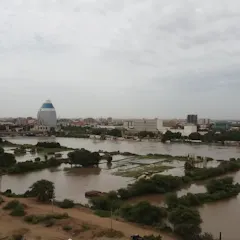
Khartoum, one of Africa’s largest cities, is both blessed and threatened by the dynamics of the Nile Rivers.

Un estudio comparativo realizado en Italia, España y el Reino Unido muestra que la salud mental está en peligro, principalmente debido a restricciones prolongadas y a la incertidumbre económica.
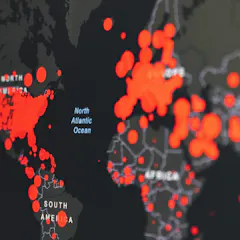
Los modelos matemáticos para predecir la evolución de la epidemia tienen intención más o menos académica y ejecutiva y gran incertidumbre.

Dos condiciones clínicas, el síndrome de Williams y de 7dup, albergan mucha información sobre nuestra historia evolutiva.
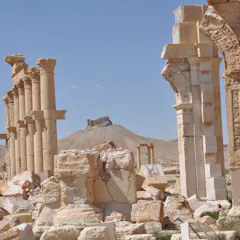
There is a surprising amount of support for the destruction of antiquities in the Middle East.

The impact of immigration on Britain’s tax and welfare system is perhaps the most important economic issue in the debate over the country’s relationship with the EU and its principle of free movement…
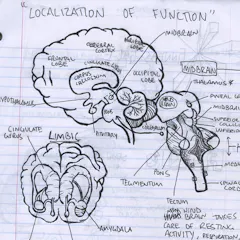
People have wanted to understand our motivations, thoughts and behaviours since the ancient Greeks inscribed “know thyself” on the Temple of Apollo at Delphi. And understanding the brain’s place in health…

In the national debate about the pros and cons of immigration, the impact on the UK’s tax and welfare system and overall public finances is perhaps the single most important economic issue. We have recently…
Authors
-

Postdoctoral fellow, University of Milan
-
Associate Professor of Philosophy, University of Milan
-
Associate professor, University of Milan
-
Postdoctoral Fellow in Philosophy, University of Milan
-
Professor of Vertebrate Palaeontology, University of Milan
-
Professor of management , University of Milan
-
PhD Candidate, University of Milan
-
Full professor Department of Oncology and Hematology-Oncology, University of Milan
-
University of Milan
-
Professor, University of Milan
-
Postdoctoral Fellow, University of Milan
-
Professor, University of Milan
-
Postdoctoral fellow, University of Milan
-
Assistant Professor of Economics, University of Milan