

Requirements for documentation such as citizenship and status cards can disadvantage people whose relationships with their respective nations have been disrupted.
University of Manitoba

The University of Manitoba has thrived for 140 years as a place where students come to learn, be inspired and find their voice. We are Manitoba’s largest, most comprehensive university and its only research-intensive post-secondary institution. Our research facilities foster collaboration and scholarship in areas including Arctic system science and climate change; immunity, inflammation and infectious disease; population and global health; culture and creative works; and Indigenous research.
At the U of M we are taking our place among leading universities through a commitment to transformative research and scholarship, and innovative teaching and learning, uniquely strengthened by Indigenous knowledge and perspectives.
Links
Articles

Preparation is rarely wasted. Even when the scenario never materializes, the process strengthens institutions, sharpens strategic thinking, and improves readiness.

Wolves are a vital part of Canada’s rich biodiversity and are a culturally important species. Killing them to protect caribou repackages the colonial fear of the “big bad wolf.”

For many people, coming to terms with chronic illness feels impossible. What if psychology could make meaning of the loss?

The dehumanizing language used by Israeli officials reflects and enables an underlying disregard for Palestinian life that connects to the findings of the recent June 2026 UN Commission of Inquiry report.

While many might view Trump’s renamings as comical or unserious, for Indigenous communities, they are reminiscent of centuries of settler-colonial erasure.

Uncertainty is part of the scientific process, and it’s not a bad thing – it’s where future discoveries can happen.

Growing concerns about police use of AI could erode the public’s perception of trust in the legal system.

Difficult stories are not obstacles to democratic education. Learning how to communicate about them are conditions for it.

Front-line workers have little control over how customers treat them. New research on taxi drivers points to a simple coping habit.

When parents stop a medication they need or interrupt breastfeeding earlier than intended, the impact affects both mother and child. We need better evidence and decision support.

Shooters are becoming freelance contractors. Their target’s ideology is entirely irrelevant to them and their involvement is purely transactional.

When runners ‘hit the wall,’ they experience sudden debilitating fatigue, difficulty keeping pace, and often, a shift away from their goal pace towards surviving until the finish line.

Allegations of racist conduct among police forces have led to numerous calls for reform, most of which fail to address the core issues.

Three provinces have passed laws that make it easier for governments to withhold, delay or dismiss requests for public records — and Ottawa may be next.

Companies facing hostile takeover threats invest more in environmental, social and governance initiatives, and the effect spreads to their competitors.

Countering violent extremism requires substantial investment from all levels of government, dismantling the state’s racialized assumptions of criminality and recognizing that gendered violence is systemic.
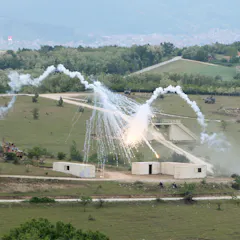
NATO is moving toward a broader approach to deterrence and defence — one that reflects elements of the ‘pan-domain’ thinking that Canada is championing.

In 2027, Canadians 18 years and older with mental illness who are deemed to meet age and other eligibility criteria could potentially access doctor-assisted death in Canada.

We need to reduce workplace isolation to support teachers’ collegial capacity to mitigate loneliness, bolster engagement and contribute toward more equitable school environments.
Authors
-

Professor, Peace and Conflict Studies, University of Manitoba
-
Associate Professor in Microbiology and Statistics, University of Manitoba
-
Master of Arts Student, Department of Sociology and Criminology, University of Manitoba
-
Professor and Director of the Centre for Defence and Security Studies, University of Manitoba
-
Associate Professor, College of Pharmacy, Rady Faculty of Health Sciences, University of Manitoba
-
Professor, Faculty of Education, University of Manitoba
-
Adjunct Professor, Natural Resource Institute (NRI), University of Manitoba
-
PhD Candidate, Faculty of Education, University of Manitoba
-
Doctoral candidate and private practice therapist, Department of Psychology, University of Manitoba
-
Master of Arts Student, Department of Sociology and Criminology, University of Manitoba
-
Professor and Canada Research Chair in Language Interactions, University of Manitoba
-
Professor of College of Community and Global Health, University of Manitoba
-
Professor, Faculty of Kinesiology and Recreation Management, University of Manitoba
-
Assistant Professor, Asper School of Business, University of Manitoba
-
Assistant Professor, Department of Sociology and Criminology, University of Manitoba