

Darwin voyait déjà nos mots, nos lois et nos habitudes comme des espèces en compétition dans un écosystème culturel. Devrions-nous, au Québec, orienter l’évolution des nombres en français ?
University of Bergen

With its 17,000 students and more than 2,500 staff, the University of Bergen (Norway) is a medium-sized European university and is both a teaching and research institution organized in seven faculties and some 90 departments and specialised centres. Six faculties cover most of the traditional university disciplines:
Faculty of Humanities
Faculty of Law
Faculty of Mathematics and Natural Sciences
Faculty of Medicine and Dentistry
Faculty of Psychology
Faculty of Social Sciences
There are also an increasing number of multi-disciplinary research centres, projects and units.
Links
Articles

Nuestra investigación nos dice que somos capaces de distinguir si una obra abstracta fue creada por un ser humano o por un animal.

De nouveaux articles de recherche examinent la manière dont les humains conceptualisent les nombres et les systèmes numériques que nous avons construits autour d’eux.

A new collection of research papers examines how humans conceptualize numbers and the numeral systems we’ve build around them.

Offshore wind and solar have tremendous potential but still face many challenges – new study.
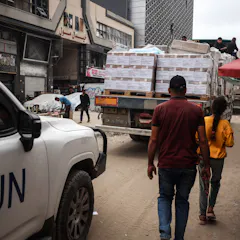
Exposure to accurate reporting over the dire plight of people in Gaza resulted in 5% bump in those in Israel who supported aid convoys.

Les craintes démographiques ressurgissent dans le débat public. Que nous disent les séries dystopiques à succès, comme La Servante écarlate, des angoisses contemporaines et quel pourrait être leur rôle politique ?

In Europe, a large-scale war could cause the Baltic Sea to freeze over and severely compromise food security – potentially for decades and even centuries to come.
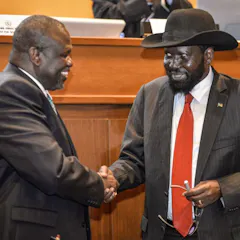
Kiir and Machar have been pivotal figures in most of South Sudan’s short history as an independent nation.

The ocean has been buffering us from the impacts of climate change, but it is reaching the limit of this capacity. Integrating ocean and climate policy will be crucial.
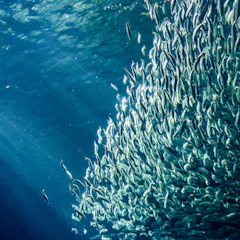
D’ici 2030, une série d’actions et d’initiatives scientifiques portées par les Nations unies se proposent de retrouver un océan en bonne santé.

Fathers who attend antenatal care may be keen to support the well being of their partners and children, but are left unengaged and often disappointed.

The ocean moderates climate change by absorbing CO₂ emissions, hosts valuable biodiversity and provides food to millions, but all of these services are threatened by pollution and human activities.

Men are increasingly expected to share housework and spend time with their partners and children.

While some adults see implicit meaning in sentences, children can miss it. Two linguists explain how this can happen, and why it matters in communication.

Entre l’échelle globale et l’échelle individuelle, les collectifs intermédiaires ont un rôle d’agent moral à ne pas négliger.

Strengthening the language on climate change can help, but journalists should cover its inspiring solutions, too.
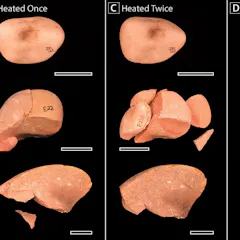
Researchers can more easily compare heated rocks from different studies and areas.

Measures to control or reduce workplace noise exposure are critical to reducing hearing loss in workers.

A new discovery adds to our existing understanding of Homo sapiens in Africa.
Authors
-

Professor of Geomorphology, University of Bergen
-
Professor of Political Science, University of Bergen
-
Associate Professor, University of Bergen
-
Research Fellow, University of Bergen
-
PhD candidate, University of Bergen
-
Associate Professor of English Linguistics, University of Bergen
-
Postdoctoral Researcher, Department of Psychosocial Science, University of Bergen
-
Postdoctoral fellow at the department of Biological Sciences, University of Bergen
-
Professor of Linguistics, University of Bergen
-
Senior Researcher in Archaeology and Cognitive Psychology, University of Bergen
-
Researcher in Information sciences and media studies, University of Bergen
-
University of Bergen
-
Programme director IMR Global Development, Institute of Marine Research, professor, University of Bergen
-
Postdoctor in archaeology at SapienCE, University of Bergen
-
PhD Candidate, Center for Climate and Energy Transformations, University of Bergen