

Perempuan pesisir di Sumenep menjalankan fungsi rantai dingin melalui pengetahuan, mobilitas, dan jaringan. Namun, kerja mereka masih minim pengakuan.
University of Amsterdam

A modern university with a rich history, the University of Amsterdam (UvA) traces its roots back to 1632, when the Golden Age school Athenaeum Illustre was established to train students in trade and philosophy.
Today, with some 30,000 students, 5,000 staff and a budget of more than 600 million euros, it is one of the largest comprehensive universities in Europe.
Teaching and research at the UvA are conducted at seven faculties: the Humanities, Social and Behavioural Sciences, Economics and Business, Law, Science, Medicine and Dentistry, with programmes offered in almost every field. Over time, the UvA has risen to international prominence as a research university, gaining an excellent reputation in both fundamental and socially relevant research. The UvA’s thriving doctoral programmes provide an excellent foundation for engaging in high-quality teaching and research.
The UvA seeks to offer an inspiring international academic environment in which both staff and students can develop their talents optimally. Characterised by a critical, creative and international atmosphere, the UvA has a long tradition of open-mindedness and engagement with social issues, in keeping with the spirit of the city with which it is inextricably linked.
Links
Articles

Listen to expert on shadow libraries Balázs Bodó on The Conversation Weekly podcast.
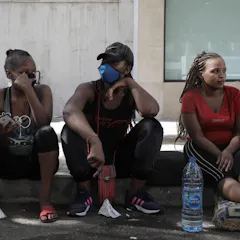
The Kenyan government must look for ways to combine emigration with labour protections.

Au-delà des droits à la libre circulation, le retrait de l'AES a des effets réels sur la Cedeao en termes de légitimité, de poids, et de droits des migrants.

Beyond the rights to free movement, the AES withdrawal has real effects on Ecowas in terms of its legitimacy, strength and migrant rights.
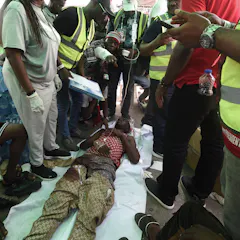
Elections in Nigeria are marked by violence. The 2027 polls risk repeating the deadly cycle.

A promessa da eficiência tecnológica na segurança urbana não deve obscurecer questões fundamentais sobre privacidade, justiça e direitos humanos

Students more informed about politics scorn party membership and campaigning, which are often associated with corruption and violence.
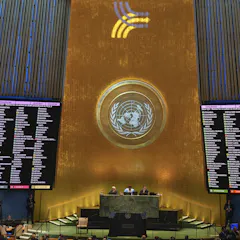
For the UN Pact for the Future to be successful, there has to be a focus on environmental and social justice, an influx of cash and resources, and an incorporation of new technologies.

Although women have long been stereotyped as being “too emotional” for leadership roles, new research suggests it’s actually men who are more likely to let emotions drive their behaviour.

Researchers warn that South Africa and Chile should avoid taking out huge loans to set up green hydrogen industries.

La victoria de Trump sigue el patrón de 2024: elecciones impredecibles, polarización y desinformación. Las elecciones globales y el auge digital exigen nuevos métodos de análisis como la inteligencia artificial y el ‘big data’ para comprender la opinión pública actual.

Did Cameroon’s elite spread homosexuality through their connections to secret societies? Instead of disproving the conspiracy theory, the study examines why it came to be.

A decade ago, people did not even agree on the traits that defined women politicians. Now they see women seeking political office as intelligent, rational, analytical, ambitious and moral.

Despite some incubator programmes tailored for entrepreneurs, Europe is lagging behind in areas such as language teaching.

A tale of two poos - attitudes towards the agricultural use of human excretion-based fertiliser differ between Japan and England as new research shows.

¿Puede existir legitimidad democrática en una sociedad desinformada y sin libertad de prensa? Esta es la gran pregunta que sobrevuela los comicios presidenciales que se celebran este domingo en Venezuela.

Scholars explain recent developments in Ecowas and the implications for the region.

Religious leaders are vital links for health services looking to counter vaccine hesitancy.

When the public sees an institution is failing, they generally lose trust in it. Not so with the health service.
Authors
-

Professor of Information Law and Policy, University of Amsterdam
-
Associate Professor of Political Science, University of Amsterdam
-
Investigador en Comunicación, University of Amsterdam
-
Senior Reseacher, University of Amsterdam
-
Assistant Professor in AI and Digital Culture, University of Amsterdam
-
Postdoctoral researcher on the Global Commission on the Economics of Water, University of Amsterdam
-
Department of Political Science, University of Amsterdam
-
Professor, Social and Behavioural Sciences, University of Amsterdam
-
PhD Candidate, University of Amsterdam
-
Assistant Professor of Conflict Studies, University of Amsterdam
-
PhD candidate, University of Amsterdam
-
Professor Emeritus of African Anthropology, University of Amsterdam
-
Kandidat doktor, University of Amsterdam
-
Assistant Professor of Organizational Behavior, Amsterdam Business School, University of Amsterdam
-
Associate Professor of International Business, University of Amsterdam